Spotting When Your Porch or Front Entry Needs Leveling Before Rebuild
Got a bumpy porch or front entry? It's more than just an eyesore—it could be a safety issue or even hint at bigger structural problems. So, how can you tell when leveling is needed? This guide breaks down key signs, modern leveling techniques, and walks you through inspection steps to make the right call. Plus, you’ll find practical examples and expert advice on preventing future issues.
At Concrete Leveling & Replacement, we help folks identify why porches settle and recommend fixes that can save you from tearing the whole thing down. Check out our concrete leveling page for a quick look at repair options.
Why Catching It Early Helps
Safety and Liability Concerns
An uneven porch isn't just annoying; it’s a tripping hazard that could lead to injuries. If someone gets hurt, you might be liable. Regular checks and quick fixes can keep everyone safe and give you peace of mind.
Stopping Other Damage
Dealing with a settling porch sooner rather than later can stop other problems like water leaks, cracks, and even damage to nearby structures. Early leveling can save you from bigger headaches down the road.
Saves Money Compared to Rebuilding
Leveling is usually cheaper than a full replacement. Techniques like foam injection or mudjacking lift slabs without the need for a whole new pour. Choosing leveling can save you thousands and reduce downtime.
Signs Your Porch Needs Leveling
Cracks and Fractures
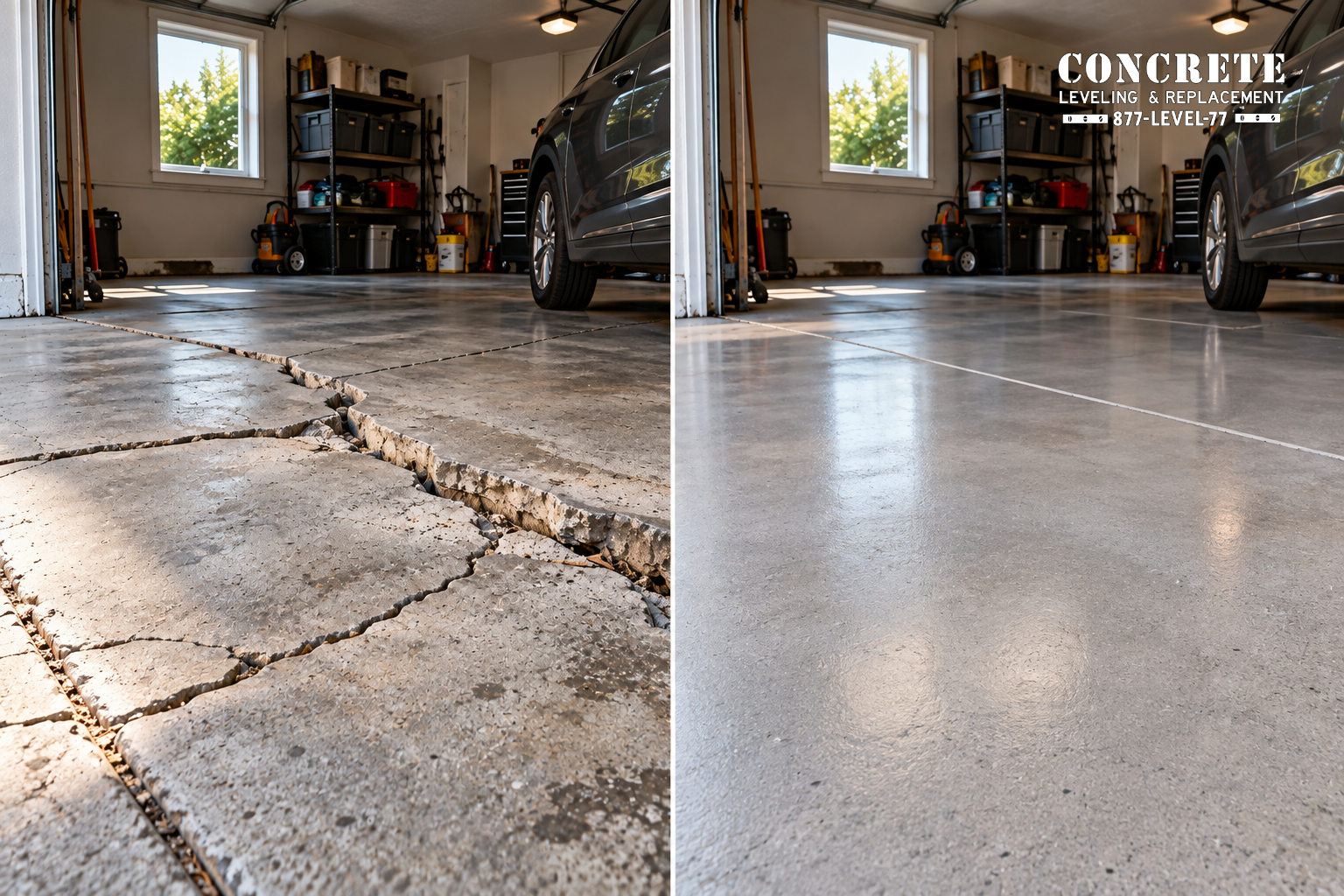
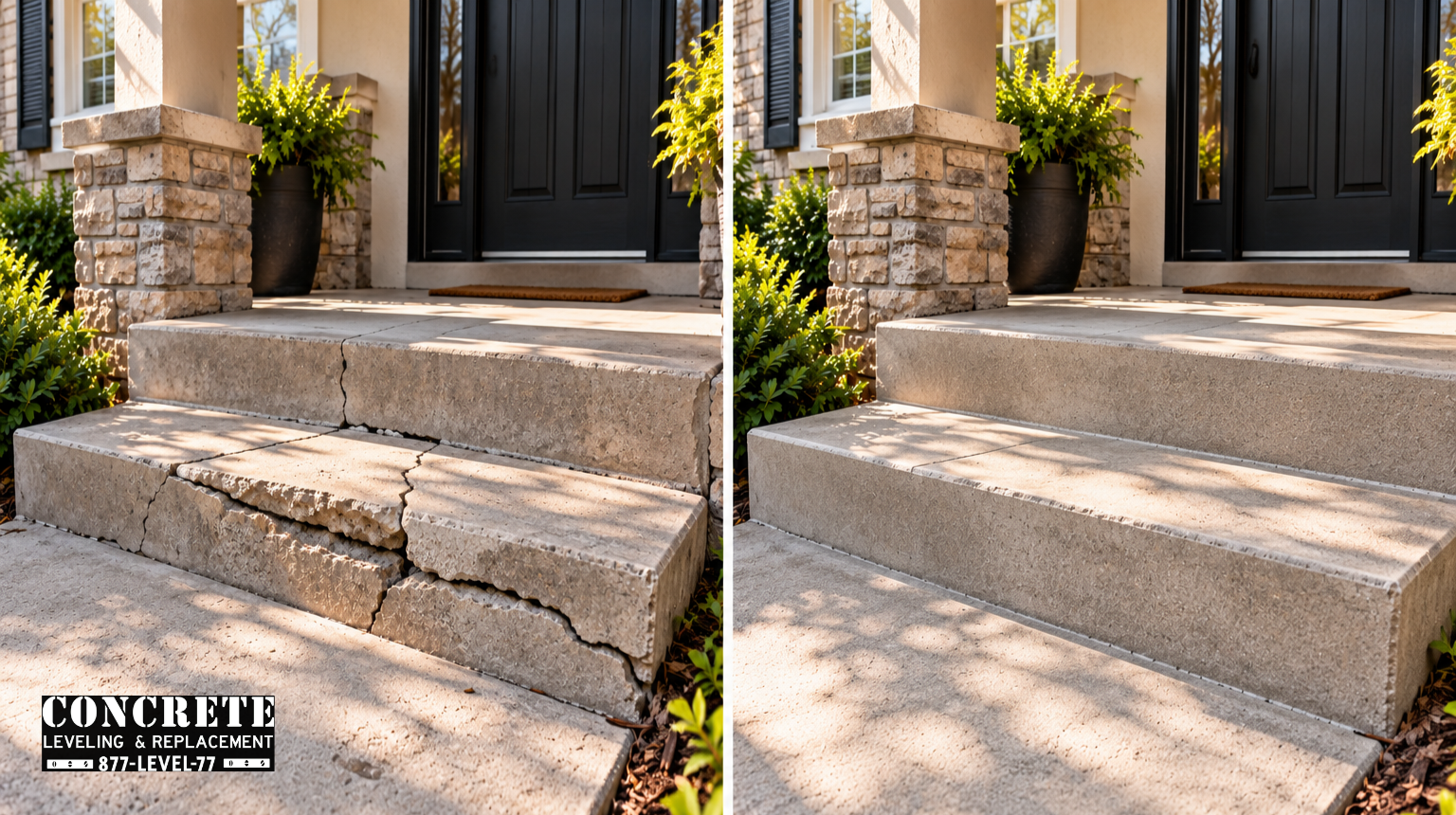
Notice any cracks across your porch? Especially if they're wide or getting bigger, this could mean the slab isn’t supported evenly. Keep an eye on these cracks, especially if they start from the edges or joints.
Uneven or Sloped Surface
If your porch floor is slanted or uneven, it’s time for a closer look. Stand a ball on it or pour some water and see if it rolls or pools. This could mean soil issues or voids under the slab.
Gaps Between Porch and House
Gaps where your porch meets the house are a red flag. This separation can let in water and pests. The fix often involves stabilizing the soil and lifting the slab back up.
Water Pooling and Drainage Problems
Water that pools on your porch after rain is a big hint that the slope is off. Fixing this often requires both leveling and regrading to direct water away.
Loose Joints and Tiles
If joints or tiles are loose or separating, the slab might be shifting. Tackling the main issue—stabilizing and leveling the slab—is usually more effective than just fixing the surface.
Modern Leveling Methods
Polyurethane Foam Injection
This method is popular because it's quick and precise. Tiny holes are drilled in the slab, and foam is injected to lift it. The foam sets fast, often in 15 to 30 minutes, so your porch is usable quickly. For more on polyurethane, see the Wikipedia article.
Mudjacking / Slabjacking
This traditional method uses a grout mixture to lift the slab. It works well for bigger voids or thicker slabs but may require larger holes and longer curing times.
Helical Piers and Edge Stabilization
If your porch has unstable soil at the edges, helical piers might be needed. They transfer loads to more stable soil and are useful when settlement is due to erosion or poor compaction.
Choosing the Right Method
Picking a method depends on your slab’s condition, the soil, and your budget. A pro will evaluate everything from drainage to soil type to recommend the best option.
How to Check Your Porch
What to Look For
Start with a slow look around your porch. Spot any cracks, loose tiles, or water pooling? Take photos and track changes to help pros identify if issues are active or historical.
Easy DIY Tests
Before calling a pro, try using a level to check flatness or pour a little water to see where it flows. These tests aren’t diagnostic but can help speed up the evaluation process.
When to Call a Pro
If you see large cracks, major slope changes, or water pooling, it’s time to call in a pro. They’ll use special tools to find voids and movement, and tell you whether leveling will work or if more is needed.
What the Pros Will Check
Pros look at slab thickness, soil type, drainage, and how your porch connects to the house. They might take soil samples to check compaction and moisture. Afterward, you'll get a detailed report with options and costs.
Real-Life Success Stories
Romulus, MI Front Porch Leveling
In Romulus, a homeowner had water pooling on their porch. Our team found the slab had settled and used foam injection to lift it, fixing the slope and stopping the pooling.
The quick cure time meant they could use the porch the same day, and the foam's stability avoided the need for a costly repour. If this sounds familiar, check out our porch repair services.
Commercial Entryway Fix
An uneven entryway at a retail store was causing accessibility issues. We used slab lifting and edge stabilization to fix it, ensuring a smooth, ADA-compliant threshold without closing the entrance.
For more on commercial options, visit our concrete leveling page.
Pool Deck and Porch Interaction
When porches connect to pool decks, settling can cause drainage issues. By fixing both at once, we restored the slope and joint integrity, preventing future disputes about which slab caused the problem.
Our concrete pool deck repair ensures coordinated plans for connected porches and decks.
How to Pick the Right Contractor
Look for Experience and References
Choose a contractor with experience in porch leveling, not just general concrete work. Ask for references and photos of similar projects. A local contractor familiar with area soils and climate is a plus.
Get a Written Assessment
A good contractor will give you a written assessment with options. Be wary of those who push for full replacement without testing—leveling might be all you need.
Check Insurance and Permits
Make sure the company has the right insurance and permits. Ask about warranties on labor and materials to see their confidence in their work.
Transparent Pricing
Transparent pricing and non-commissioned techs usually mean recommendations that fit your needs. Our team operates on a non-commission model to prioritize honest evaluations.
Preventive Tips and Long-Term Care
Fix Drainage and Landscaping
Fix drainage issues to prevent porch settlement. Ensure gutters and grading direct water away. The EPA offers resources on stormwater management: EPA Stormwater Basics.
Regular Checks
Check each spring and fall for new cracks or pooling. Catching changes early can prevent major repairs later.
Mind Nearby Soil Disturbances
Nearby construction or tree roots can disturb soil and speed up settlement. Plan ahead with a pro to understand potential impacts.
When Replacement Might Be Needed
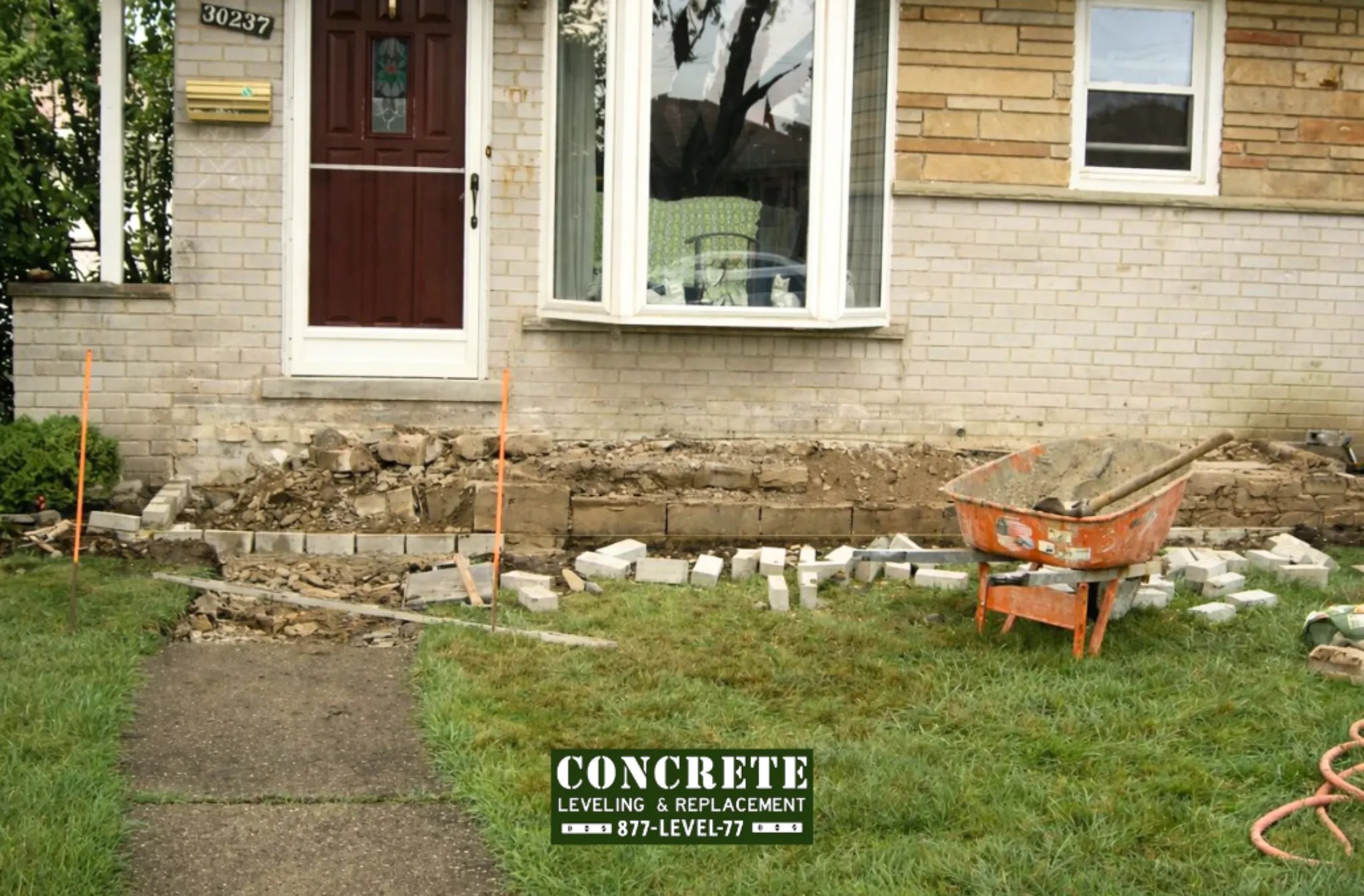
If the slab is too damaged with multiple fractures or corroded rebar, full replacement could be the best long-term solution. Evaluate carefully to decide whether leveling or replacement is right.
FAQs and Troubleshooting
How Fast Can Leveling Be Done?
Foam injection often lets you use the slab within hours. The time depends on project size and whether extra work is needed.
Is Leveling a Long-Term Fix?
When done right and combined with drainage fixes, leveling can extend slab life. Polyurethane stabilizes soils and resists moisture.
Can I DIY Leveling?
Minor cracks can be DIY-ed, but structural issues need a pro. For accurate diagnosis and to avoid mistakes, consult a technician if you see signs of movement or drainage issues.
What Are Typical Costs and Warranties?
Costs vary by region and method. Polyurethane is pricier than mudjacking but often lasts longer. Get a written warranty to see the long-term value.
Where Can I Learn About Soil Risks?
The U.S. Geological Survey offers resources on land subsidence and soil movement: USGS on Land Subsidence.
Final Steps: Leveling vs. Reconstruction
When Leveling is Best
If issues are localized, like minor sinking or pooling, leveling is often best. It's especially good when the slab is intact and the problem is soil-related.
When to Consider Replacement
Think about replacement if you see widespread cracking or severe edge failure. It's also the way to go if you're redesigning the porch.
Next Steps
Start with a thorough inspection and get multiple written proposals. Our team at Concrete Leveling & Replacement offers evaluations and solutions tailored to Michigan's climate. Check our counties we serve for coverage info.
Conclusion and Call to Action
Spotting signs that your porch needs leveling can save time and money. Look for cracks, uneven surfaces, and water pooling. Modern techniques like foam injection offer fast, durable fixes without full replacement. If you're unsure, get a professional inspection for an informed recommendation.
Explore our porch repair services or request a leveling estimate through our concrete leveling services. We also offer step repair and driveway repair to keep your property safe and looking good.
Concrete Leveling & Replacement is a family-owned business in Michigan with over 25 years of experience. Call us at (734) 895-3820 or email sales@concretelevelingpro.com to schedule an inspection. The sooner you act, the more repair options you’ll have!