Understanding the Dangers and Legal Implications of Uneven Concrete
Dealing with uneven concrete isn't just about looks; it's a real safety concern. If left unchecked, it can lead to accidents and costly repairs. This guide will help you grasp why this issue matters for both homeowners and business owners. We'll dive into what causes uneven surfaces, provide some stats on safety risks, and share legal insights and practical tips on how to prevent, inspect, and fix these problems. By the end, you'll know how to identify hazards, understand your responsibilities, and explore modern repair methods that can save money and enhance safety.
For a quick check on whether your driveway, patio, or sidewalk might need professional help, take a look at our detailed guide on signs your driveway, patio, or sidewalk needs leveling. This post complements what we're discussing here by showing you when it’s time to call in the pros.
Slip and fall accidents are quite common and can be expensive. The CDC reports that falls contribute significantly to emergency room visits, affecting both victims and property owners. Understanding how safety, legal compliance, and repair options connect is key to protecting people and property.
Why Uneven Concrete Is a Big Deal
Immediate Safety Concerns
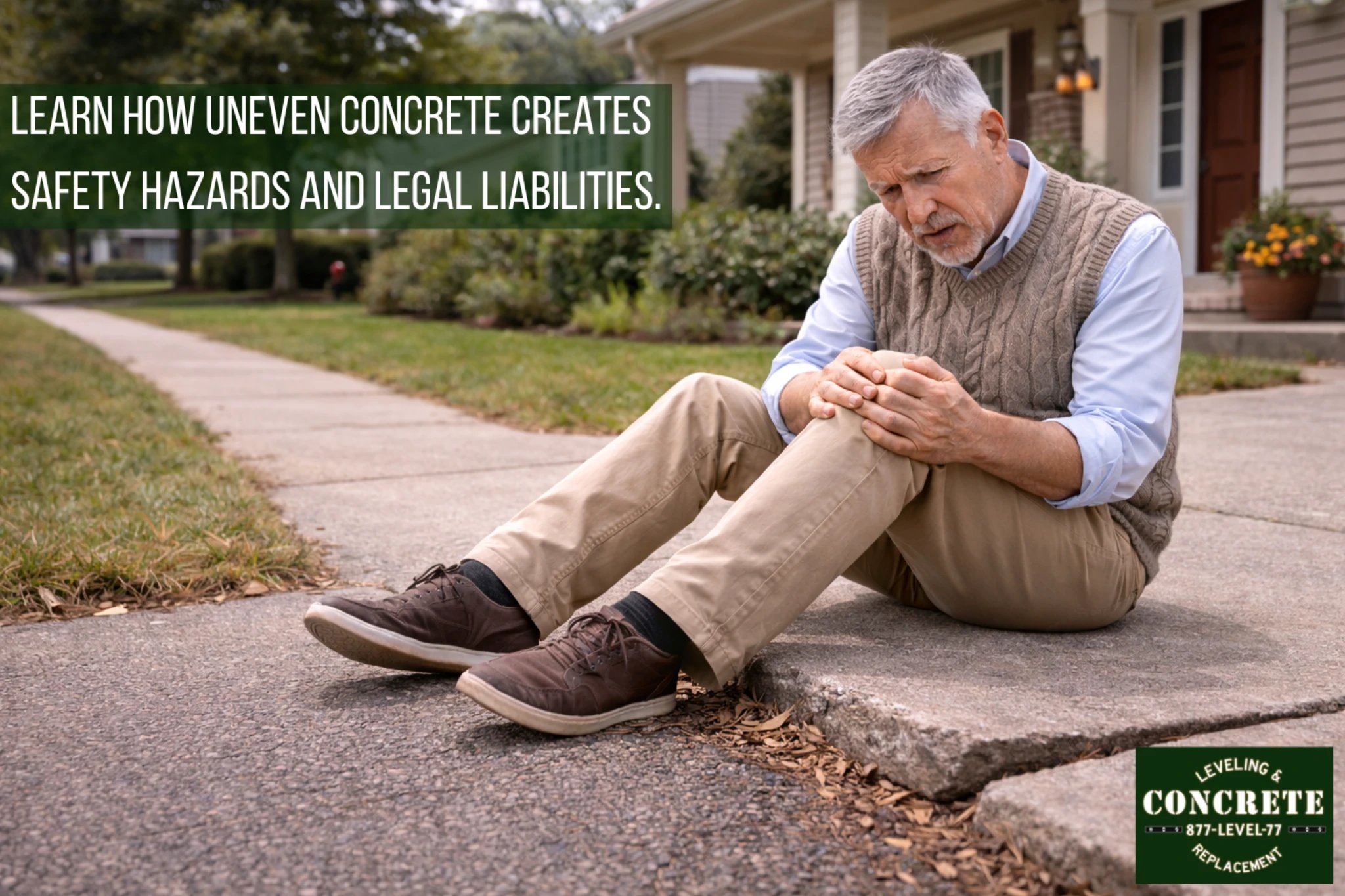
Uneven concrete poses a tripping hazard that can harm pedestrians, employees, guests, and residents. Even a small height difference between slabs can cause someone to trip and fall. This is especially risky for older adults or those with mobility issues, as it can lead to severe injuries like fractures or head trauma, often requiring extensive medical care.
In busy commercial areas, a trip-and-fall accident can happen where foot traffic is high, like entrances or parking lots. It’s crucial to maintain these areas proactively to prevent accidents. Regular inspections and addressing visible hazards promptly can reduce the likelihood of incidents, ensuring a safer environment for everyone.
Financial Impacts on Property Owners
If you ignore uneven concrete, you risk legal claims, higher insurance premiums, and repair costs. Municipalities and courts might award damages to injured parties, and businesses could face hefty legal fees defending negligence claims. Emergency repairs or complete replacements after prolonged neglect often cost more than timely, targeted solutions.
For instance, some cities have spent millions settling claims related to sidewalks. These cases show how neglect can lead to significant expenses, especially when issues are widespread. Keeping up with concrete maintenance isn't just about safety; it helps control costs.
Reputation and Business Disruptions
Accidents due to uneven concrete can damage a business's reputation and disrupt operations. A slip-and-fall incident at a store or restaurant can quickly spread on social media, impacting future customers. Repairs can also disrupt business if areas need to be closed off, affecting revenue.
By maintaining level and safe walking surfaces, businesses can protect their reputation and ensure smooth operations. Long-term maintenance and transparent communication about repair schedules also show customers that safety and accessibility are priorities.
What Causes Uneven Concrete?
Issues with Soil and Subgrade
Uneven concrete often starts below the surface. Soil erosion, poor compaction during installation, and settlement can create voids that cause slabs to sink or tilt. In areas with expansive soils or high groundwater, freeze-thaw cycles can worsen these movements over time. Tackling subgrade issues is crucial for lasting repairs.
Effective repair starts with assessing the soil conditions. Techniques like soil stabilization, targeted void filling, and re-compaction can help prevent recurring settlement and prolong the life of concrete repairs.
Drainage and Grading Problems
Bad drainage is a common cause of concrete issues. Water pooling near or under slabs weakens the supporting soils, speeding up deterioration. Poor grading can direct water towards foundations and sidewalks rather than away, increasing the chances of washouts and uneven slabs.
Fixing the problem might require re-grading, installing drains, or redirecting runoff. Without addressing the root cause, new leveling or patches may fail under the same conditions that caused the original problem.
Tree Roots, Utility Work, and Vibration
Surface upheaval can also result from tree roots lifting sidewalks, utility work disturbing the base, or nearby construction causing vibrations. Recognizing these influences can help property owners plan preventive strategies and design durable fixes.
Managing landscaping choices, coordinating with utility providers, and monitoring heavy traffic can reduce future surface movement risks. Interventions like root barriers and reinforced joints can enhance long-term performance.
Safety Risks and Statistics
How Common Is the Problem?
Slip and fall incidents lead to millions of emergency room visits each year. National statistics highlight the risks of poorly maintained walking surfaces. These numbers emphasize the importance of regular inspection and repair programs by homeowners and property managers.
Given how frequent and severe these incidents can be, organizations often implement regular maintenance schedules and formal reporting procedures. These steps reduce accident chances and help document efforts to maintain a safe environment.
Health and Economic Effects
Beyond immediate medical care, fall-related injuries can cause long-lasting disabilities, lost income, and increased care needs. For seniors, one fall can mark the start of losing independence and increased healthcare costs. On a larger scale, these impacts put pressure on emergency services and healthcare systems.
Workplace safety agencies provide guidance on preventing slips and falls, highlighting the responsibility of businesses to maintain safe premises. Implementing controls like floor repairs and anti-slip treatments is vital for a comprehensive safety program.
Regulatory and Research References
For authoritative info on fall prevention, check out resources like the CDC on falls and injury prevention. These sources offer data-backed recommendations and best practices for identifying hazards and mitigating risks. Using this guidance helps property owners focus on interventions that improve safety.
Building codes and accessibility standards often include provisions on surface tolerances and transitions to reduce trip risks. Getting familiar with these standards helps avoid compliance issues and unexpected liability.
Legal Responsibilities: What You Need to Know
Property Owner Duties
Property owners must keep their premises safe. This duty varies by jurisdiction but generally, if a hazard is foreseeable and preventable, the owner can be held liable for injuries resulting from negligence.
Keeping records of maintenance activities, routine inspections, and timely repairs can strengthen a defense against negligence claims. Ignoring complaints or delaying maintenance increases the risk of lawsuits and higher damages.
ADA Compliance and Accessibility
Businesses and public properties must follow accessibility standards like those from the Americans with Disabilities Act (ADA). These standards specify slope, cross-slope, and threshold height to ensure safe access. Not meeting these standards can result in lawsuits and costly fixes.
Property owners should consult ADA resources and, if needed, hire a qualified consultant to audit walking surfaces. Aligning repairs with ADA guidelines reduces liability and enhances usability for all visitors. For official ADA guidance, visit the U.S. Department of Justice ADA information pages.
Legal and Financial Outcomes
Cities and private plaintiffs have secured substantial settlements in cases involving walkway hazards. These outcomes highlight the financial incentive to address uneven concrete proactively. Routine maintenance logs, prompt repairs, and clear signage during temporary hazards can reduce legal exposure and demonstrate responsible management.
Investing in preventive measures is often cheaper than funding a legal defense or a large settlement.
Prevention and Maintenance Tips
Regular Inspections
Creating and sticking to a regular inspection schedule for sidewalks, driveways, and parking lots is one of the best prevention strategies. Inspections should document slab elevations and cracks, and note changes after bad weather or construction. Consistent inspection and quick fixes are key to risk management.
Inspections can be done in-house if staff are trained, or by professionals who provide detailed reports and recommendations. Using tools like level gauges or laser scanning improves accuracy and helps prioritize repairs.
Tackling Drainage and Landscaping
Managing water is crucial for preventing soil erosion and slab movement. Regrading to direct water away from slabs, installing French drains, and ensuring gutters discharge away from surfaces help prevent washouts. Landscaping choices matter too; choose trees with less aggressive root systems near sidewalks and use root barriers to protect slabs from uplift.
Investing in drainage and landscape planning protects concrete surfaces and prevents unevenness.
Technology for Early Detection
New technologies help property owners detect issues early. Drones, laser scanning, and predictive maintenance software can identify patterns of movement and risk factors. These tools allow targeted repairs where they offer the most benefit.
Integrating technology into a maintenance program helps prioritize budgets, schedule repairs efficiently, and reduce surprise liabilities. Over time, data collected supports smarter repair choices and helps owners move from reactive to preventive maintenance.
Repair Options: What Works Best
Concrete Leveling and Mudjacking
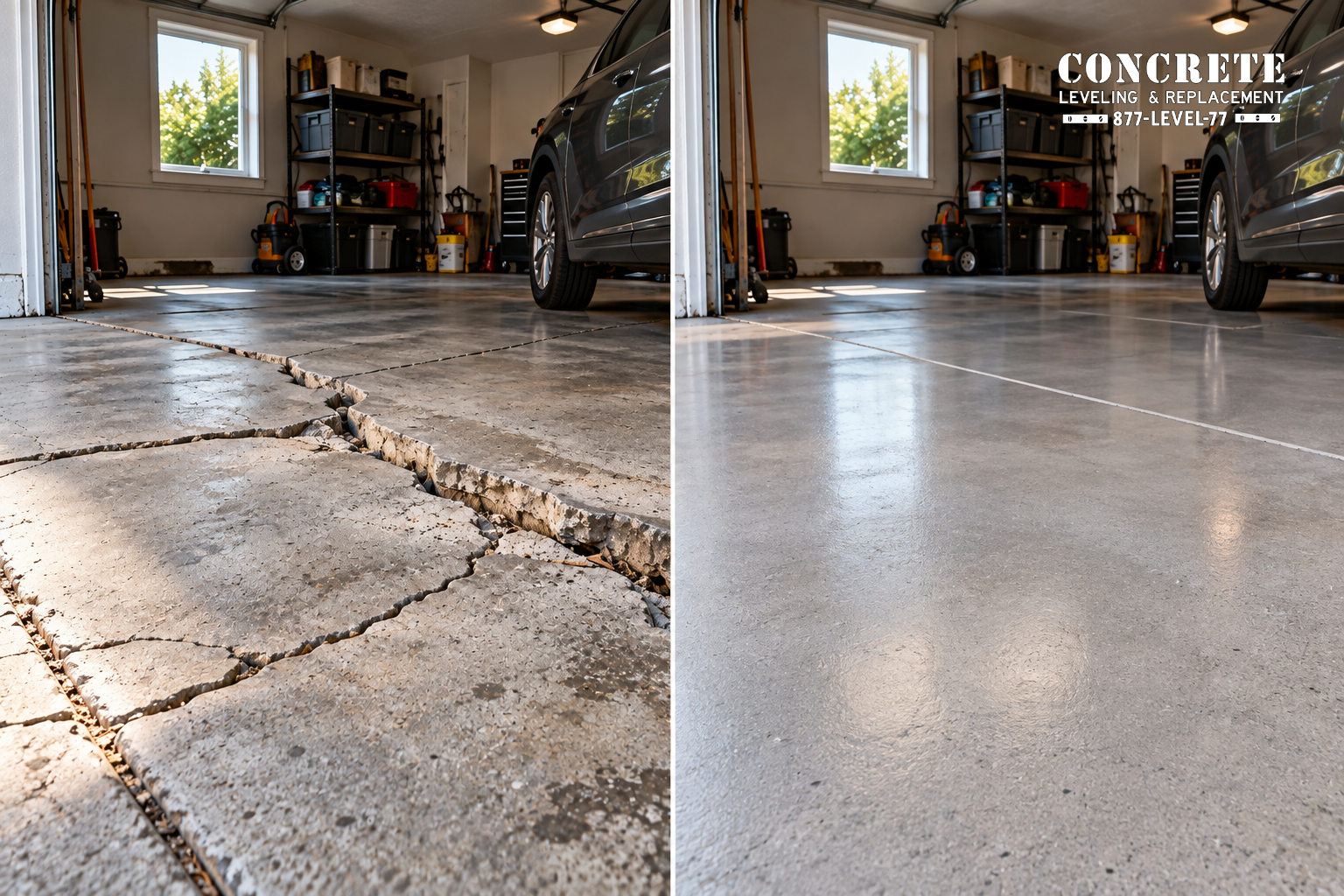
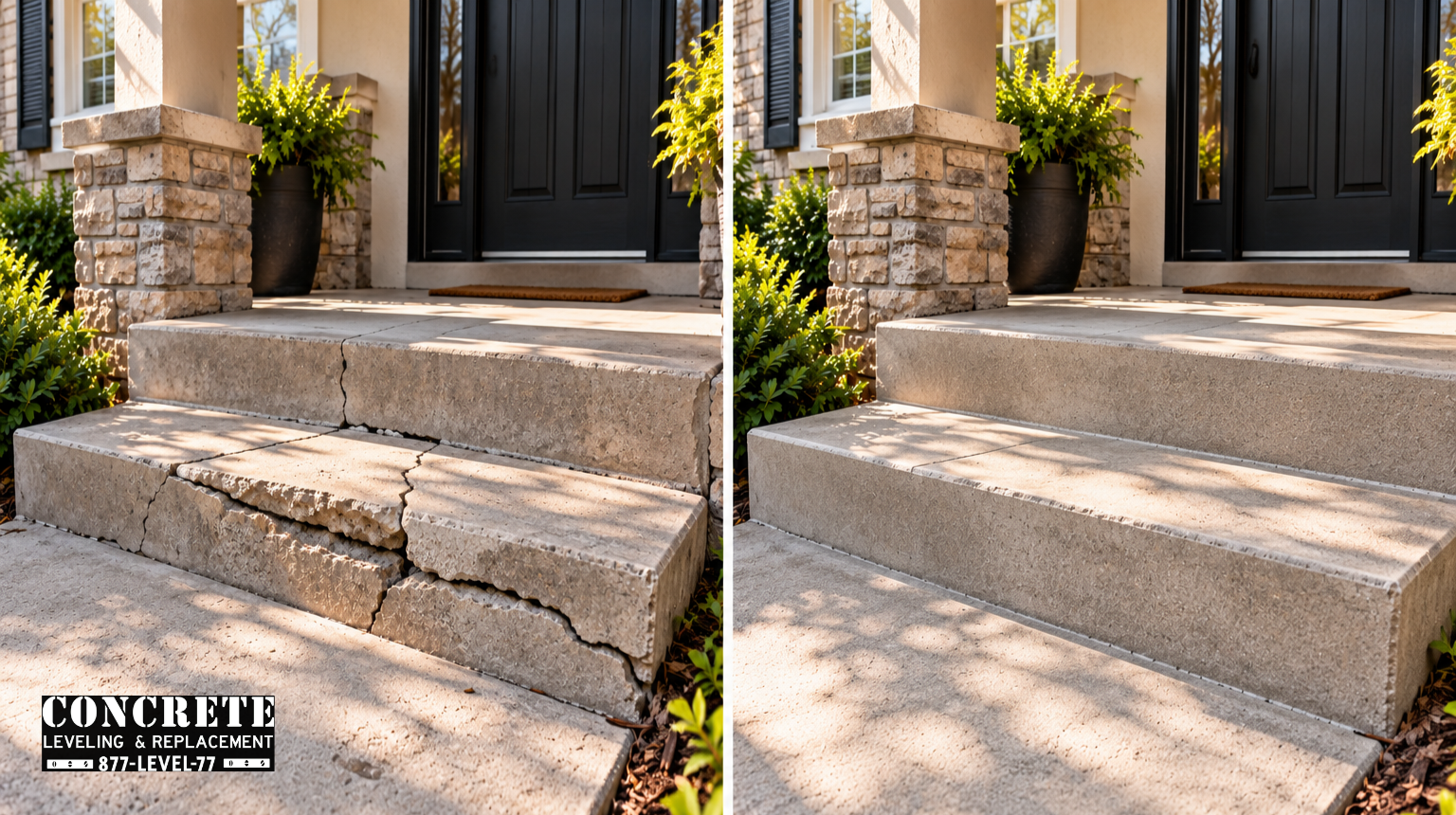
Concrete leveling techniques, like polyurethane injection and mudjacking, restore slabs by filling voids below. Polyurethane foam is lightweight, cures quickly, and resists water. Mudjacking is effective for larger voids and can be cost-effective when done right.
Choosing the right method depends on slab thickness, access, soil conditions, and desired repair longevity. A qualified contractor should evaluate the situation and recommend the best approach. Consider our concrete leveling services for safe, functional surfaces with minimal disruption.
Advanced Overlays and Resurfacing
Thin overlays made from specialized materials can restore worn concrete without full replacement. These systems often offer enhanced durability, improved slip resistance, and faster curing times. Overlays can be formulated to include recycled materials or low-carbon binders.
When surface wear is the main issue, overlay systems efficiently renew surfaces and extend their life. Specify products that meet slip-resistance and durability requirements for the application.
Full Replacement: When It's Necessary
Sometimes damage is too extensive or the underlying soil requires a complete reset. Full replacement is needed when slabs are heavily cracked or when subgrade stabilization alone can't ensure long-term performance. This allows for proper base reconstruction and improved drainage.
While more expensive upfront, replacement is the right choice when other methods would be temporary or insufficient. Discuss costs and warranty options with your contractor to make an informed decision.
Industry Trends and Innovations
Sustainable Repair Materials
The industry is adopting sustainable materials, including recycled aggregates and low-carbon cement alternatives, to reduce environmental impact. These materials can help businesses meet green building standards. Selecting eco-friendly products often requires coordination with suppliers to ensure durability and compatibility with existing concrete.
As sustainability becomes more important, property owners should seek solutions that balance environmental benefits with proven performance. Manufacturers now offer a range of certified materials that meet both criteria.
Technology Integration: Drones, Laser Scans, and Predictive Software
Technology is changing how inspections and maintenance are planned. Drones provide aerial views for large properties, while laser scanning captures detailed elevation data. Predictive maintenance software analyzes patterns and prioritizes interventions based on risk and cost-effectiveness. These tools allow for earlier detection and smarter planning of repairs.
Using technology in routine maintenance processes increases efficiency and reduces overlooked hazards. Property managers who adopt these tools can extend asset longevity and better allocate budgets.
Advanced Overlays and Faster Curing Systems
New overlays and polymer-modified cements cure faster and offer improved bond strength, allowing businesses to return to normal operations sooner. Faster turnaround times are valuable for retail, hospitality, and municipal applications where downtime is costly. These systems also often include slip-resistant textures for added safety.
When scheduling repairs, consider options that minimize closure time and maximize return to service. Faster curing materials can reduce lost revenue and limit access restrictions.
Real-World Scenarios
Municipal Costs of Neglect
Cities that neglect sidewalks and public walkways can face large settlement expenses. Historical cases show municipalities spending millions on settlements and repairs. These examples highlight how deferred maintenance can result in significant fiscal consequences for taxpayers and municipal budgets.
Increasingly, municipalities are adopting preventive maintenance programs and targeted repairs to avoid settlement issues and reduce liability exposures. Investing in regular inspections and prioritized repairs can dramatically lower long-term costs.
Commercial Retrofit Reducing Liability
A retail plaza dealing with frequent trip complaints used concrete leveling and overlay work to fix uneven entrances and walkways. Repairs were coordinated to occur after hours, using fast-curing materials to minimize revenue loss. This reduced customer complaints and insurance claims.
This example shows the value of combining solutions with operational planning to maintain continuity while addressing safety needs. Proactive work reduces claims and enhances customer experience.
Local Insight: Romulus Weather Challenges
In areas like Romulus, Michigan, freeze-thaw cycles speed up concrete deterioration. Properties here should focus on drainage and seasonal inspections to catch issues early. Practical measures like winter pre-inspections and spring follow-ups help property owners identify problem spots and schedule repairs before hazards escalate.
Concrete Leveling & Replacement addresses these regional challenges with solutions tailored to Michigan's climate. We combine soil assessment, drainage fixes, and appropriate leveling or replacement work to deliver durable results. For more information, check out our concrete pool deck repair services.
How to Deal with Uneven Concrete: A Step-by-Step Guide
Step 1: Inspect and Document
Start by walking the property and documenting visible hazards: measure vertical displacement between slabs, photograph cracks and pooling water, and note complaint areas. Prioritize based on severity and usage. For commercial properties, focus on high-traffic areas and access routes.
Keeping records helps with informed decision-making. Regular updates to inspection records show ongoing attention to safety and maintenance.
Step 2: Investigate Causes
Look into drainage, soil conditions, and external factors like tree roots or utility work. If the cause isn't clear, consider a geotechnical evaluation or diagnostic testing. Knowing the cause guides repair methods and prevents recurrence.
For larger properties, drone or laser scan data can speed up assessment and reveal subtle changes. These tools complement traditional inspection methods.
Step 3: Choose the Right Repair
Pick an approach that matches conditions, budget, and desired service life. Concrete leveling or polyurethane injection is often cost-effective for settled slabs, while overlays are better for surface wear. Full replacement is needed for extensive damage or subgrade reconstruction.
Work with a qualified contractor who provides written recommendations, including life-cycle comparisons and warranty info. Our concrete floor repair team can provide site-specific evaluations and options tailored to your needs.
Step 4: Implement and Monitor
Carry out repairs with a clear timeline and communication plan to minimize disruption. Use fast-curing materials where necessary, and fix drainage or grading as needed. After repair, include the area in regular inspections and monitor for changes.
Monitoring ensures repairs are working as expected. Keep records and receipts to show diligence in maintenance, which can be useful in future claims.
FAQs
How do I know if my concrete needs leveling or replacement?
If slabs have moderate displacement, trip hazards, and limited cracks, leveling methods like polyurethane injection or mudjacking are often effective. If they are cracked or crumbling extensively, full replacement may be necessary. A professional inspection will determine the best option.
For more on this, check out our post on why concrete slabs sink and how to fix them for a clear explanation of the decision process.
Can I reduce my liability by posting warnings or signs?
Temporary signs and barriers are important for immediate safety, but don't eliminate the legal responsibility to fix hazards. Signs are a short-term solution, but responsible owners should plan for permanent repairs. Courts consider whether the owner acted reasonably, and relying on temporary measures can be viewed unfavorably in liability cases.
What role does ADA compliance play in sidewalk repairs?
ADA standards set specific tolerances for slope and surface transitions to ensure safe access. Aligning repairs with ADA requirements prevents enforcement actions and reduces lawsuit risks. Consulting ADA guidance and involving experts ensures compliance and safer outcomes. See the ADA resources for guidance.
Conclusion and What to Do Next
Uneven concrete is a manageable issue that impacts safety and finances. By understanding causes, conducting regular inspections, tackling drainage and soil issues, and choosing the right repair method, property owners can reduce injury risks and legal exposure. Investing in modern repair techniques and preventive maintenance protects people and assets.
If you suspect uneven concrete on your property or want a professional assessment, Concrete Leveling & Replacement is here to help. We offer local expertise and practical solutions tailored to Michigan's climate. Contact us at (734) 895-3820 or sales@concretelevelingpro.com to schedule an inspection. Learn how we restore safety and value to properties across the region.
For more on fall prevention and injury statistics, see the CDC and ADA resources. For general info on concrete, check out Wikipedia. These resources back our recommendations and offer further context for safety planning.
Ready to make your property safer? Schedule an assessment with Concrete Leveling & Replacement and take steps to reduce risk and protect your investment. Call (734) 895-3820 or visit our website to get started.