Expert Concrete Step Repair for a Safer, More Welcoming Front Entrance
Your front entrance is the first thing people notice. If your concrete steps are cracked, uneven, or sinking, it can make your home feel a little neglected. Getting those steps professionally repaired is a quick way to boost safety, improve your home's curb appeal, and tidy up your entryway without the hassle of replacing everything.
At Concrete Leveling & Replacement, we often see front entrances starting with minor issues that turn into bigger problems if ignored. But here’s the good news: many of these step problems can be fixed quickly if you catch them early. In this guide, we'll explore what causes step damage, how repairs work, when leveling is enough, and why it's crucial to get an honest evaluation rather than guesswork. If you also have issues with nearby walkways or landings, our sidewalk repair and concrete leveling services could be just what you need.
For those curious about trip hazards and making entrances more accessible, check out the U.S. Access Board's tips on walkway and step safety at access-board.gov. Because let's face it, front steps aren't just for looks; they're a high-traffic spot that impacts daily use.
Why Front Step Repair Matters More Than Most Homeowners Realize
Safety is the first priority
Your front steps see a lot of action from family, friends, deliveries, and changing weather. Even a small uneven patch can be a trip hazard, especially when people can't see well or are carrying things. Fixing those uneven steps makes moving around safer for everyone.
Homeowners often overlook a cracked step because it happens gradually. That’s what makes it risky. People might unconsciously adjust their walk, but kids, older adults, or visitors might not see the hazard at all.
First impressions start at the entryway
Your front entrance is a major focal point of your home. If the steps are chipped or sunken, your property might look older or less maintained than it is. A clean, level entry makes the whole exterior look more intentional and well-kept.
This matters even more if you’re planning to sell, host guests, or just want your home to look its best. Many homeowners are amazed at how much more balanced their house feels once the steps are straightened and the concrete surface is refreshed.
Small repairs can prevent larger damage
Concrete issues rarely stay isolated. A cracked step often means something’s shifting below, and that same problem might affect the stoop, porch, or walkway nearby. Fixing it early can stop the damage from spreading and save you from pricier repairs down the road.
For instance, if water is eroding the soil under your entrance, the landing might keep settling unless you fix the drainage. That’s why we often check steps along with porch repair or patio repair when the surrounding concrete shows signs of movement.
Common Signs Your Concrete Steps Need Professional Attention
Visible cracks and crumbling edges
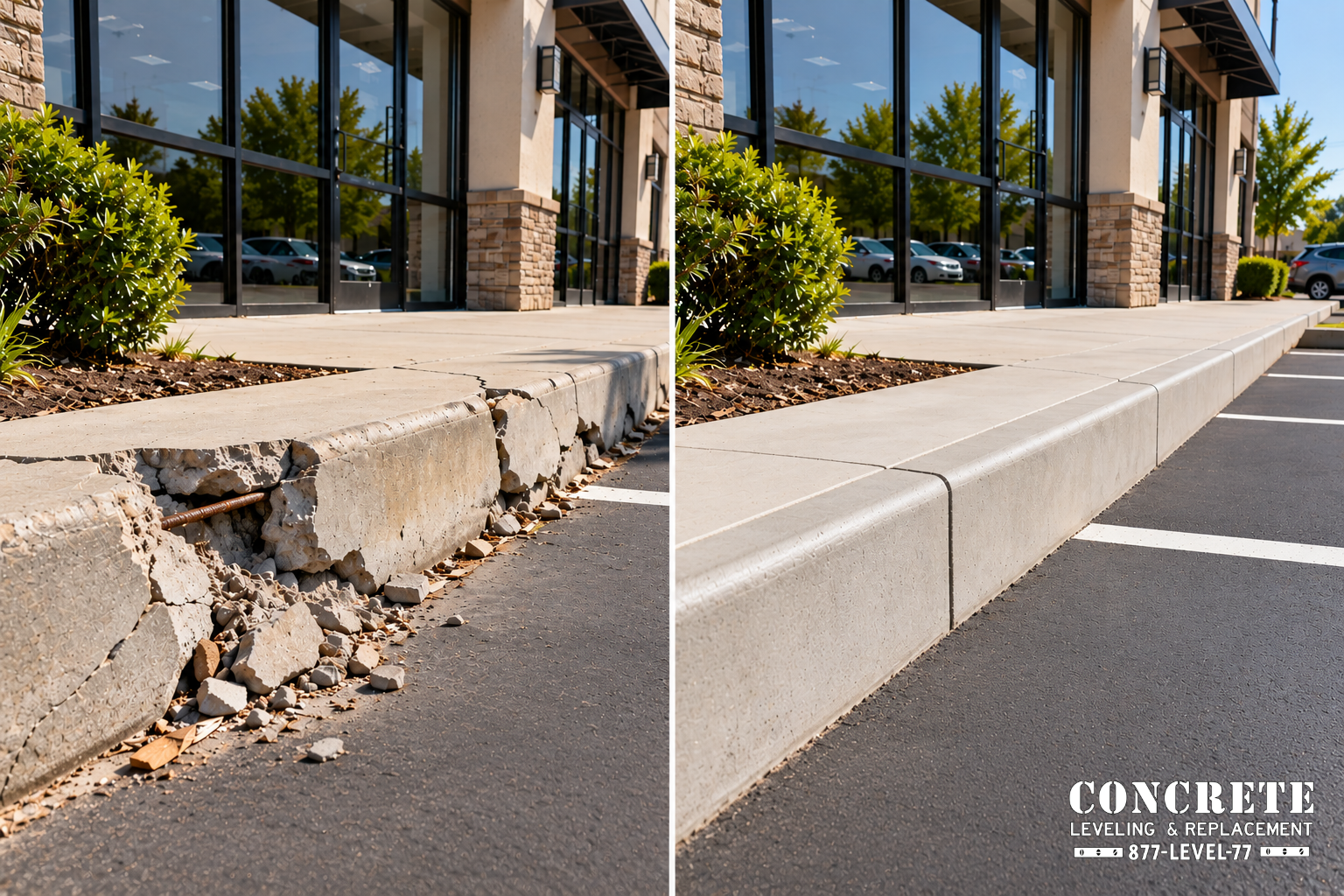
Small cracks aren't always urgent, but bigger cracks, broken corners, and flaking concrete signal that the surface is weakening. These issues can trap moisture, expand during cold weather, and eventually create loose pieces under foot traffic.
When edges crumble, it’s more than just an eyesore. They can become slippery, unstable, and tricky to navigate safely, especially in wet or icy conditions.
Uneven height between steps or landing
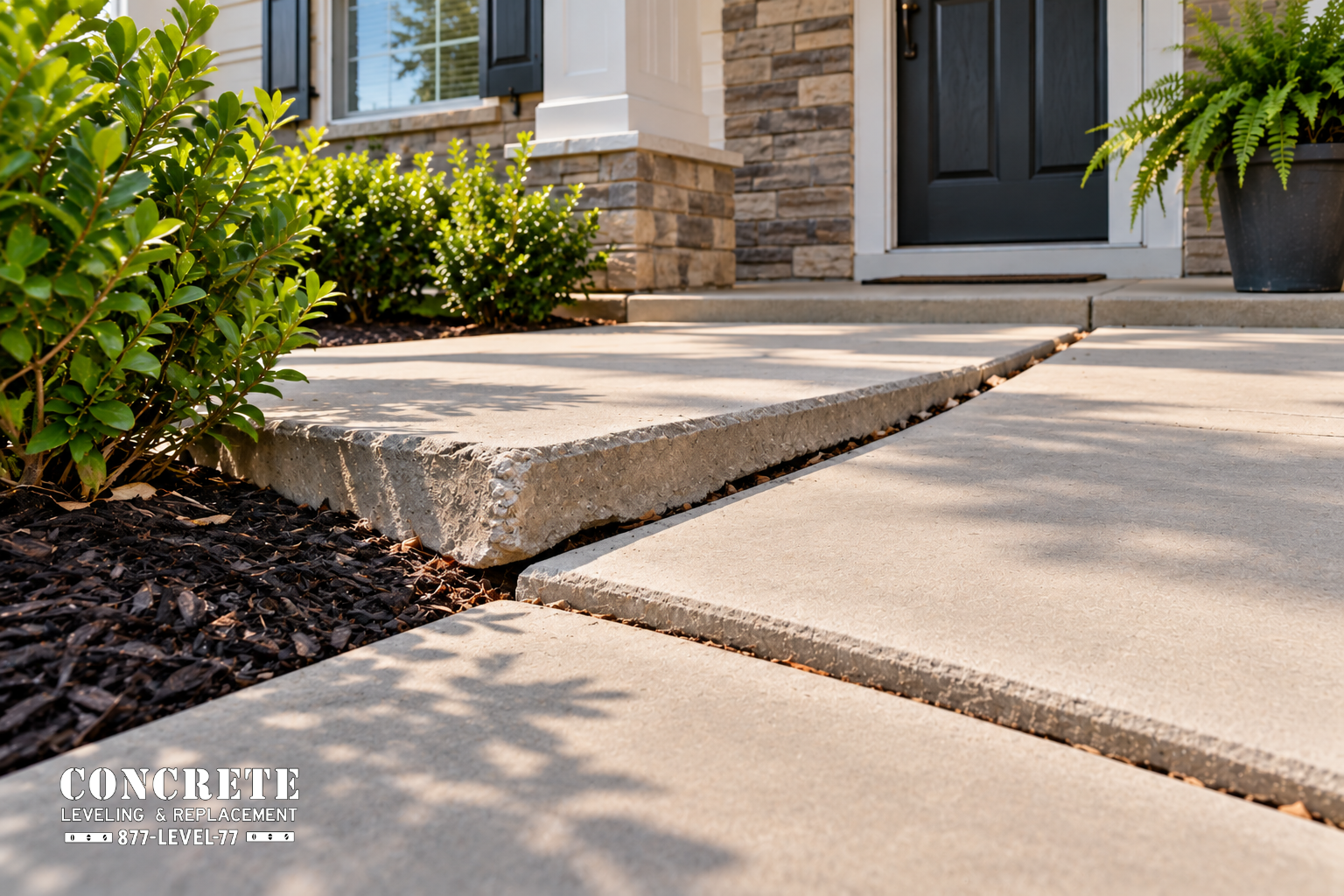
If one step is lower than the others, or if the landing doesn’t line up with the doorway anymore, the structure might have settled. Uneven height is one of the clearest signs that professional repair is needed because it affects how people go up or down the steps.
Settling happens gradually as soil compresses, erodes, or shifts. Often, leveling can fix the problem without replacing everything, especially if the step structure is still solid.
Water pooling near the entrance
Standing water around steps is a warning sign. Water collecting near a front entrance can seep into cracks, weaken the base, and make the surrounding slab more prone to frost damage. It also ups the risk of slippery surfaces during rain or snow melt.
If drainage is the issue, repair should target the cause, not just the visible problem. The National Weather Service explains how freeze-thaw cycles and moisture can worsen damage in colder climates, which is especially relevant for Michigan homeowners.
What Causes Concrete Steps to Sink, Crack, or Shift
Soil settlement beneath the concrete
A common reason steps shift is soil settling underneath. Over time, loose fill dirt or poorly packed base material can compress and create voids. Once that support is lost, the concrete starts to sink or tilt.
This is especially common where the entry was built on backfilled soil or where drainage problems have softened the ground. Sometimes, the slab looks fine on the surface until you notice the angle from a distance.
Water erosion and drainage problems
Water is a big enemy of concrete. It doesn’t ruin the surface instantly, but it slowly affects what’s happening below it. Poor grading, downspouts too close to the entrance, and clogged drainage can wash away support material under the steps.
We often see this issue along with other concrete movement, like driveways and walkways nearby. If your entrance and driveway both show signs of settling, our concrete driveway repair and concrete floor repair services can help tackle the root of the issue.
Freeze-thaw cycles and seasonal stress
In cold climates, water entering a crack can freeze, expand, and widen the damage. When it thaws, the cycle repeats. That repeated stress can turn a small flaw into a broken step over time.
The concrete might also move as temperatures change, especially if the entrance was built on a base that’s already prone to shifting. Repairs in colder areas should consider long-term movement, not just quick fixes.
How Professional Concrete Step Repair Works
Inspection and diagnosis
Repair starts with a careful look at the step, landing, and surrounding areas. A pro should look beyond the visible crack and figure out if the problem is due to settlement, drainage, erosion, or structural damage in the concrete itself.
At Concrete Leveling & Replacement, our technicians don’t work on commission, so recommendations are based on what your property needs. This matters because a step that can be leveled and stabilized shouldn’t be replaced if it's not necessary.
Choosing repair, leveling, or replacement
Not every damaged step needs full replacement. Often, concrete leveling or targeted repair can lift the slab, restore safe height, and improve appearance without tearing everything out. Replacement is usually for situations where the concrete is too worn out, unsafe, or beyond repair.
This is where experience counts. A straightforward evaluation can save time, cut costs, and deliver better results than a one-size-fits-all approach. If the entrance is part of a larger affected area, services like interior floor repair or factory floor repair may be relevant in commercial or industrial settings where adjacent slabs also need attention.
Final finishing and safety checks
Once the repair is done, the surface should be checked for consistent height, safe transitions, and proper drainage flow. The goal is not just to make the steps look better, but to make them function better for everyday use.
Sometimes, a simple surface patch may improve appearance, but the real value comes from correcting the underlying movement. That is what gives the repair durability and helps protect the entrance from recurring problems.
Why Leveling Is Often Better Than Full Replacement
It preserves the existing structure
When the concrete is still structurally sound, leveling can be an efficient way to restore the step without removing the entire assembly. That means less disruption to landscaping, less mess around the entry, and a faster return to normal use.
Homeowners often expect replacement because they assume all concrete damage is permanent. In reality, many problems are caused by support loss below the slab rather than complete failure of the concrete itself.
It can be more cost-effective
Replacement includes demolition, haul-away, new formwork, curing time, and a larger labor investment. Repair or leveling may avoid many of those steps and still produce a clean, lasting result. For a busy household, that can make a major difference in cost and convenience.
That said, the cheapest option is not always the best option. A professional should explain whether the step can genuinely be saved or whether replacement would provide better long-term value.
It supports faster improvement with less interruption
Most homeowners want their front entrance restored quickly. Leveling and repair typically allow that to happen faster than full replacement, which can take longer because of demolition and rebuilding steps. A quicker repair also reduces the time your entry is exposed to hazards.
In neighborhoods where homes are frequently accessed by guests, mail carriers, and service providers, minimizing downtime matters. A repaired step makes the entrance safer and more presentable without creating a drawn-out project.
How Front Step Repair Improves Curb Appeal and Everyday Function
A cleaner, more balanced appearance
When concrete steps are level and intact, they create a visual frame for the front door. The entry feels more symmetrical, more welcoming, and more polished. Even if the rest of the exterior is unchanged, the front of the property looks more cared for.
That visual improvement is one reason step repair is often one of the most satisfying exterior upgrades. It is practical, but it also changes how people experience the entire home from the street.
Better access for family and guests
Function matters just as much as appearance. A repaired step makes it easier to carry groceries, walk children up the entrance, or welcome older family members with greater confidence. The smoother the transition, the more usable the entry becomes.
If your entrance includes connected concrete surfaces, a full assessment may reveal opportunities to improve the whole path. In those cases, garage floor repair and concrete pool deck repair show how the same repair principles can also improve other high-traffic areas around a property.
Long-term value through proactive maintenance
Repairing the steps before they fail completely helps preserve property value and reduces the likelihood of emergency work later. It also shows that the home is being maintained carefully, which matters whether you plan to stay long term or eventually sell.
For homeowners who want to stretch the life of existing concrete, this is one of the smartest investments available. A strong entryway supports the whole property experience from the first step onward.
What to Expect During a Professional Evaluation
Assessment of the concrete and surrounding soil
A good evaluation does not stop at the visible damage. The technician should examine slope, drainage, cracking patterns, and signs that the soil has shifted or washed away. That broader inspection is what leads to a practical recommendation instead of a guess.
In our experience, many concrete problems are connected. A step issue may point to a sidewalk issue, and a sidewalk issue may reveal drainage trouble near the driveway or porch.
Honest recommendations based on condition
Property owners deserve a clear explanation of what can be repaired and what cannot. If leveling is the right answer, that should be said. If replacement is the more responsible choice, that should also be explained in plain language.
That approach protects the homeowner and builds trust. It also helps ensure that the final result matches the actual condition of the structure rather than a sales-driven recommendation.
Local service and practical scheduling
Because our crews are located throughout Michigan, we can travel efficiently without adding unnecessary cost to the project. For homeowners in the region, that local structure makes it easier to get timely help when the entrance starts showing signs of damage.
If you want to see whether your property is within our service area, review our counties we serve page and see how our team supports residential and commercial properties across multiple counties.
Maintenance Tips to Keep Your Front Steps Looking Good Longer
Keep water moving away from the foundation
Proper drainage is one of the most important ways to protect repaired concrete. Make sure downspouts direct water away from the entrance, gutters stay clear, and the ground slopes away from the home where possible.
Even a well-repaired step can develop new problems if water keeps collecting in the same place year after year. Preventive drainage care is a simple way to protect your investment.
Seal cracks early and watch for movement
Small cracks should be monitored and addressed before they widen. Catching minor issues early can prevent moisture from entering the slab and reduce the chance of larger structural movement.
It is also wise to inspect the steps after harsh winters or heavy rain. Seasonal checks make it easier to spot changes before they become obvious hazards.
Schedule repairs before the damage spreads
When one part of the entrance begins failing, nearby concrete may already be under stress. Early intervention keeps the problem manageable and may reduce the scope of future work. The sooner you act, the more likely you are to preserve the original structure.
If you notice the step repair issue is connected to other exterior concrete, our porch repair and patio repair services can help restore a safer, cleaner outdoor space with a more consistent look.
Frequently Asked Questions About Concrete Step Repair
How do I know if my steps need repair or replacement?
If the concrete is only cracked or sunk because of support loss below the slab, repair or leveling may be enough. If the steps are severely broken, structurally unstable, or missing large sections, replacement may be necessary. The best way to know is through an honest inspection from an experienced contractor.
Can repaired steps look good again?
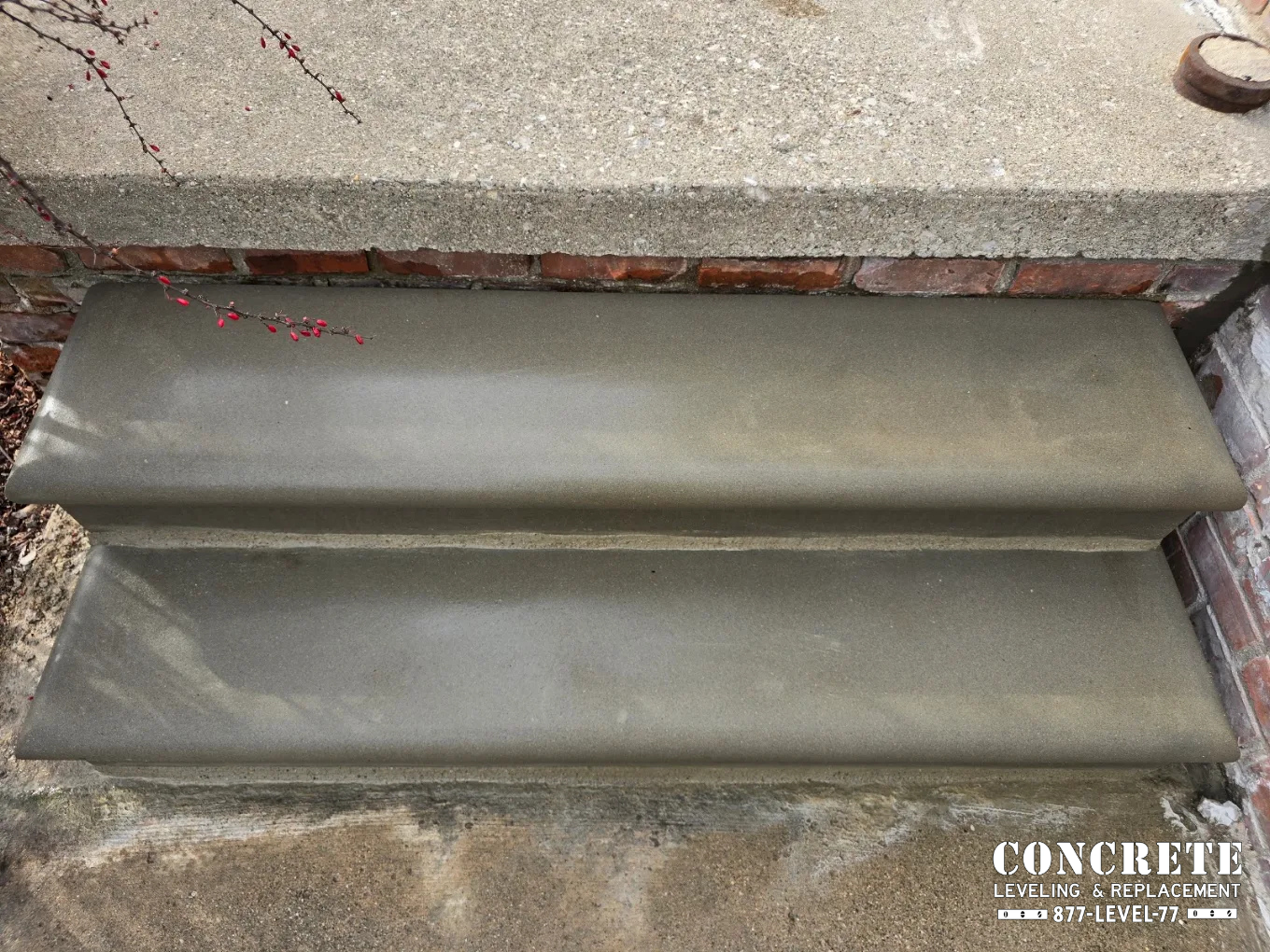
Yes. A professionally repaired entry can look dramatically better, especially when the concrete is leveled and the surface is stabilized. While color differences may remain in some cases, the overall appearance and function usually improve significantly.
How long does step repair take?
Many step repair projects can be completed much faster than a full replacement. The exact timeline depends on the amount of settling, the repair method used, and the condition of the surrounding concrete. A professional assessment will give you a more accurate schedule.
What if my front steps are part of a larger concrete issue?
That is common. Problems at the entrance may be tied to the driveway, walkway, porch, or adjacent slab areas. In those cases, a broader repair plan can save time and help create a more consistent result across the property.
Restore Your Front Entrance With Confidence
A damaged front step does not have to define your home’s appearance or safety. With the right professional repair, you can restore a smoother, cleaner, and more welcoming entrance while protecting the concrete you already have. The key is acting before small movement becomes major deterioration.
At Concrete Leveling & Replacement, we focus on honest evaluations, practical solutions, and long-lasting results. If your front entrance is cracked, sinking, or uneven, contact our team to talk through your options and learn whether repair, leveling, or replacement is the smartest next step. A better-looking, safer front entrance may be closer than you think.
Learn more or request help through our website at Concrete Leveling & Replacement or call (734) 895-3820 for service in Michigan.