Broken curbs aren't just an eyesore along your parking lot or roadway. They give off a vibe that you might be ignoring maintenance, overlooking safety, or letting small issues snowball into bigger ones. For customers, tenants, vendors, and employees, the state of your curb line often shapes their first impression before they even step inside.
That’s why fixing concrete issues matters. When property owners invest in smart fixes like curb and gutter repair, they’re not just boosting appearance. They're also protecting drainage, cutting down on trip hazards, and extending the life of the surrounding concrete. Often, repairing a damaged curb is much smarter than waiting until the damage spreads to sidewalks, drive lanes, or landscaped areas.
At Concrete Leveling & Replacement, we've noticed how quickly a neglected edge can impact an entire property. This guide dives into why broken curbs make businesses seem neglected, what causes the damage, when repairs are the smart move, and how professional concrete solutions can bring back both function and curb appeal. We'll also touch on repair methods, maintenance strategies, and key warning signs that property managers should never ignore.
Why Broken Curbs Hurt a Business Image
First impressions start at the property line
People notice concrete edges before they even realize it. A chipped curb, a settled section, or a broken gutter line can make a property feel older, less cared for, and less inviting. Even if your building interior is spotless, the outside environment sets expectations long before a visitor opens the door.
This is especially true for commercial sites that depend on confidence, professionalism, and traffic flow. Retail centers, office parks, medical facilities, warehouses, and apartment complexes all benefit from a neat, well-kept exterior. A clean curb line shows that the owner pays attention to details, which can influence how tenants, partners, and customers view the whole operation.
Small defects suggest bigger maintenance problems
A single cracked or crumbling curb might seem minor, but it often gives the impression that other issues are also being ignored. If the edges are failing, visitors might assume drainage is poor, pavement is unstable, or repairs are overdue elsewhere. That perception can affect leasing decisions, vendor confidence, and even customer trust.
According to the National Park Service’s overview of concrete deterioration, exposure to water, freeze-thaw cycles, and movement beneath the slab can all contribute to visible damage. While that article isn't about commercial curbs specifically, the underlying principles are the same: when concrete starts to break down, the problem usually doesn't stay isolated for long.
Curb damage can affect traffic and safety perceptions
Damaged curbs can also make drivers and pedestrians feel uneasy. Delivery trucks may struggle to align properly, snow removal equipment might catch on uneven edges, and people walking across the property might worry about tripping or stumbling. Even if no one has been injured yet, the visible condition of the curb influences how safe the site feels.
For businesses that get frequent visitors, that perception matters just as much as actual performance. A neglected edge sends the wrong message, while a repaired and level curb line reinforces order, care, and professionalism.
What Causes Curbs to Break Down?
Drainage and water infiltration
Water is one of the biggest threats to concrete. When drainage patterns direct runoff toward the curb line instead of away from it, moisture can seep into cracks and joints. Over time, that water can erode the supporting base material, weaken the concrete, and accelerate surface failure.
This is why businesses should pay attention to nearby slopes, downspouts, catch basin performance, and surface runoff patterns. If water is repeatedly pooling near a curb or washing soil away from its edge, the concrete is likely under stress. In some cases, related drainage solutions like catch basin repair may be needed to help protect the curb system from further damage.
Soil erosion and settling underneath the slab
When the supporting soil shifts, the concrete above it can crack, settle, or break away. This is especially common where compaction was poor, where underground voids formed, or where repeated water movement has carried fine material away from beneath the slab. Once support is lost, even a thick curb section can deteriorate quickly.
In commercial settings, heavy vehicles, seasonal changes, and constant use can speed up this process. The problem often starts out of sight, which is why an early inspection is so valuable. If the subgrade is unstable, the visible curb damage may only be the first clue.
Freeze-thaw cycles and seasonal stress
In climates with winter freezing, concrete is exposed to repeated expansion and contraction. Water enters cracks, freezes, expands, and widens the damage. Once spring arrives, melting water penetrates deeper and the cycle repeats. Over time, this freeze-thaw action can chip away at the curb edge and weaken the surrounding structure.
The Federal Highway Administration explains how moisture and temperature swings affect concrete durability. While curb systems are smaller than roads and highways, they face the same environmental pressures. Commercial property owners in Michigan should consider winter weather one of the main reasons curb damage spreads faster than expected.
Vehicle impact and repeated loading
Curbs in commercial lots take a surprising amount of abuse. Delivery vehicles, snow plows, maintenance equipment, and careless parking can all create impact damage. Even repeated low-speed contact can chip corners, break away sections, or loosen nearby material.
Once an edge is compromised, the damaged area may continue to crumble under normal traffic. That’s why repairs should be handled promptly, before small chips become major structural loss.
Why Professional Repair Is Better Than Cosmetic Patching
Surface patching doesn't solve structural issues
It can be tempting to cover curb damage with a quick patch and move on. While that may improve appearance temporarily, it often fails to address the underlying problem. If the soil beneath the concrete is unstable or water is still getting under the slab, the damage will return.
Professional concrete repair looks beyond the surface. A qualified crew evaluates whether the issue is caused by settlement, drainage, deterioration, or impact damage. That means the repair plan is based on what the property actually needs rather than a one-size-fits-all fix. For broader concrete concerns on the site, services like concrete leveling can also help restore adjacent surfaces that have shifted or settled.
Better results for safety and appearance
A professional repair restores a cleaner edge, but it also helps improve the function of the curb line. That may include reestablishing proper grade, rebuilding a damaged section, or addressing nearby settlement so the repaired area lasts longer. The result is a more polished property with fewer hazards for people and vehicles.
This is especially important for businesses that want to project reliability. A neat, even curb can make a surprisingly large difference in how the entire site looks from the street. It can also reduce complaints from tenants and visitors who notice unsafe or unsightly conditions.
Long-term value compared with repeated temporary fixes
Temporary fixes often cost more in the long run because they require repeated labor and don't stop the damage from spreading. Professional repair is usually more efficient because it targets the cause, not just the symptom. That approach helps preserve the existing concrete and can delay the need for larger replacement work.
For business owners balancing budgets, that matters. It’s often easier to plan one durable repair than to keep responding to recurring failures. Honest evaluation and practical recommendations are especially valuable when a property manager needs a straightforward answer about repair versus replacement.
Signs Your Curbs Need Attention Now
Visible cracking and edge breakup
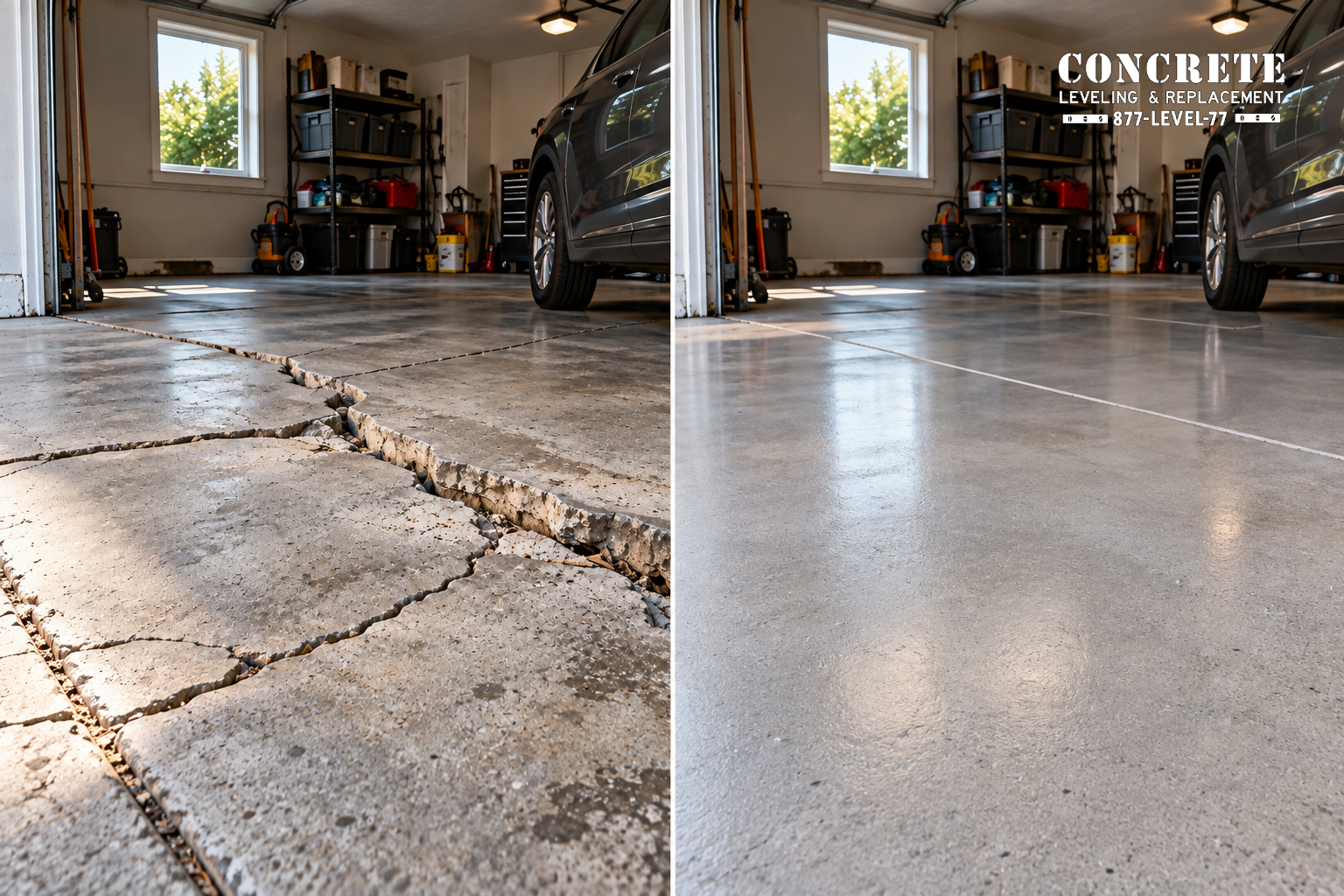
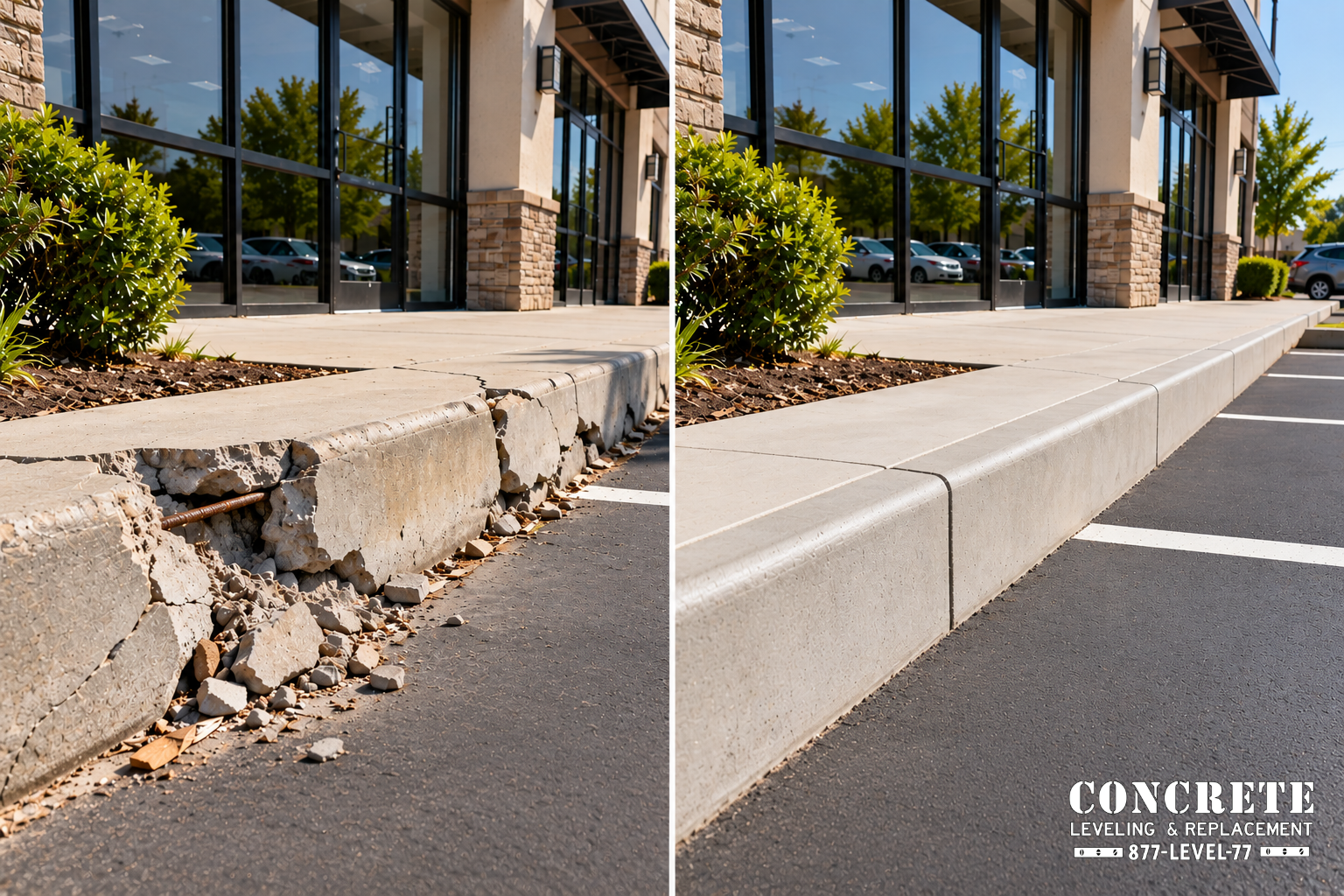
The most obvious sign is visible cracking along the curb face or top edge. You may also notice chunks missing, exposed aggregate, or flaking material that worsens over time. These defects often indicate that the concrete is no longer holding together as a solid unit.
If the damage is localized, repair may still be possible without replacing the entire section. But if the curb is breaking apart in multiple places, an evaluation should happen soon. The longer the material deteriorates, the more surrounding areas may be affected.
Uneven transitions and settled sections
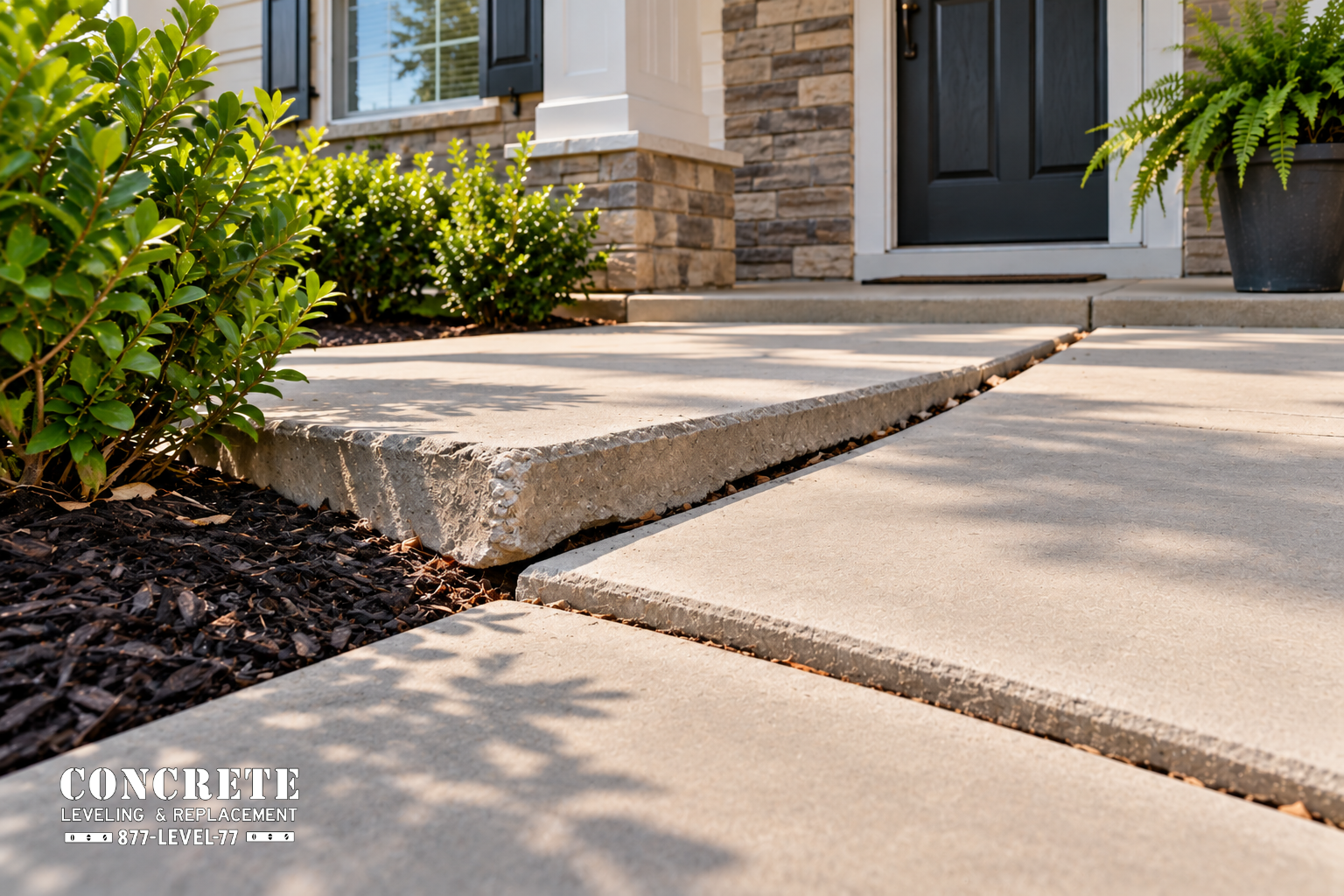
Sometimes the curb doesn’t look broken at first glance, but the height is no longer even. One section may dip, tilt, or sit lower than the rest. This is often a sign that the base beneath it has shifted or compacted.
Uneven transitions can create problems for both drainage and accessibility. Water may no longer flow where it should, and pedestrians or vehicles may encounter abrupt changes in grade. If other nearby concrete surfaces are also moving, concrete driveway repair or sidewalk correction may be needed to restore a safe and coherent exterior layout.
Ponding water and soil washout
Water pooling near curbs should never be ignored. Standing water can soften soil, speed up erosion, and leave the concrete without support. When puddles collect after routine rainfall, there’s usually an underlying drainage issue that needs attention.
Likewise, if soil or mulch is washing away from the edge, that may mean runoff is too concentrated in that area. A repair plan may need to include drainage correction so the curb can stay stable after the concrete work is finished.
Complaints from staff, tenants, or customers
Sometimes the first warning sign isn’t visual at all. People may mention rough driving conditions, awkward transitions, or a tripping concern near the curb. These comments are worth taking seriously because they often point to a condition that’s already affecting day-to-day use.
For businesses, internal feedback can be one of the best early indicators of a developing concrete issue. If multiple people are noticing the same problem, an inspection is likely overdue.
How Professional Concrete Repairs Restore a Neglected Exterior
Site evaluation and cause diagnosis
The repair process should begin with a careful evaluation of the curb, surrounding pavement, and drainage conditions. A good contractor looks for soil movement, cracking patterns, water flow, and adjacent structural issues before recommending a solution. That step matters because the right repair depends on understanding what caused the failure in the first place.
At Concrete Leveling & Replacement, our crews are trained to give honest evaluations rather than unnecessary upsells. We focus on practical solutions that restore usability and extend the life of existing concrete. That approach is especially helpful when a property has multiple areas of concern, such as a damaged curb, uneven apron, or settling slab nearby.
Repair methods that address the problem
Depending on the condition of the curb, the solution may involve rebuilding damaged concrete sections, correcting settlement, or improving the support beneath the slab. In some situations, related concrete elements can be stabilized with lifting methods so the repaired curb line works together with the surrounding surfaces.
For example, if the curb damage is connected to a sunken entry or parking area, pairing the project with sidewalk repair or another adjacent fix can create a more seamless and durable result. The goal is not just to make the damage look better, but to restore the entire area as a functional system.
Appearance improvements that support branding
Business owners sometimes underestimate how much a repaired curb improves branding. A tidy, crisp edge communicates order and professionalism just as clearly as fresh landscaping or clean signage. For customer-facing sites, that can have a real effect on the overall impression of quality.
Even industrial properties benefit from a better exterior. While the aesthetic standard may be different, clean, level, and safe surfaces help reinforce a message of reliability and operational discipline. In short, concrete repair supports both image and performance.
When Repair Is Enough and When Replacement Makes More Sense
Repair is often the best choice for isolated damage
If the curb damage is limited to a small or moderate area and the surrounding slab remains stable, repair is often the most efficient solution. This can save money, reduce downtime, and preserve the parts of the structure that are still performing well. It also helps avoid the disruption of a larger tear-out when that level of work is not necessary.
Many properties don't need a full replacement. They need the right repair at the right time. That’s why experienced contractors evaluate the whole site rather than jumping to the biggest project possible.
Replacement may be needed for severe deterioration
If the curb is extensively broken, structurally compromised, or tied to widespread base failure, replacement may be the smarter option. This is especially true when multiple sections are failing or when the concrete has reached the end of its service life. In those cases, patching would only delay an inevitable larger repair.
The best contractors explain this clearly. They should be able to show why a repair is sufficient or why replacement would provide better value over time. That kind of honest guidance helps owners make decisions with confidence.
How to weigh cost, downtime, and long-term performance
When deciding between repair and replacement, property owners should consider more than the upfront price. They should also think about traffic disruption, future maintenance, safety risk, and how long the solution is likely to last. Sometimes a slightly larger project offers much better value because it prevents repeat failures.
Industry research from the Portland Cement Association emphasizes the importance of durability, proper support, and moisture management in concrete performance. That principle applies directly to business curbs: long-term value comes from solving the underlying issue, not just hiding it.
Maintenance Tips to Keep Curb Damage from Returning
Improve drainage around the property
Drainage is one of the most important factors in curb longevity. Keep gutters, downspouts, and surface runoff systems directed away from vulnerable concrete areas whenever possible. If water routinely collects along the curb, the issue should be corrected before the next season brings more damage.
In some properties, repair work on the curb should be paired with drainage improvements so the same problem doesn't come back. That may include basin adjustment, grading correction, or fixing nearby concrete surfaces that are sending water in the wrong direction.
Inspect after winter and heavy rain
Seasonal inspections can catch new damage early. After freeze-thaw cycles or major storms, walk the property and look for spalling, cracking, soil washout, or settlement. Early detection gives you more options and usually leads to less expensive work.
This habit is especially useful for properties with high traffic or older concrete. A short inspection routine can reveal small issues before they affect customer safety or create a more visible maintenance problem.
Address nearby concrete issues before they spread
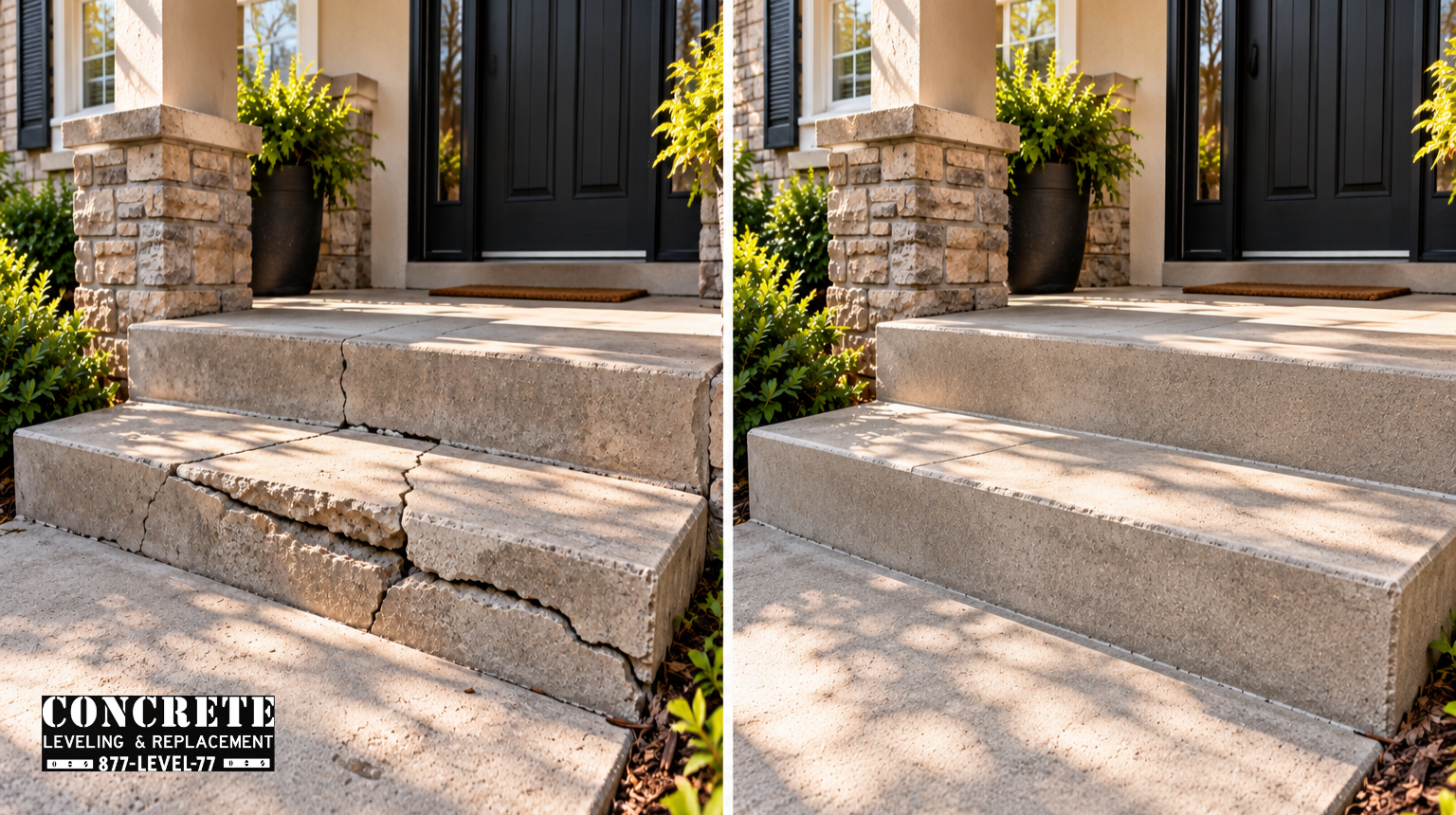
Curbs often fail alongside other surfaces. If the sidewalk, porch, driveway, or parking area is also showing movement, those issues should be addressed together whenever possible. Coordinated repairs help stabilize the property as a whole and reduce the chance that one failing section will affect another.
For example, if your curb damage is tied to a broader exterior settlement problem, services such as concrete floor repair or other slab corrections may be part of a complete solution. Taking a comprehensive view often produces the most durable results.
Frequently Asked Questions About Broken Curbs
Can broken curbs really affect business perception that much?
Yes. People often judge a property within seconds, and visible concrete damage is one of the easiest details to notice. Even when the issue seems small, it can create an impression that the property is not being maintained carefully.
Do all damaged curbs need replacement?
No. Many curbs can be repaired if the damage is localized and the surrounding structure is still stable. A professional inspection is the best way to determine whether repair or replacement makes more sense.
Is curb repair disruptive to daily business operations?
It depends on the scope of the work, but many repairs can be completed with limited disruption. Planning the project carefully and working with an experienced contractor can help minimize downtime and preserve access where possible.
How do I know if drainage is contributing to curb damage?
Look for pooling water, soil washout, staining, or repeated cracking in the same spot. If these signs appear after rain or snowmelt, drainage may be part of the problem and should be evaluated along with the concrete itself.
Make a Better First Impression With Expert Concrete Repair
Broken curbs may seem like a small detail, but they can have a big effect on how your business looks, feels, and functions. A damaged curb line can suggest neglect, reduce safety, and allow larger concrete problems to develop over time. The good news is that professional repair can often restore both appearance and performance without the cost and disruption of full replacement.
If you want your property to look cared for and operate more safely, start with an honest evaluation of the damage. Our team at Concrete Leveling & Replacement can help you determine whether repair, leveling, or replacement is the right answer for your site. We serve commercial and residential properties across Michigan, and we bring practical experience to every project we inspect.
For property owners looking to improve exterior safety and image, now is the time to act. Learn more about our curb and gutter repair services, explore our service area, or contact us today at (734) 895-3820 to request an estimate. A cleaner curb line can make a stronger impression than you might expect.