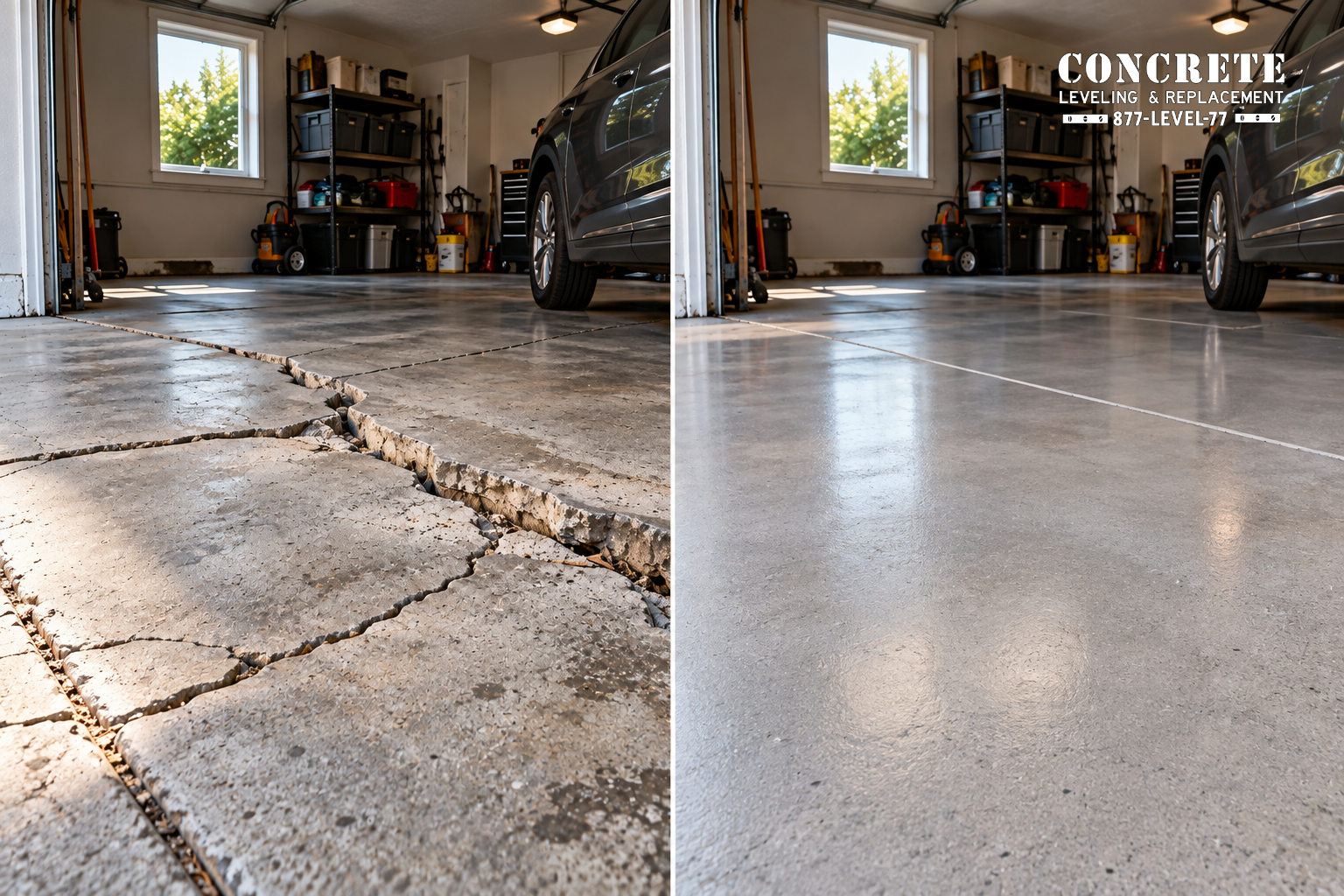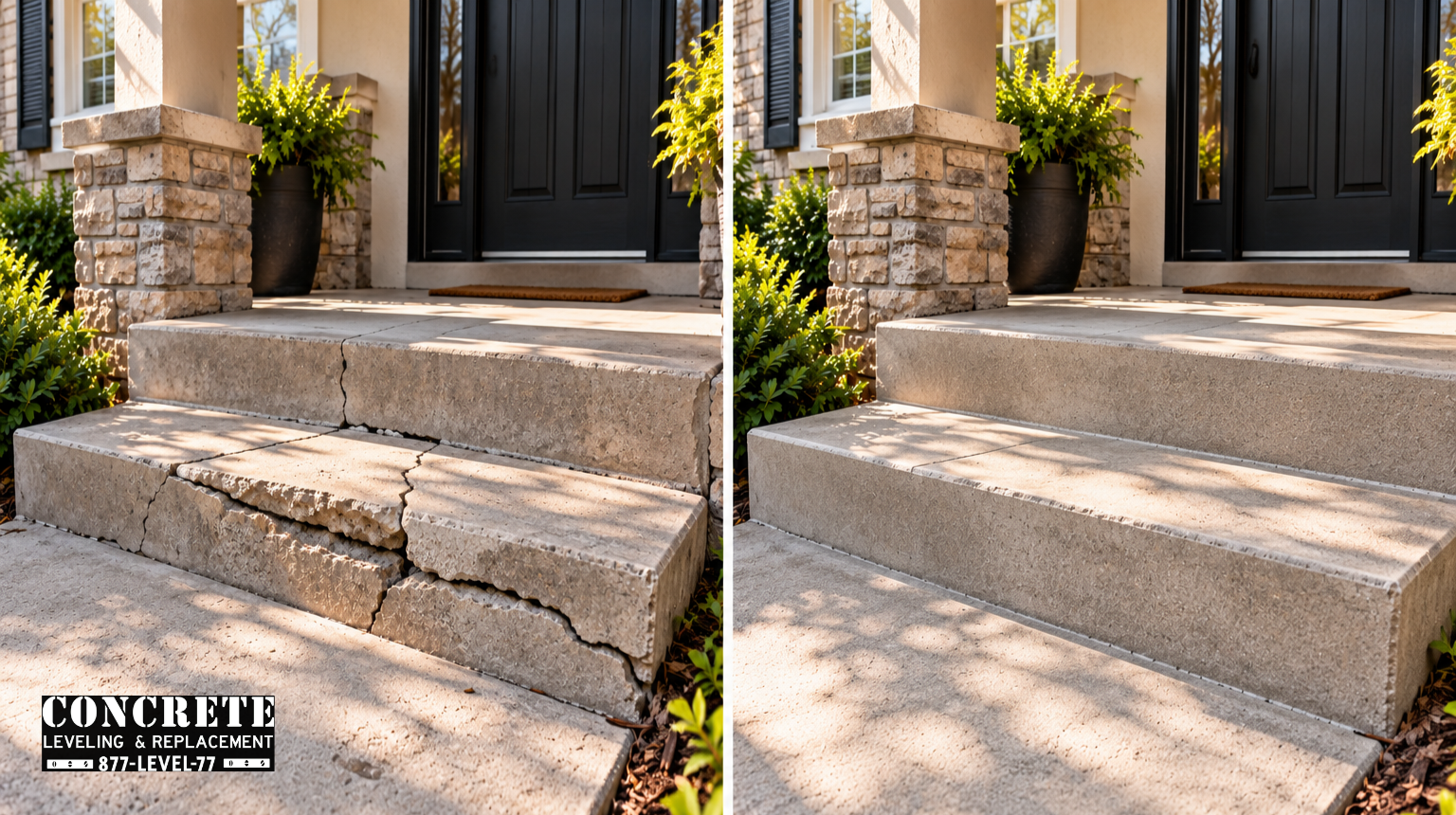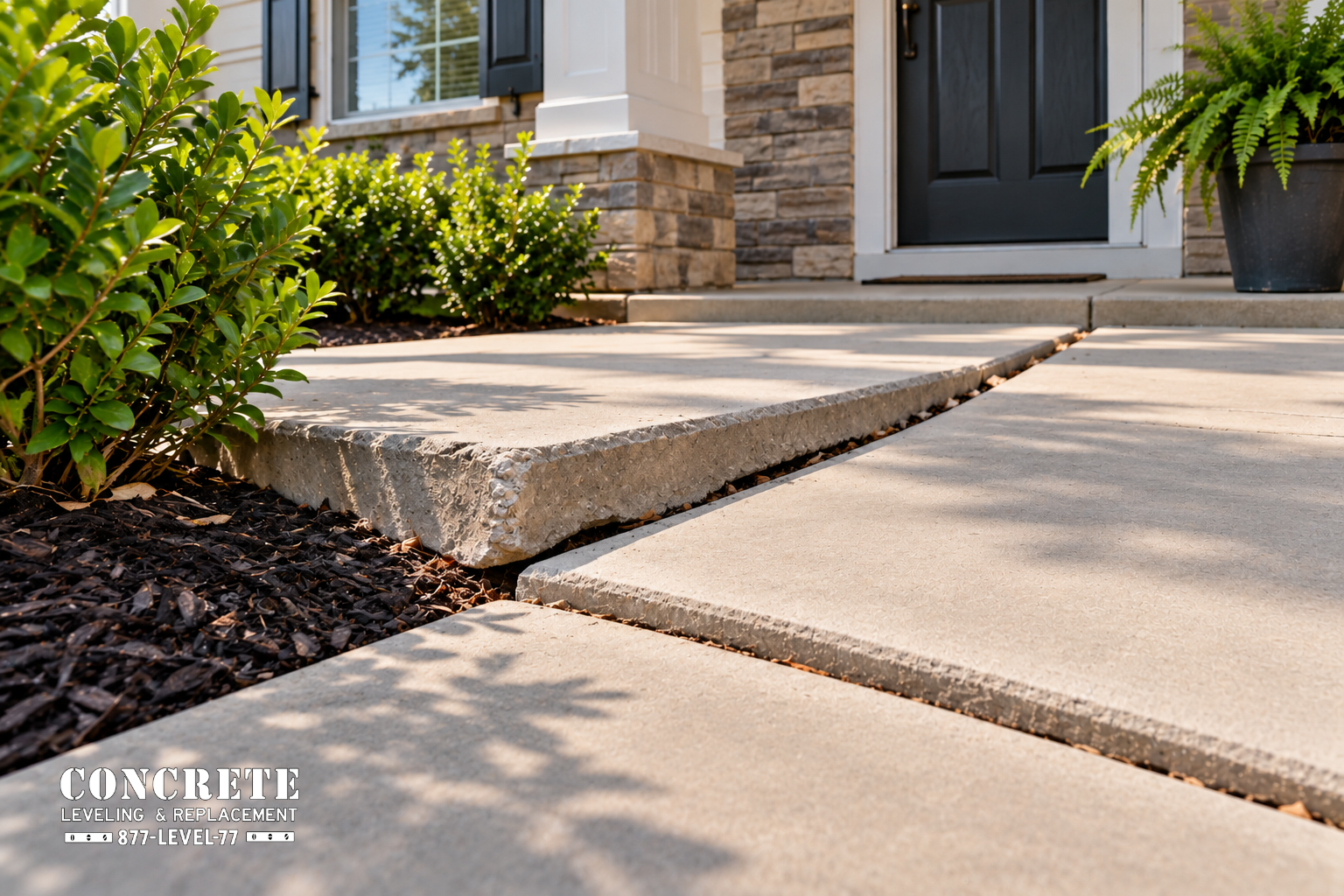
Uneven concrete doesn’t just happen overnight. In many homes, the first signs are subtle: a tiny crack near the edge of the driveway, a slightly tilted porch slab, or a sidewalk panel that’s just a bit lower than its neighbor. These small changes might not seem like a big deal, but they often hint at bigger issues lurking below. Spotting these warning signs early can help you avoid larger repairs, enhance safety, and protect your property’s value.
This guide dives into what causes concrete to shift, how to catch the earliest warning signs, and when it’s smart to consider solutions like concrete leveling, sidewalk repair, or concrete driveway repair. For more on how soil movement affects structures, check out resources from the U.S. Geological Survey and University Extension programs that explain how things like moisture and freeze-thaw cycles impact surface stability.
Why Uneven Concrete Is More Than a Cosmetic Issue
Small shifts can signal a larger failure beneath the slab
Concrete is tough, but it relies on stable soil support. When the soil underneath settles, erodes, or expands unevenly, the slab loses support and starts to move. This can show up as sinking corners, lifted edges, or separated joints. What starts as a gentle slope can eventually lead to trip hazards, drainage problems, or cracks that spread.
Many homeowners think a slightly uneven slab is just a visual problem, but it often grows over time. Water can pool against the slab, seep into cracks, and make surrounding soil conditions worse. In colder climates, that water can freeze and expand, making the problem even more noticeable from season to season. Over time, the issue can affect attached structures, nearby steps, and water flow across the property.
Safety, drainage, and property value are all affected
Uneven surfaces can be dangerous. A raised sidewalk panel can trip someone. A sunken driveway section can jolt vehicles. A porch slab with a dropped edge can make entry and exit less secure, especially in wet or icy weather. Often, the hazard grows slowly enough that property owners get used to it without realizing how dangerous it has become.
There’s also the issue of drainage. Water should flow away from the home, not collect beside it. When concrete changes slope, runoff patterns change too. This can increase moisture near the foundation, encourage erosion, and lead to repeated freeze-thaw damage. From a resale perspective, visible concrete damage can make a property look poorly maintained, even if the rest of the home is in good shape.
Common Causes of Uneven Concrete Around the Home
Soil settlement and erosion
One common reason concrete becomes uneven is soil settlement. The ground beneath the slab can compress naturally over time, especially if it wasn’t compacted properly during installation. Heavy rain, poor drainage, and utility leaks can also wash away supporting soil, leaving empty pockets beneath the concrete. Once support is lost, the slab starts moving toward the void.
Soil erosion is especially common along driveways, sidewalks, patios, and areas where water concentrates. Downspouts that discharge too close to the slab, poor grading around the home, and recurring runoff can all contribute. If you see sinking concrete near outdoor walkways, it might be time to review your drainage patterns and consider services like patio repair or porch repair to tackle the issue before it spreads.
Freeze-thaw cycles and seasonal movement
Seasonal weather changes are another big factor. When water enters the soil or a crack and freezes, it expands. When it thaws, the space shifts again. This repeated cycle is tough on concrete and the supporting soil beneath it. Over several winters, the slab may lift in one area and settle in another, creating uneven joints and visible separation.
The effects aren’t limited to northern climates. Any region with temperature swings and recurring moisture can see freeze-thaw stress. According to NIST, temperature-related movement affects many building materials, and concrete is no exception. The good news is that early inspection and proper leveling can often fix the problem before it gets worse.
Poor drainage and improper grading
Drainage issues often keep concrete problems coming back. If the ground slopes toward the home or if water collects near the slab, moisture gradually weakens the base. Over time, the slab may shift, crack, or sink. Proper grading should move water away from the house and concrete surfaces, not toward them.
Homeowners sometimes focus on patching the visible crack without fixing the water problem that caused it. That approach can work temporarily, but it rarely solves the root issue. A thorough inspection should always consider runoff patterns, gutter discharge, soil slope, and how nearby hardscapes interact with the home.
Warning Signs You Should Not Ignore
Cracks that widen or keep returning
Not every crack means a slab is failing, but cracks that grow wider, reappear after repair, or run across multiple sections should be taken seriously. A crack may be the first sign that the slab is shifting because the base beneath it is no longer stable. If the crack lines up with a low spot or a lifted edge, the issue is likely structural rather than cosmetic.
Cracks also create pathways for water. Once moisture enters the slab, it can freeze, soften soil, or widen the damage. It’s important to evaluate the entire area instead of sealing a single line and hoping the problem stops there. In some cases, combining leveling with targeted interior floor repair or concrete floor repair may be the right approach if the movement affects indoor slab areas as well.
Trip edges and height differences between slabs
One of the clearest warning signs is a height difference between adjacent panels. Even a small lift or drop can create a tripping hazard, especially for children, older adults, or anyone carrying items in and out of the home. This is common on front walks, back patios, garage entries, and the path to a side door.
If you can feel the difference while walking across it, the problem is usually significant enough to warrant inspection. Height changes often indicate soil settlement on one side of the slab or heaving on the other. Either way, the movement is rarely random. It usually points to an underlying condition that should be addressed before the surface becomes more difficult and expensive to correct.
Pooling water and recurring drainage issues
Standing water is a major red flag. If water collects on or near a slab after rain, the concrete may no longer have the proper slope. That ponding can speed up surface deterioration, encourage algae growth, and keep the ground below the slab wet for too long. Moist soil loses strength and becomes more vulnerable to movement.
When this happens near a driveway or walkway, the issue may also affect surrounding areas. For example, a small dip near a garage can turn into a broader driveway issue, especially if vehicle weight repeatedly passes over the weakened section. In these cases, a service like concrete leveling can restore the proper surface profile without replacing the entire slab.
How to Inspect Your Concrete Like a Pro
Look for slope changes and separation points.
A simple visual inspection can reveal a lot. Walk around your property and look for places where one slab edge sits higher than another, where joints have widened, or where cracks seem to follow the same direction as a dip. Check places near downspouts, irrigation lines, and areas where water naturally runs after storms.
You can also place a long level or straight board across the slab to better understand the slope. If the tool rocks or reveals a noticeable dip, that’s worth noting. Homeowners don’t need special equipment to spot early warning signs, but having a consistent method makes it easier to compare changes over time.
Check doors, steps, and nearby structures.
Concrete movement often shows up in surrounding features before it becomes obvious in the slab itself. Doors may begin sticking, steps may separate from a landing, or gaps may appear where the slab meets a garage floor or porch. These are signs that the movement is affecting more than the surface.
If you notice problems around steps or entryways, it may be smart to look into step repair early. Step movement can create immediate safety issues because people expect entry points to be level and stable. A small adjustment today can prevent a much larger repair later.
Document changes over time
Taking photos every few months can help you understand whether a problem is changing. Compare the gap in a crack, the height of a slab edge, or the direction of water flow after a storm. This record is useful whether you plan to repair the issue yourself or bring in a professional for an evaluation.
Documentation also helps separate a one-time cosmetic issue from a pattern of ongoing settlement. If the slab has been moving slowly over several seasons, that’s a strong clue that the soil beneath it is active and should be corrected rather than covered up.
Repair Options and When Each One Makes Sense
Concrete leveling for settled slabs
When concrete has sunk because of voids or weak support, leveling is often the most practical solution. This approach lifts the slab back toward its proper height and restores a more even surface. It’s usually faster and less disruptive than full replacement, especially when the concrete itself is still in decent condition.
Leveling is a smart choice when the slab is structurally sound but has dropped due to soil movement. It works well for driveways, sidewalks, garage floors, porches, patios, and other surfaces where the main issue is loss of support. If you’re dealing with a broader pattern of settlement, concrete driveway repair may be the best way to combine leveling with surface correction and joint restoration.
Repair versus replacement
Not every slab can be saved. If concrete is severely broken, badly deteriorated, or missing large sections, replacement may be more appropriate. The right choice depends on the size of the damage, the slab’s age, and whether the base can be stabilized. A trustworthy inspection should explain why one option is better than the other instead of pushing the most expensive fix.
For many property owners, repair is the preferred first step because it protects existing concrete and solves the immediate hazard. Replacement makes more sense when the surface has reached the end of its service life or when the damage is too advanced to restore effectively. A detailed evaluation should balance safety, long-term performance, and cost.
Matching the repair to the problem
The best repair strategy depends on what caused the movement in the first place. A slab that sank because of erosion may need better drainage in addition to leveling. A porch that shifted due to poor support may need structural correction. A floor that cracked because of interior settlement may need a different approach than an exterior sidewalk.
That’s why a proper assessment matters. The goal isn’t just to make the surface look flatter; it’s to address the reason it moved. By identifying the root cause, you can reduce the chance that the same issue will return in a few months or after the next heavy rain.
Why Early Action Saves Money and Stress
Stopping damage before it spreads
Concrete problems rarely stay isolated. A small sink near the garage can affect a driveway panel, which can affect runoff, which can then affect the foundation perimeter. The longer the slab remains uneven, the more likely surrounding surfaces are to respond to the same movement. Early action helps keep the problem from spreading.
It’s also easier to correct a moderate issue than a severe one. A slab with a slight dip is often simpler to lift and stabilize than one that has cracked in multiple directions or broken away from adjacent sections. Homeowners who address the issue sooner usually save themselves from larger disruptions later.
Protecting accessibility and curb appeal
Even if a slab isn’t dramatically damaged, it can still affect how people experience the property. Visitors notice unsteady walkways, rough edges, and poor transitions between surfaces. For families with children, elderly relatives, or frequent guests, a level approach to entrances and outdoor areas is part of everyday comfort and safety.
Curb appeal matters too. A clean, even surface gives a property a more cared-for appearance. If you’re planning to sell, or simply want the home to look well maintained, repairing uneven concrete is one of the most practical updates you can make. It improves function first, but the visual payoff is often immediate.
What Makes a Reliable Concrete Repair Assessment
An honest look at the cause, not just the symptom
A reliable assessment should explain what’s happening under the slab and why it’s happening. That includes checking for soil washout, drainage concerns, joint separation, and signs of repeated movement. If a contractor only looks at the visible crack without considering the base, the diagnosis may be incomplete.
At Concrete Leveling & Replacement, we focus on practical solutions backed by over 25 years of experience in leveling and more than 20 years in replacement work. Because our technicians are not paid commission, recommendations are based on what the property actually needs. That kind of evaluation matters when the difference between repair and replacement can affect both cost and long-term results.
Local experience makes a difference.
Concrete movement is influenced by local conditions, including soil type, rainfall patterns, and seasonal temperature swings. A team that works in the region regularly is more likely to understand common problem areas and recurring causes. That’s especially helpful when troubleshooting issues around walkways, garage slabs, and entry points that see regular use.
For property owners looking for dependable service across the area, our crews travel without added costs and can evaluate the situation based on the conditions of your site. If you’re comparing options, learning more about our counties we serve page can help you understand where we work and how we approach concrete problems across Michigan.
How to prepare for an inspection
Before an evaluation, make a quick list of what you’ve noticed: where the slab is uneven, when you first saw it, whether water pools in the area, and whether the problem seems to get worse after rain or winter weather. This information helps the inspection go faster and often leads to a better diagnosis. Photos, notes, and measurements are especially useful if the issue has changed over time.
You should also think about nearby features that may be related, such as gutters, downspouts, retaining edges, or utility access points. Concrete problems are often connected to the surrounding landscape, so a complete picture gives the clearest path forward.
Frequently Asked Questions About Uneven Concrete
Can small cracks be ignored?
Small cracks aren’t always an emergency, but they shouldn’t be dismissed if they’re growing, spreading, or appearing alongside sinking sections. The key is to watch for change. A stable hairline crack may just need monitoring, while a crack that widens or allows water intrusion may need immediate attention.
Is leveling better than replacing?
Leveling is often the better option when the concrete is structurally sound and the main issue is settlement. Replacement is more appropriate when the slab is severely deteriorated, broken beyond repair, or no longer worth restoring. A professional assessment can help you choose the most practical path.
How quickly should I act?
As soon as you notice a change in slope, a new trip edge, or recurring drainage issues, it’s smart to start evaluating the problem. You don’t necessarily need emergency work for every issue, but waiting usually makes the repair more complicated. Early action gives you more options and often lowers total cost.
Conclusion: Treat Small Changes as Early Warnings
Uneven concrete is often the first visible sign of a bigger issue below the surface. Soil settlement, drainage problems, seasonal movement, and erosion can all change the shape of a slab long before it fails completely. By learning what to look for, you can catch the warning signs early and choose a solution that restores safety and stability.
If you’ve noticed sinking, cracks, or trip hazards around your home, don’t assume the problem will stop on its own. A professional evaluation can help determine whether leveling, repair, or replacement is the right answer. For homeowners who want honest recommendations and practical solutions, the team at Concrete Leveling & Replacement is ready to help you protect your property and extend the life of your concrete surfaces.
Ready to take the next step? Call (734) 895-3820 or email sales@concretelevelingpro.com to request an inspection and get clear answers about your uneven concrete.