Notice Cracks or Uneven Front Steps? Don't Wait to Fix Them
Your front steps are often the first thing people see when they visit your home or business. But they can also become a real safety issue if left unattended. A small crack, a sunken spot, or even a tilted step can turn into a tripping hazard, especially in rain, snow, or low light. If you see any movement, widening cracks, or gaps, it's a sign things are getting worse, not better. It's smart to tackle these problems early with professional step repair before they spread.
Sometimes, problems with front steps aren't just on the surface. They can signal deeper issues like soil settling, drainage problems, or erosion around the foundation. The good news? You don't always need to demolish and rebuild. Depending on the problem, leveling or repairing might fix things at a lower cost. This guide will help you understand what's happening, what signs to watch for, and what to do.
In Michigan, weather and soil can make concrete move more than you'd expect. Freeze-thaw cycles, heavy rain, and moisture changes put stress on slabs. That's why inspections matter. If your steps are sinking along with walkways or driveways, consider sidewalk repair or concrete driveway repair to protect the whole entry area.
The U.S. Consumer Product Safety Commission reports that falls are a major cause of injury, making trip hazards more than just a cosmetic issue. Check out the CDC's fall prevention resources for more safety tips. Even a small movement in a step can change how someone lands, so even minor damage deserves attention.
Why Front Steps Crack, Sink, or Become Uneven
Soil Settlement Under the Steps
Uneven steps often start with soil settling under the concrete. Over time, soil can compact, wash away, or shift with moisture changes, leaving gaps beneath the concrete. When the support disappears, the concrete can drop, tilt, or separate from surfaces. This can happen slowly, so you might not notice until it's obvious.
Settlement is common where water drains toward the steps or downspouts discharge nearby. If water keeps softening the soil, the base weakens. In these cases, concrete leveling might fix things without a full replacement.
Freeze-Thaw and Moisture Issues
Michigan winters are tough on concrete. Water in small cracks expands when frozen, pushing the concrete apart. This can turn a hairline crack into a bigger problem. Repeated freeze-thaw cycles weaken the surface over time.
Moisture isn't just a surface issue. Water reaching the base can erode support materials, creating hollow spots. Addressing drainage can be as crucial as repairing the concrete.
Poor Installation or Aging Construction
Sometimes, the problem lies in how the steps were installed. If the base wasn't compacted properly or if drainage wasn't considered, issues can appear years later. Aging concrete naturally becomes more prone to cracking.
Older steps might have had patch repairs that didn't address underlying causes. A proper evaluation can determine if leveling, patching, or a full rebuild is needed.
Warning Signs You Shouldn't Ignore
Visible Cracks and Widening Gaps
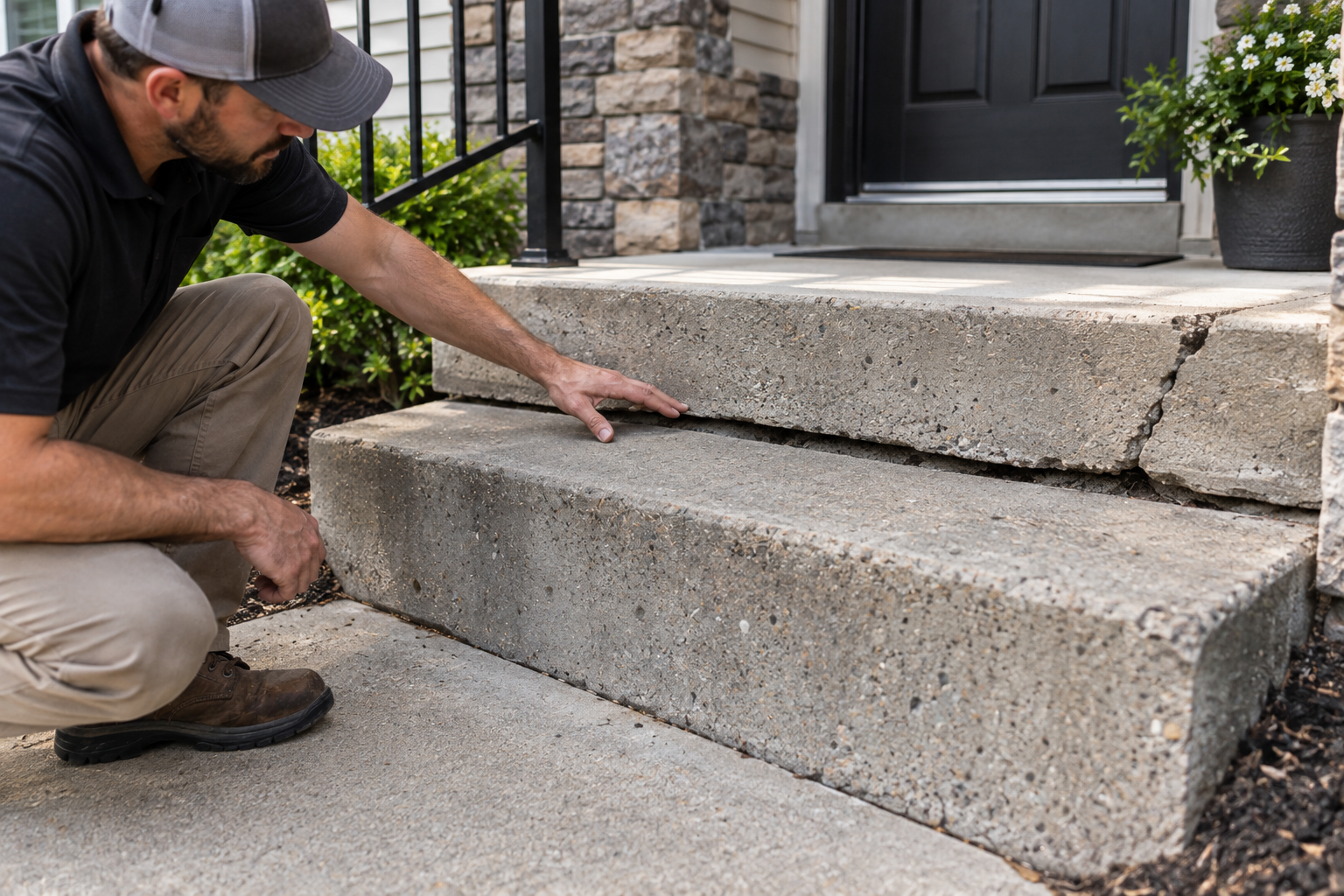
Cracks are often the first sign of trouble, but their size and pattern matter. Hairline cracks may be normal, but diagonal cracks or breaks near the edge suggest movement below. If cracks grow, the issue might still be active. It's better to inspect now than face a bigger hazard later.
Watch for gaps where steps meet porches or walkways. Separation can mean steps have shifted away from other surfaces. Water can enter and worsen damage. If nearby slabs are moving, porch repair might restore stability.
Uneven Step Height
Even a small crack can cause uneven steps, which is risky. People expect consistent step heights. A sunken step can disrupt walking and cause stumbles, especially for kids, older adults, or those carrying items. Winter adds more risk with slippery surfaces.
Building codes emphasize consistent step dimensions because inconsistency leads to missteps. Check the U.S. Access Board for safety standards. Even if your steps don't need to meet public requirements, the principle is the same: predictable steps are safer than unexpected changes.
Stains, Sinking, and Edge Damage
Subtle signs like water stains or rust marks can indicate moisture or movement issues. If a step seems lower on one side or if edges chip away, the concrete might be losing support. These can be symptoms of bigger structural issues.
A hollow sound when tapping the step can also signal voids beneath. It doesn't mean immediate replacement is needed but does call for quick evaluation. Early action offers more repair options and can lower costs.
How Professional Step Repair Works
Inspection and Diagnosis
Repairs start with a thorough check of the step, slab, and nearby drainage. A good contractor looks beyond the visible crack to identify the root cause, whether it's settlement, erosion, or poor grading. Fixing symptoms without fixing the source often leads to repeat issues.
At Concrete Leveling & Replacement, recommendations focus on what your property truly needs, not just sales. Inspections aim for safety and value. If the issue affects surrounding areas, they might suggest related repairs like concrete floor repair for overall stability.
Leveling, Lifting, and Stabilization
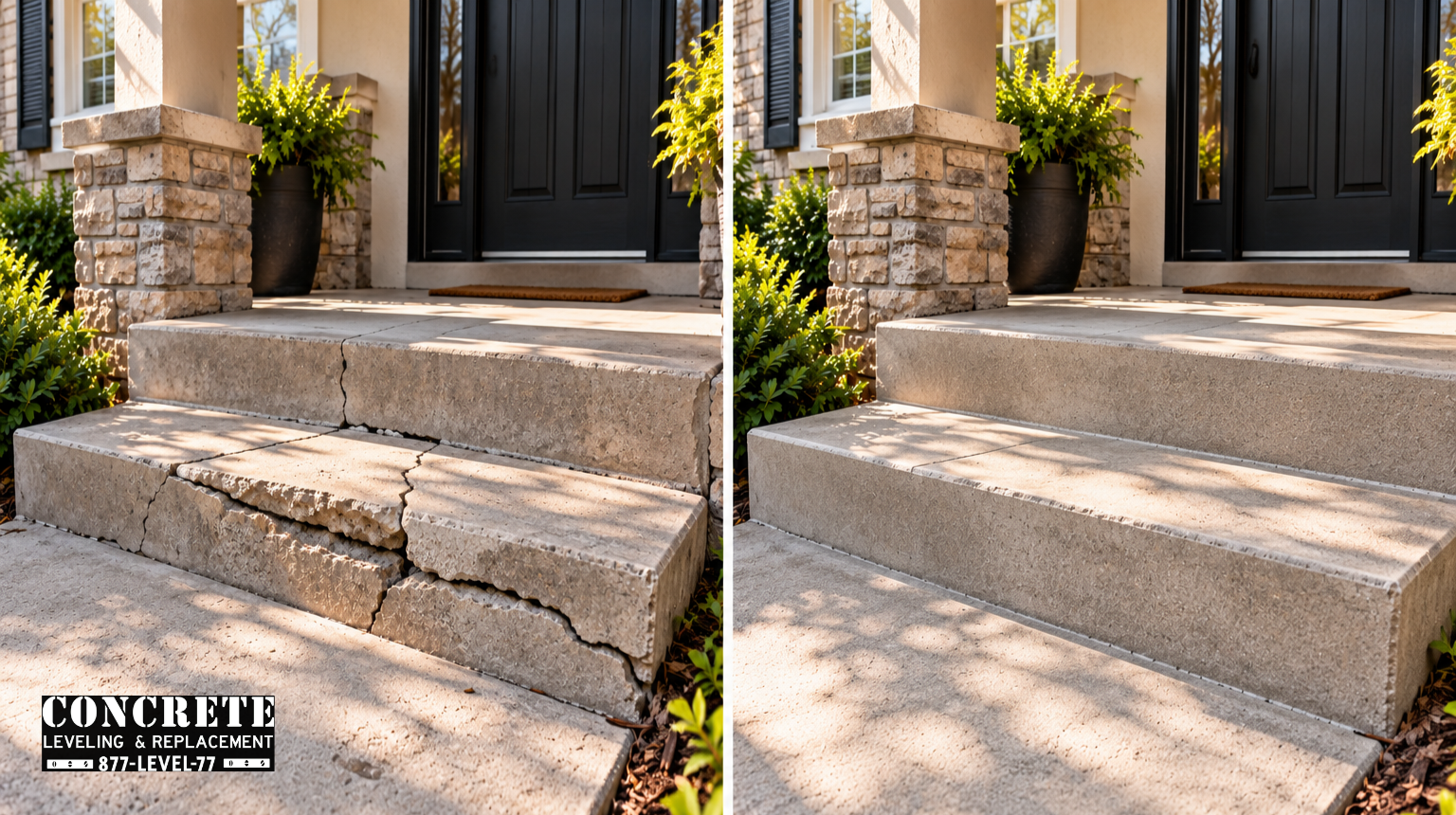
If settlement is the issue, leveling might be the best fix. Materials fill voids and restore proper step positioning. This reduces trip hazards, improves entry appearance, and extends concrete life, often faster and less invasive than full replacement.
If the concrete is structurally sound, preserving it is wise. This approach cuts demolition debris, shortens downtime, and lets you return to normal use faster. The goal is a safe, stable entryway that works through the seasons.
When Replacement Makes Sense
Sometimes, repair isn't the best option. If steps are severely cracked, broken, or missing support, replacement might be better. This is true if concrete has multiple failure points or past repairs have failed. A new pour can restore strength and appearance.
Replacement decisions should be based on actual condition, not assumptions. A thorough evaluation helps decide if a step can be saved or if a rebuild is smarter. If replacement is needed, consider nearby surfaces like patio repair for a cohesive approach.
Why Early Repair Saves Money and Stress
Preventing Bigger Structural Damage
Step problems rarely stay isolated. Water, soil shifts, or widening cracks can spread damage to nearby slabs and surfaces. Early action often reduces project scope and protects the rest of the property.
Early repair also prevents recurring issues. Correcting steps before they become unstable reduces cracking, edge collapse, or separation. This means less stress and fewer surprises later. A small investment now can prevent larger repairs later.
Avoiding Injury Liability
A trip hazard isn't just a maintenance issue; it can lead to liability concerns. Visitors, delivery drivers, and tenants all use the entrance, and a fall can lead to medical bills or disputes. The more obvious the hazard, the harder it is to delay action. Repairing steps shows you took reasonable steps to ensure safety.
For businesses, this is even more important due to unpredictable foot traffic. Keeping entryways stable supports safety and professionalism. A well-maintained exterior reflects positively on the business.
Reducing Seasonal Repair Cycles
Repairing steps early often means fewer repeat fixes. Small cracks sealed before they widen hold up better because they aren't exposed to water. The same goes for raised slabs before voids get larger. Timely maintenance interrupts deterioration cycles.
This is crucial in climates with temperature swings. The longer a crack stays open, the more damage it suffers. Early repairs preserve existing concrete, often the most cost-effective strategy available.
What Homeowners Should Do Right Now
Document the Problem
Take photos of your front steps from different angles and note changes over time. Capture crack width, height differences, and gaps where steps meet porches or walkways. Note any standing water, drainage issues, or seasonal changes. These details help contractors understand the problem.
Even simple observations like "the left side is lower than last month" or "water pools at the base after rain" can point to causes. This info guides inspections and speeds up repair recommendations. It also creates a useful before-and-after reference.
Keep the Area Safe Until Repaired
If steps are already a trip hazard, consider temporary safety measures. Use caution tape, improve lighting, or limit access until repairs are done. In winter, clear snow and ice carefully but avoid aggressive chiseling that worsens cracks. A visible warning is better than assuming everyone sees the issue.
For businesses or multi-unit sites, alert tenants or staff about the hazard. Even a simple notice can prevent injuries while waiting for service. Make the entrance as safe as possible until permanent repairs are complete.
Schedule a Professional Inspection
Guessing only goes so far. A professional inspection can determine if steps need leveling, patching, repair, or replacement. Concrete Leveling & Replacement serves residential and commercial properties across Michigan, evaluating steps in the context of the whole entry system. This often leads to smarter, longer-lasting solutions.
If you're in our service area, check the counties we serve for coverage details. A quick inspection now can prevent bigger issues later and give you a clear repair plan.
Common Questions About Cracked or Uneven Front Steps
Can Cracked Steps Be Repaired Without Replacement?
Yes, many cracked or uneven steps can be repaired without full replacement, especially if the concrete is still solid. Leveling, sealing, patching, and stabilization may restore safety and function. The right fix depends on the damage and its cause, making professional assessment important.
How Do I Know If a Step Is a Safety Hazard?
If a step has height differences, loose edges, visible movement, or spreading cracks, treat it as a hazard. Any surface that makes walking unpredictable needs attention. If you wouldn't walk on it in the dark or while carrying groceries, it probably needs service soon.
What If the Crack Keeps Coming Back?
Repeated cracking usually means the root cause isn't fixed. Drainage, soil movement, and weak support can cause recurring cracks. A complete repair strategy may include leveling, better water management, or section replacement.
Protect Your Entryway Before Damage Gets Worse
Front steps should make your property safer, not be a hazard. If your concrete is cracked, uneven, or sinking, fix it before someone gets hurt or the damage spreads. The right repair can boost safety, curb appeal, and extend concrete life. Whether your steps need leveling, repair, or replacement, act before problems grow.
Concrete Leveling & Replacement offers honest evaluations and practical solutions, backed by over 25 years of concrete leveling and 20 years of replacement experience. If your steps are showing signs of movement, call us at (734) 895-3820 or visit Concrete Leveling & Replacement for an estimate. A safer entryway starts with one inspection, and fixing the problem now is easier than explaining a fall later.
For more planning and maintenance help, explore options like catch basin repair if drainage is part of the issue. With proper water management and stable concrete, your front steps can stay safe and level for years.