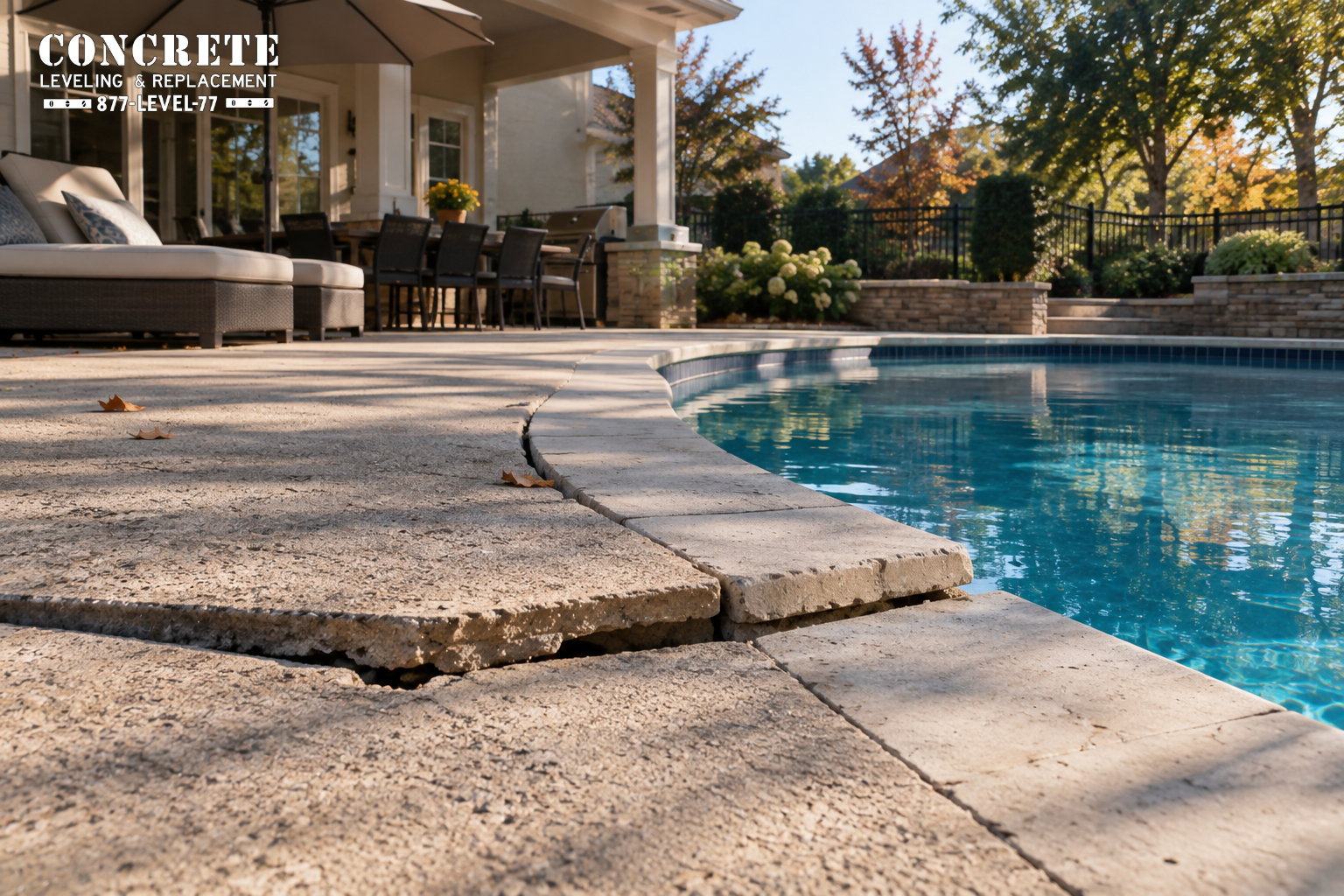
Noticing your concrete floor sinking can be worrying, but it doesn’t always mean you need to rip everything out and start from scratch. Often, the slab itself is still solid, and the real issue lies underneath with things like soil voids or water erosion. Catching these problems early means you can often solve them with concrete leveling or targeted repairs, saving you the hassle and cost of a full replacement.
Full replacement is usually the priciest choice and not always necessary. A detailed check can show if the concrete has just settled a bit, if a joint has failed, or if only a small section needs fixing. If you own property and want a practical solution, the first step is figuring out why the concrete is sinking. Whether it's a floor, driveway, patio, or walkway, a good inspection can help you avoid spending more than you need to.
Why Do Concrete Floors Sink?
Soil Settling Under the Slab
Concrete only stays level if the ground below is stable. If the soil wasn’t compacted properly when first laid down, or if it shifts over time, the concrete can lose its support and start to settle. This often happens in areas with clay soil, changing moisture levels, or freeze-thaw cycles. When the base moves, the concrete follows, creating dips and uneven spots that become obvious once the floor isn’t level anymore.
Water Is Often the Sneaky Culprit
Drainage issues are another big reason for sinking concrete. Water pooling near a slab can wash away the soil that supports it, creating voids under the surface. The U.S. Geological Survey notes that changes in soil moisture can greatly affect ground stability, which explains why concrete often shifts after heavy rain. If water drains toward the slab instead of away, the problem will likely get worse unless fixed.
Cracks and Failed Joints Speed Up Damage
When part of a slab drops, stress builds around cracks and joints, making nearby concrete more prone to movement. Sometimes, a small edge failure turns into a larger dip because the slab no longer spreads weight evenly. That’s why early attention is crucial: a small problem now can grow into a big structural issue if ignored.
When You Might Not Need Full Replacement
The Slab Is Uneven but Not Badly Broken
If your concrete is sinking but not heavily cracked, you might not need to replace it. Many slabs stay in good shape on top even when they settle below. Hairline cracks or slight joint separation don’t automatically mean failure. These issues often signal a support problem, not a material one, meaning the slab can sometimes be lifted and stabilized instead of removed.
The Damage Is in One Spot
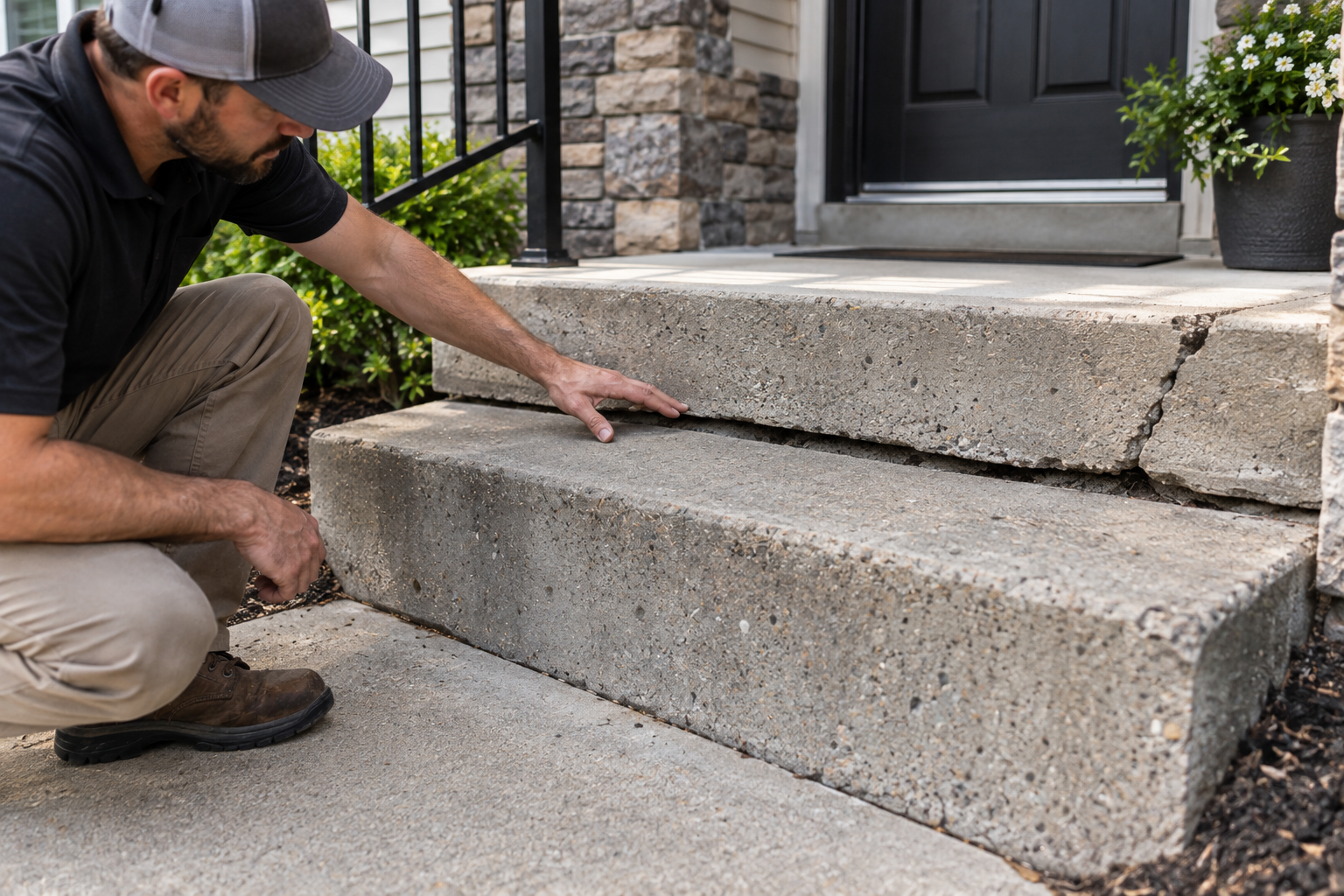
If only one part of a floor has sunk, targeted repair could be the smarter move. This often happens near entries, garage corners, porch edges, and slabs close to downspouts or landscaping. If the rest of the slab is solid, a full replacement would be overkill. A skilled technician can compare the affected area with the surrounding concrete to decide if repair, leveling, or partial replacement is best.
The Slab Still Has a Good Overall Structure
A slab might show some wear but still be strong enough to repair. That’s why an honest inspection matters. Our team at Concrete Leveling & Replacement checks if the problem is from settling, drainage, or surface wear before recommending a solution. Our technicians aren’t paid commission, so we aim to suggest what your property truly needs, not the most expensive option.
Repair Options to Save the Slab
Concrete Leveling for Settled Surfaces
Concrete leveling is a great way to fix a sunken slab. It works by filling the void beneath the concrete, bringing the surface back to its rightful spot. Depending on the situation, pros might use mudjacking or polyurethane foam injection to stabilize the slab. Want to see this in action? Our concrete floor repair and interior floor repair services tackle the kind of settling that causes uneven surfaces in homes and businesses.
Fixing Drainage and Stabilizing Soil
Repairing the slab is just part of the fix if the ground keeps shifting. That’s why improving drainage often goes hand in hand with leveling. Redirecting runoff, extending downspouts, regrading soil, and sealing water entry points can make a big difference in long-term performance. The Federal Emergency Management Agency offers guidance on flood and drainage resilience, highlighting how crucial site water management is. In concrete repair, keeping water away helps ensure the slab doesn’t sink again.
Partial Repair Instead of Full Replacement
Sometimes, only a section of the slab needs removal and replacement, especially if one part has broken beyond repair while the rest is stable. Partial replacement can be a practical middle ground when leveling isn’t enough. It’s often cheaper than replacing an entire floor, and it can be paired with leveling nearby areas for a smooth transition. The key is matching the repair to the slab’s actual condition, not just the visible symptoms.
When Replacement Is the Right Move
Severe Cracking and Structural Failure
Not every sinking floor can be saved. If the slab is badly cracked, crumbling, or in unstable pieces, replacement might be the safest bet. A slab that’s lost too much integrity may not be reliable even if lifted. In those cases, forcing a repair could cause more harm than good. That’s why a professional inspection is so important: it separates repairable settlement from a true slab failure.
Repeated Repairs Haven’t Worked
If a slab has been repaired multiple times and still moves, a deeper issue might be at play. Persistent water issues, expansive soil, or ongoing drainage failures can make repairs less effective over time. If the supporting system under the slab can’t be stabilized, replacement might be the more lasting solution. Even then, a good contractor should explain why the slab failed and what needs changing to avoid a repeat issue.
Damage to the Whole Floor System
In some buildings, the concrete is just part of the problem. If the floor system faces widespread settling, failed control joints, or structural issues, replacement might offer better long-term value. This is more common in busy commercial or industrial spaces with significant traffic and weight loads. For industrial properties, specialized factory floor repair can sometimes address the problem without total replacement, but only if the slab condition allows.
What to Expect from a Professional Inspection
Measuring Slope and Elevation Changes
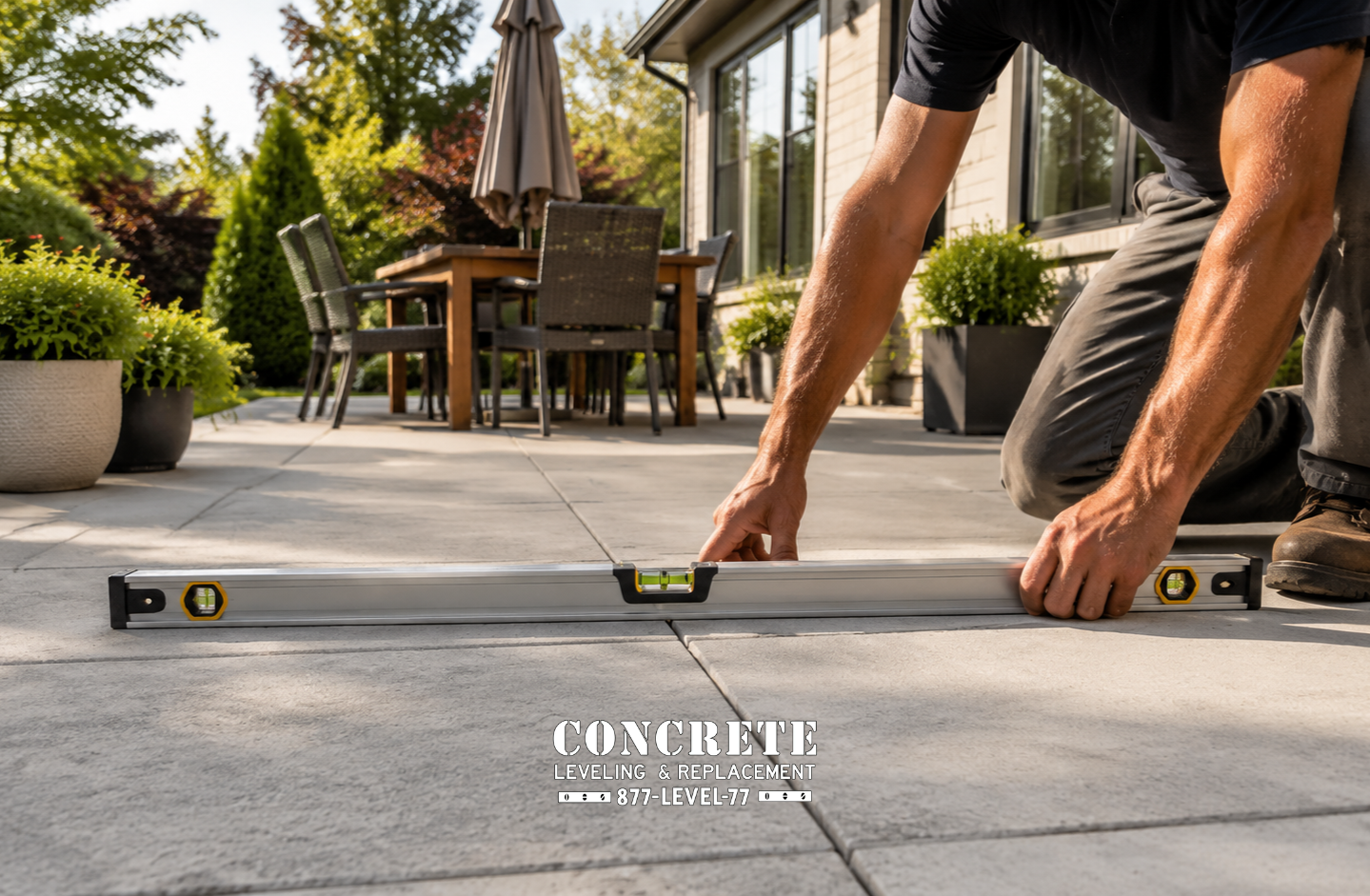
An evaluation starts by measuring how much the slab has moved and where. Technicians look for high and low points, step-offs, joint separation, and visible cracks. These measurements help decide if the issue is minor settling or a larger structural concern, guiding whether leveling, repair, or replacement makes the most sense.
Checking the Surrounding Site Conditions
The slab shouldn’t be evaluated in a vacuum. The ground around it, nearby drainage patterns, landscaping, and adjacent concrete all tell an important story. For instance, a sinking garage floor might be linked to runoff from the driveway, while a patio problem could be due to poor grading around the home. If outdoor areas are also affected, our patio repair and concrete driveway repair services can help address the broader system, not just one symptom.
Looking for Signs of Moisture and Soil Movement
Moisture is a clear clue in any sinking concrete case. Damp spots, erosion channels, stained edges, or water pooling near the slab often point to the source of movement. Soil that’s washed out from beneath a slab may leave telltale gaps and hollow sounds when tapped. Experts also pay attention to seasonal changes, because a floor shifting in spring may behave differently in summer or winter depending on the moisture level below.
Why Acting Early Saves Money
Smaller Repairs Are Usually Less Disruptive
The sooner you tackle a sinking floor, the more options you have. Early repair often means less concrete removal, quicker installation, and lower costs. It also reduces the chance of the problem spreading to nearby slabs, walls, or entry points. For homeowners, this means avoiding major disruption. For business owners, it means less downtime and fewer interruptions.
Waiting Often Makes the Problem Costlier
If settlement continues, the slab can crack more, become a trip hazard, and stress nearby structures. Over time, the repair can shift from a simple leveling job to a more involved reconstruction project. That’s why it’s wise to investigate early, even if the slab looks only slightly uneven. If you’re unsure whether the issue is getting worse, check out our article on why early concrete repair saves money to understand how minor settlement turns into a bigger expense.
Safety Risks Shouldn’t Be Ignored
Uneven concrete isn’t just a cosmetic issue. It can create tripping hazards, make equipment harder to move, and cause drainage to flow in the wrong direction. In public or commercial spaces, this can quickly become a liability. The Occupational Safety and Health Administration stresses the importance of keeping walking and working surfaces safe, which aligns with maintaining level concrete in occupied spaces. Fixing the slab promptly helps protect the people who use it every day.
How We Approach the Problem
Honest Recommendations, No Sales Pressure
We offer practical solutions. With over 25 years in concrete leveling and mudjacking, and more than 20 years in concrete replacement, we know the right answer isn’t always the most dramatic one. Sometimes leveling is best. Sometimes a small repair. Sometimes replacement is truly needed. The point is to match the solution to the slab's actual condition.
Local Crews Mean Efficient Service
Our crews are based throughout Michigan, allowing us to serve homeowners and commercial clients in Wayne, Oakland, Macomb, and Washtenaw counties without extra costs. If you want to check if we cover your area, visit our counties we serve page for an overview of the communities we support. That local reach matters when a sinking slab can’t wait.
Solutions for Both Residential and Commercial Properties
Sinking concrete can happen anywhere, from a residential basement floor to a commercial walkway or industrial facility. That’s why our services include sidewalk repair, concrete floor repair, and catch basin repair. Each service tackles a different source of settlement or surface instability. The common goal is simple: restore function without overspending on work you don’t need.
Real-World Example: Repair Versus Replacement
When Leveling Solved the Problem
Take a garage floor where one corner had sunk about an inch because water washed away the support soil near the edge. The slab had a few hairline cracks but was mostly intact. After checking, the issue was due to poor drainage at the entrance. Leveling the corner, improving drainage, and sealing the joint fixed the problem without replacing the whole floor.
When Partial Replacement Was Better
Now consider a commercial entry slab where one section was in unstable fragments after years of vehicle traffic and freeze-thaw exposure. Lifting the slab wouldn’t have restored integrity because the concrete was beyond practical repair. A partial replacement in the damaged section, along with stabilization in adjacent panels, gave a safer and longer-lasting result. This shows why a site-specific evaluation matters.
What Property Owners Should Take Away
The takeaway is that sinking concrete isn’t always a replacement job. It’s a condition needing investigation. A qualified contractor should explain what failed, why it failed, and which solution offers the best value over time. This approach protects your budget and helps extend the life of the concrete you already have.
Frequently Asked Questions About Sinking Concrete Floors
Can a Sinking Slab Always Be Lifted?
No. Most settled slabs can be leveled if the concrete is still structurally sound, but badly broken or deteriorated slabs may need replacement. The condition of the slab, the amount of movement, and the cause of the settlement all matter. An inspection is the only reliable way to know which option is appropriate.
Will the Problem Come Back After Repair?
It can if the underlying cause isn’t addressed. That’s why drainage, grading, and soil conditions are so important. A good repair plan should fix both the visible issue and the movement source whenever possible. If water management improves and the slab is stabilized, the repair is more likely to last.
How Do I Know if I Need Emergency Service?
If the floor has become a trip hazard, is separating from nearby structures, or is affecting doors, equipment, or traffic flow, you should seek an inspection soon. Rapid movement, large cracks, or obvious voids beneath the slab are warning signs. If the concrete is in a busy walkway or workplace, prompt attention is even more important.
Is Repair Always Cheaper Than Replacement?
Usually, but not always. The best value depends on the scope of damage, the age of the concrete, and whether the slab can be stabilized. A low-cost repair that fails quickly isn’t a true savings. A smart evaluation looks at long-term performance, not just the initial price tag.
Don't Wait for Damage to Spread
If your concrete floor is sinking, don’t assume replacement is your only option. Often, the slab can be leveled, stabilized, or partially repaired at a practical cost. The key is acting early and getting a clear professional assessment before the problem worsens. Whether the issue is in a garage, basement, commercial entry, or outdoor slab, the right plan can restore safety and save the concrete you already own.
At Concrete Leveling & Replacement, we take a straightforward approach to concrete repair. We look at the cause, explain your options, and recommend what makes the most sense for your property. If you want honest guidance on a sinking floor in Romulus or nearby Michigan areas, call (734) 895-3820 or email sales@concretelevelingpro.com to schedule an evaluation. You can also explore related solutions like garage floor repair or porch repair if the problem is affecting other parts of your property.