How Weather Can Mess with Your Concrete: A Simple Guide
Concrete is meant to be tough, but weather can be a sneaky culprit in causing damage. From moisture getting in and freeze-thaw cycles to the sun's rays and shifting soil, these elements can slowly weaken your driveways, sidewalks, patios, foundations, and more. Knowing how weather impacts concrete helps you make better choices for keeping it in good shape and avoiding costly repairs down the line.
This guide will walk you through the usual weather-related issues, the latest ways to protect your concrete, and some handy tips to make it last longer. It also covers practical repair advice for property owners who want to keep things safe and valuable. If your surfaces start to settle, crack, or shift, check out our concrete leveling services and driveway repair options.
Weather damage isn't just about looks. Small cracks can widen, water can seep in, and temperature changes can turn minor wear into major issues. The U.S. Department of Energy notes that freeze-thaw conditions can cause materials to expand and contract, speeding up damage when moisture is around. This makes concrete maintenance crucial in colder climates. Learn more about freeze-thaw effects from the U.S. Department of Energy.
Why Weather Takes a Toll on Concrete
Concrete is strong, but it breathes
Concrete feels solid, yet it has tiny pores that let water and contaminants seep in over time. In winter, when moisture inside freezes, it expands, creating pressure that leads to cracks or even chunks breaking off. Even without freezing, the cycle of getting wet and drying out slowly wears down the surface.
Temperature swings cause stress
Concrete expands in the heat and contracts when it cools. While this movement is normal, over time, it can stress joints, edges, and weak spots. If the slab wasn't properly installed, cured, or reinforced, you might see uneven sections, cracks, or seam separation. That's why good curing techniques are vital early on.
Soil movement adds to the problem
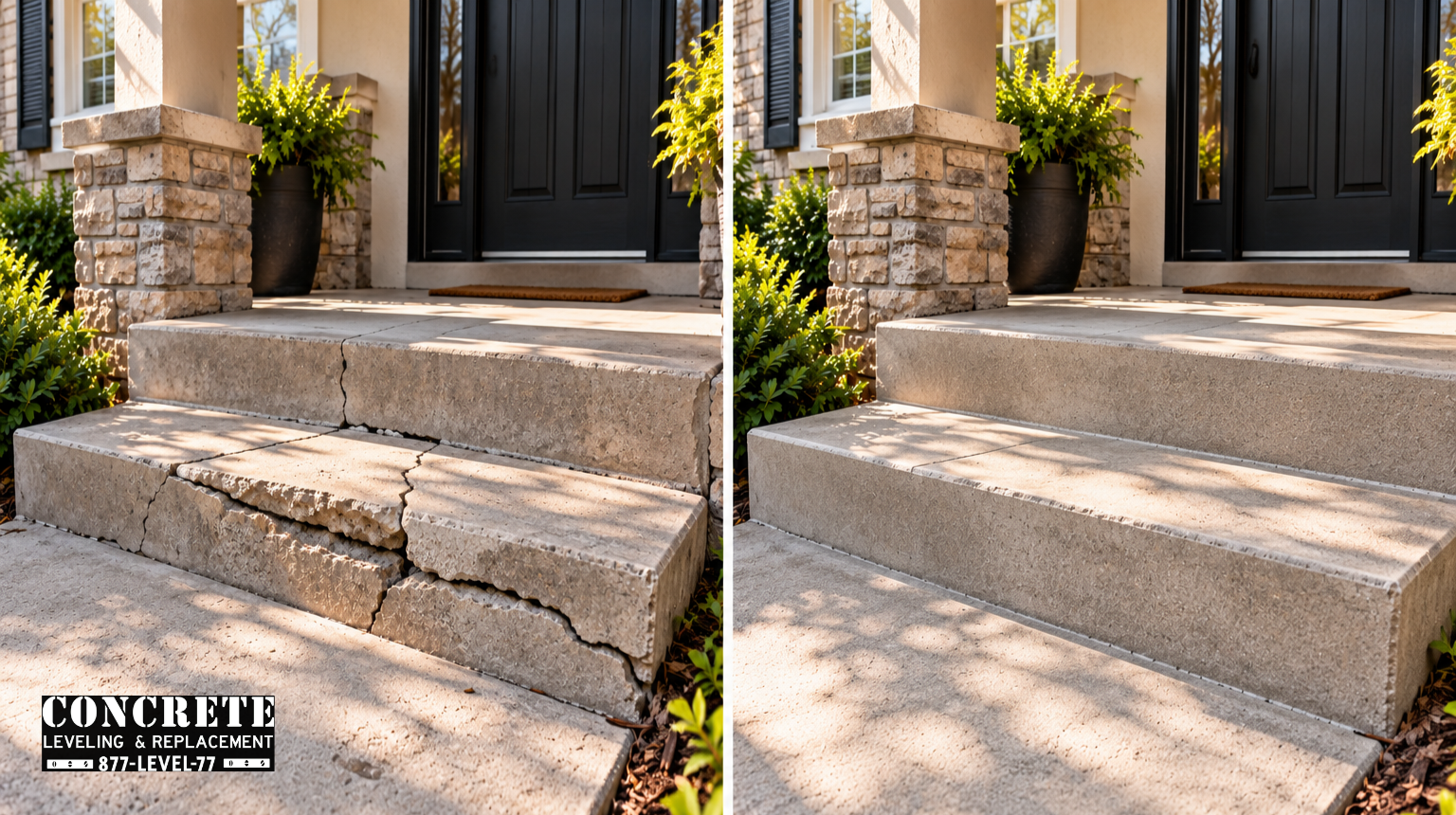
Weather impacts more than just the concrete slab. Heavy rain can soften the soil and wash away its support, while drought can shrink the soil and create gaps. This shifting ground can cause the slab to settle, tilt, or become unsafe. If you're noticing sunken slabs or trip hazards, our sidewalk repair and porch repair services can help restore safe, even surfaces.
How Rain, Snow, and Moisture Harm Concrete
Water intrusion starts the breakdown
Moisture is a common culprit in concrete deterioration. Water can sneak into small cracks, joints, and surface pores, then freeze or carry in salts and chemicals that speed up wear. Over time, this can lead to flaking, staining, and gradual surface material loss. A simple crack now might turn into a repair project next season if water keeps getting in.
Freeze-thaw cycles are especially harsh
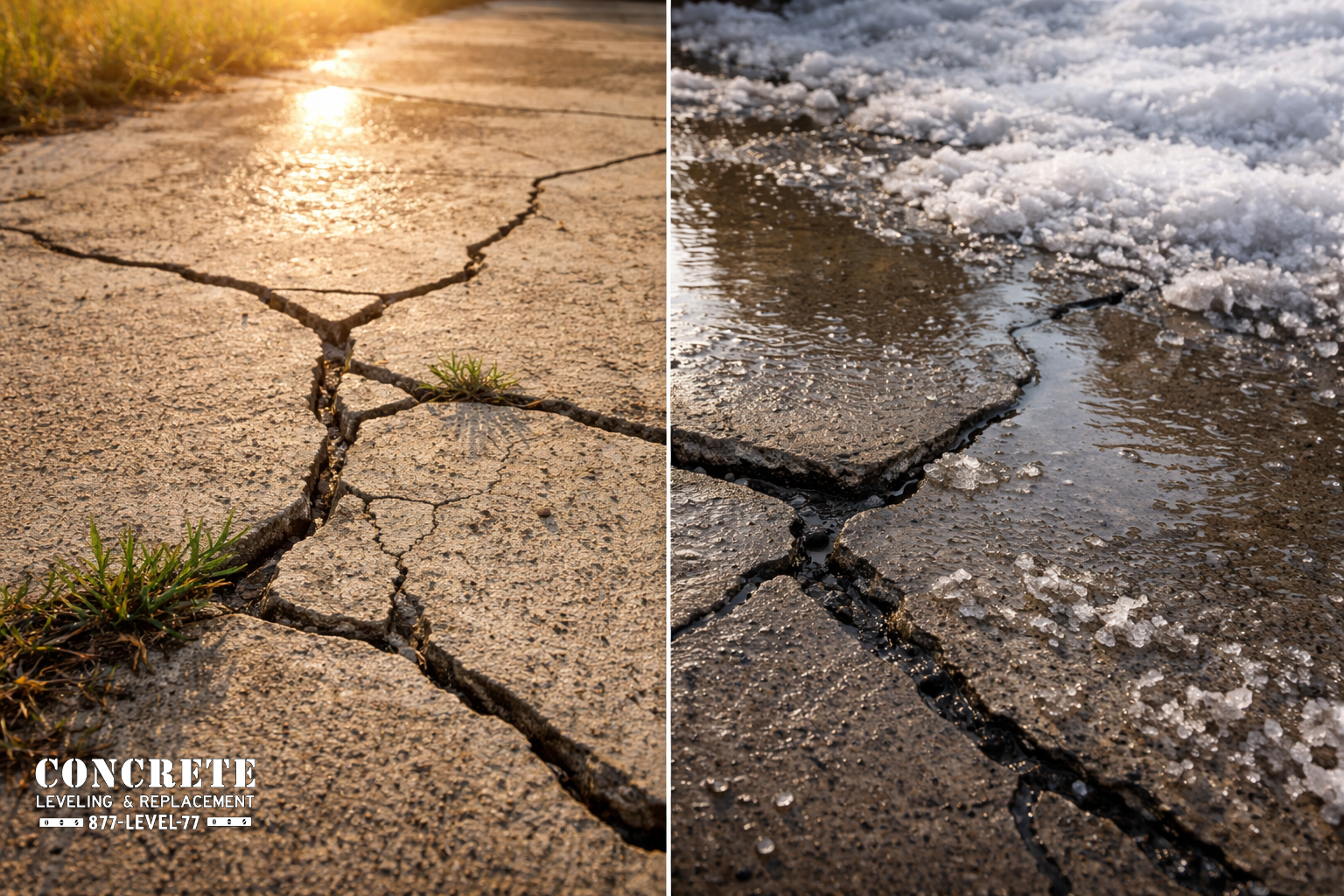
In places with cold winters, water in concrete expands as it freezes. This repeated expansion and contraction stresses the surface, widens cracks, and weakens edges. The American Concrete Institute emphasizes controlling moisture exposure and durability in concrete performance, especially in tough weather. Their technical resources on durability are available through the American Concrete Institute.
Deicing chemicals add another hit
Salt and ice-melting products make walkways safer, but also wear down the surface when used a lot. These chemicals can penetrate porous concrete, leading to scaling, discoloration, and long-term damage. That's why many experts recommend sealers that reduce absorption while still letting moisture vapor escape.
Protective sealers are now popular
One big advance in concrete protection is using penetrating sealers. These products soak into the slab rather than sitting on top, helping resist water, stains, and chemical intrusion. More people are sealing after proper curing because it boosts durability without changing the slab's look too much. For more on preventive protection, check out our patio repair solutions, which often include sealing and surface preservation tips.
Sunlight, Heat, and UV Exposure
UV rays speed up surface aging
Concrete might seem immune to sunlight, but prolonged UV exposure can cause issues. On decorative or finished surfaces, fading and discoloration are common. On older slabs, intense sun can dry the top layer too quickly, making it brittle and prone to chipping or cracking.
Heat causes expansion and drying stress
Hot weather can make concrete expand, and repeated heating and cooling can wear on joints and edges. Dry conditions also pull moisture out of concrete faster, impacting long-term strength if the slab wasn't cured properly. This is crucial for new pours or recent repairs, where proper hydration ensures durability.
Hot weather reveals hidden flaws
Summer often makes existing problems more visible. Small cracks may widen, settlement becomes more obvious, and joints may separate as the slab reacts to higher temperatures. If you see uneven entryways or trip edges in warmer months, consider a professional evaluation before these issues become a safety concern. Often, concrete leveling can fix the root cause without replacing the whole slab.
How Weather Affects Different Concrete Surfaces
Driveways face heavy exposure
Driveways endure vehicle loads, standing water, snowmelt, and road salt year-round. That mix makes them prone to cracking and surface loss. A driveway with poor drainage or weak subbase support may sink faster after storms or freeze-thaw seasons. If you're dealing with these problems, our concrete driveway repair focuses on restoring function and improving lifespan.
Sidewalks and walkways need safety-focused care
Sidewalks often show weather-related damage first, becoming a liability issue. Soil heave, water washout, and winter frost can all create trip hazards. Because these surfaces are used daily by family, customers, and visitors, it's smart to fix uneven sections early. If your walkway is lifting, separating, or settling, sidewalk repair can help protect accessibility and reduce risk.
Patios and pool decks are vulnerable to moisture
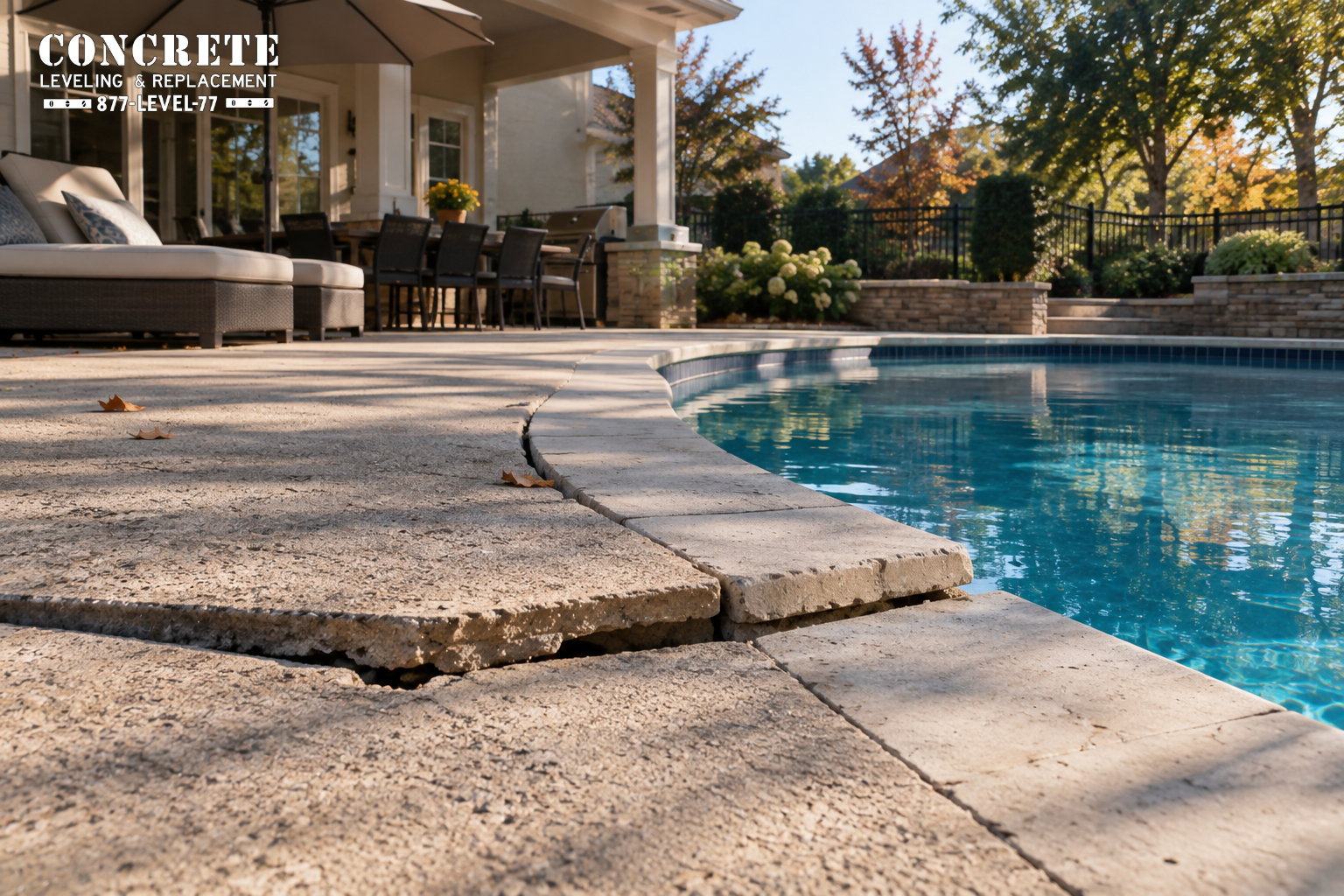
Outdoor living spaces frequently face rain, sun, chemicals, and temperature swings. Around pools, constant water exposure can speed up surface wear if the concrete isn't sealed and maintained properly. This is why homeowners benefit from regular inspections and timely repairs in entertainment areas. Check out our pool deck repair services if your surface is becoming rough, uneven, or unsafe.
Foundations and interiors aren't immune
Even indoor concrete can be affected by the weather. Heavy rain can change the moisture content of surrounding soil, causing foundation movement that transfers into interior slabs, leading to cracks or floor separation. In commercial buildings, this may show up as uneven floors or gaps near walls. Our interior floor repair services are useful when settlement or moisture-related movement affects indoor structures.
Spotting Weather-Related Concrete Damage Early
Keep an eye out for new cracks or widening gaps
Hairline cracks aren't unusual, but cracks that grow wider, lengthen, or begin to offset in height should be checked quickly. The key is to notice changes over time instead of waiting until the slab is severely damaged. If a crack keeps reopening after rain or temperature changes, weather might be a factor.
Look for discoloration, scaling, and pitting
Surface wear often starts with subtle visual clues. Fading, white mineral deposits, rough patches, and flaky areas all indicate that water, salts, or UV exposure are affecting the slab. These might not seem urgent at first, but they often mean ongoing deterioration beneath the surface.
Watch for pooling water and drainage issues
Water sitting on top of concrete instead of draining can speed up damage. Pooling often means the slab has settled, the grade around it has changed, or the drainage system isn't working as it should. If you see standing water after storms, it's wise to assess the area before the next season makes things worse.
Pay attention to seasonal changes
Some concrete problems are seasonal and only show up in winter or during wet months. Freeze-thaw cycles might lift one section, then let it drop again when conditions change. Similarly, summer dryness can expose voids or gaps hidden by swollen soil earlier in the year. Seasonal signs often mean the concrete and subgrade are reacting to weather patterns.
Preventing Weather Damage: What You Can Do
Seal concrete at the right time
Protective sealants for concrete are among the most effective ways to reduce weather-related damage. A penetrating sealer limits moisture absorption, reduces deicing chemical impact, and makes cleaning easier. Timing matters, though, because a slab should cure properly before sealing. That's why many experts suggest planning preventive maintenance before winter or a long wet season begins.
Keep joints clean and working
Expansion joints and control joints manage movement, but only if they stay in good shape. Dirt, debris, and sealant failure can reduce their effectiveness and let water in. Routine inspection and maintenance of joints helps preserve the slab and reduce random cracking.
Improve drainage around the slab
Water management is a smart long-term strategy for concrete care. Downspouts, grading, gutters, and soil slope all affect how much water reaches the slab and its base. If runoff constantly moves toward a driveway or sidewalk, the concrete will likely wear out faster. Drainage corrections paired with concrete floor repair or exterior slab repair can extend the life of the whole area.
Schedule checks before harsh weather
Reducing surprise repairs is easy by inspecting concrete before winter and after the spring thaw. Seasonal checks help catch cracks, settlement, and surface loss before they become expensive problems. If you manage commercial or industrial property, routine inspection is particularly valuable because safety and liability risks are higher when surfaces become uneven.
When Concrete Leveling is the Right Move
Not every damaged slab needs replacement
Many weather-related issues can be fixed with leveling instead of full replacement. If the concrete is structurally sound but has settled due to soil movement, slab lifting can restore the surface to a safer and more usable position. This is often more efficient and cost-effective than tearing out the slab.
Weather affects repair timing
Professionals generally prefer dry, stable conditions for concrete leveling or repair. Rain can mess with materials, and freezing temperatures can affect curing and bonding. That's why spring and fall are often the best times for repair in areas with harsh winters. For more on timing, our guide to sinking slabs explains why timing matters for lasting results.
Modern repair methods aim for longevity
Today's repair solutions are more advanced than the old patch-and-pray methods. Polyurethane injection, mudjacking, crack repair, and sealant applications can work together to stabilize surfaces and reduce future movement. The goal is not just to fix what's visible but to address the conditions that allowed the weather to damage the slab in the first place.
Get an honest evaluation before deciding
At Concrete Leveling & Replacement, we base recommendations on what your property needs, not on commission-driven sales pressure. That matters because some slabs can be saved with leveling or repair, while others may need replacement due to severe structural failure. A straightforward inspection helps you avoid unnecessary spending and choose the most practical solution.
Real-Life Example: Why Timing and Sealing Matter
A late-fall pour can lead to spring damage
Take a homeowner who installed a new sidewalk late in the year and didn't seal it before the first frost. By spring, the surface began to spall and needed patching. The problem wasn't just the cold weather but the combo of moisture exposure, freezing temperatures, and lack of protection during a vulnerable time.
What this example teaches property owners
This scenario shows why concrete maintenance isn't just about looks. Timing, curing, sealing, and drainage all matter, especially when seasons change quickly. Planning gives the slab a better chance of surviving winter, spring thaw, and summer heat without early deterioration.
Why local climate matters
In areas with repeated freeze-thaw conditions, the risk is even higher. Romulus, MI, has cold winters and humid summers, meaning concrete can face both moisture intrusion and thermal stress in the same year. That's why property owners in Michigan often benefit from early sealing, seasonal inspections, and repair schedules that avoid the worst weather windows.
FAQs: Common Questions About Weather and Concrete
How does moisture affect concrete?
Moisture can seep into pores, cracks, and joints, causing expansion when temperatures drop, gradually weakening the slab over time. It can also carry salts and contaminants deeper into the concrete, speeding up deterioration. If moisture is a recurring issue, drainage correction and sealing are worth considering.
What impact does sunlight have on concrete?
Sunlight can fade finishes, dry out surfaces too fast, and contribute to brittleness over time. Decorative concrete may show the effects more visibly, but even standard slabs can develop surface wear when exposed to strong UV radiation for long periods. Sealing and routine maintenance help slow that process.
Can concrete be leveled in bad weather?
Concrete leveling is best done in dry, stable conditions. Temperatures above freezing and limited ground moisture are ideal because they support better curing and material performance. Rain can interfere with the repair process, so scheduling work during predictable weather is usually best.
How often should concrete be inspected?
The rule of thumb is to inspect concrete at least twice a year, ideally before winter and after the spring thaw. If the surface sees heavy traffic, deicing salts, or chronic drainage issues, more frequent checks might be wise. Catching problems early saves money and reduces safety risks.
Wrapping It Up: Protect Your Concrete Before the Weather Wins
Weather changes affect concrete in more ways than most property owners realize. Moisture, freezing temperatures, heat, sunlight, and shifting soil all work together to weaken slabs over time. The good news is that proactive care makes a major difference when you combine sealing, drainage improvements, seasonal inspections, and timely repair.
If you've noticed cracks, settlement, scaling, or uneven areas, don't wait until the next season makes it worse. A professional assessment can show whether leveling, repair, or replacement is the best path forward. For help with weather-related concrete issues, explore our concrete leveling and concrete floor repair services, or review our service area to see where we work throughout Michigan.
Ready to protect your surfaces? Contact Concrete Leveling & Replacement for a straightforward evaluation and practical recommendations that help extend the life of your concrete. Visit our website or call (734) 895-3820 to get started.