Spotting Early Signs of Concrete Settlement: A Homeowner’s Guide
Concrete settlement is something many homeowners face when their driveways, walkways, or floors start looking uneven. This happens when the ground beneath the concrete shifts or washes away, causing cracks or slopes that can make doors jam or surfaces unsafe. Catching these issues early is crucial because it can save you money and extend the life of your concrete.
But how do you know when your concrete is starting to settle? If you've noticed any changes, a pro inspection can help determine if it's just a surface issue or something more serious with the soil beneath. Services like concrete leveling and concrete floor repair can often fix the problem if caught early, especially when the slab is still solid.
In this guide, we'll cover the warning signs of early concrete settlement, what causes it, how modern repairs work, and what you can do to prevent it from happening again. We'll also share a real-life example from Michigan and explain why getting a professional evaluation is important when you first notice signs.
What Concrete Settlement Really Means
Uneven movement below the slab
Concrete settlement happens when the ground underneath a slab stops supporting it evenly. This can be due to erosion, poor soil compaction, moisture changes, or even voids underground. Once the ground shifts, the slab follows, leading to visible dips, tilts, or separations at joints and edges.
This process is often slow, which means many homeowners only notice it when cracks get bigger or floors start sloping. According to the U.S. Geological Survey, changes in soil moisture and erosion can significantly affect ground stability, especially in places with unpredictable weather. So, it's not just about the slab—it's about the soil underneath it.
Why early detection matters
Finding settlement issues early means repairs are usually simpler and cheaper. Studies show that early intervention can cut repair costs by up to 50% compared to waiting until things get worse. A slab that's just a bit uneven can often be fixed with targeted leveling, while one that's badly damaged might need replacing.
This is why regular inspections are important. A quick look can reveal early movement before the concrete becomes unsafe. To understand how soil issues can lead to settlement, check out our article on how soil conditions impact concrete stability.
Common Signs of Early Concrete Settlement
Small cracks that widen over time
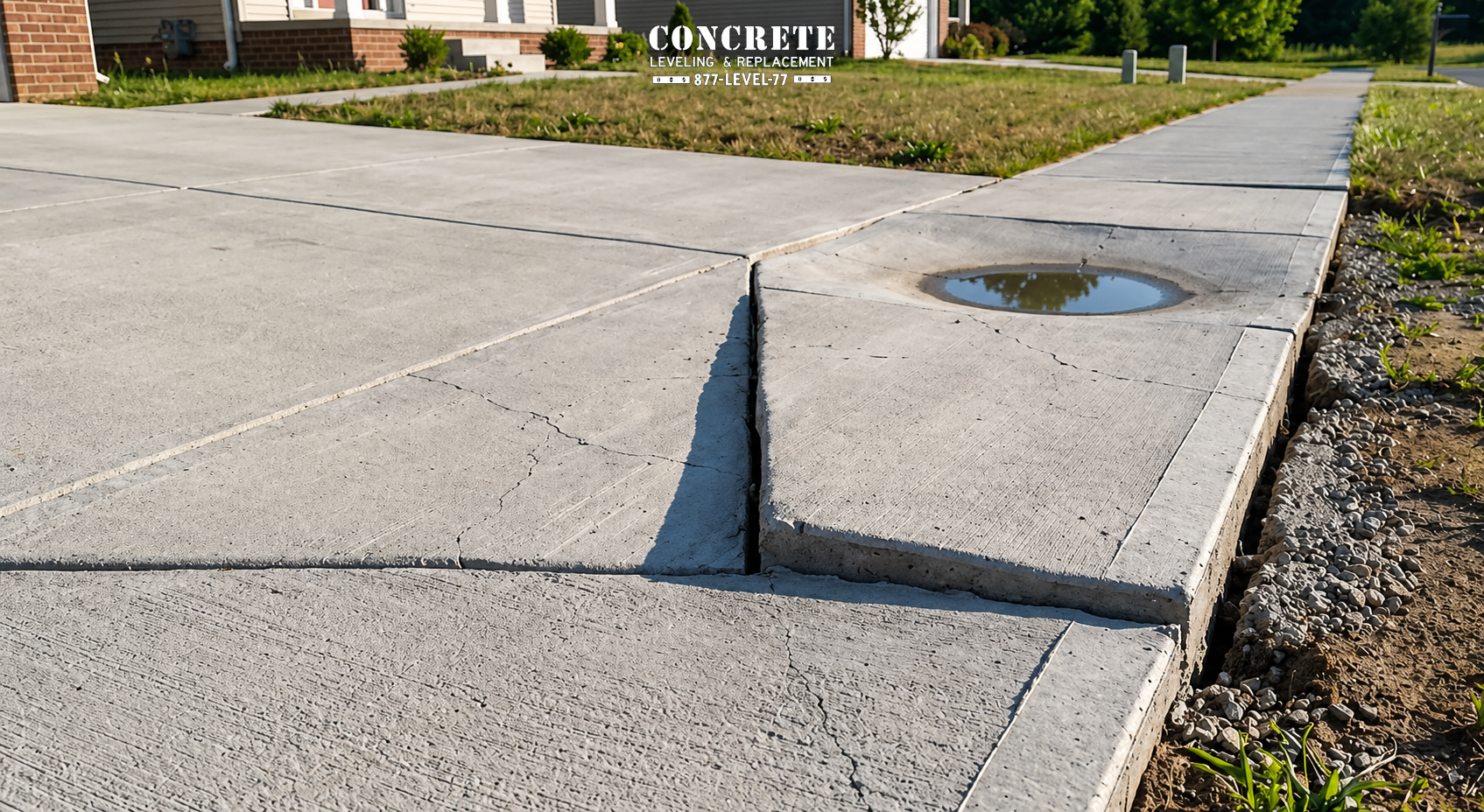
One of the first signs is cracking that gets worse over time. While small cracks are normal, those that widen or branch out might mean the ground is shifting underneath. Watch for cracks near joints, corners, and spots where water gathers.
If a crack changes after heavy rain, freeze-thaw cycles, or temperature swings, settlement might be the cause. This often shows up first on driveways, sidewalks, and patios. Sometimes, it could also indicate a drainage issue, so a full property check is wise before deciding on repairs.
Sloping, sinking, or uneven surfaces
Another sign is when a surface feels uneven or looks like one side is lower than the other. You might see water pooling in low spots, a tripping edge, or feel a slope when walking across the area. This often gets more noticeable over time, especially after wet weather.
Uneven slabs are more than just an eyesore. They can be dangerous for kids, the elderly, or anyone carrying heavy things. In business settings, they can also cause compliance and liability issues, particularly on sidewalks and entryways. If you're worried about outdoor surfaces, our sidewalk repair and concrete driveway repair services can help keep them safe and looking good.
Gaps around walls, steps, or exterior edges
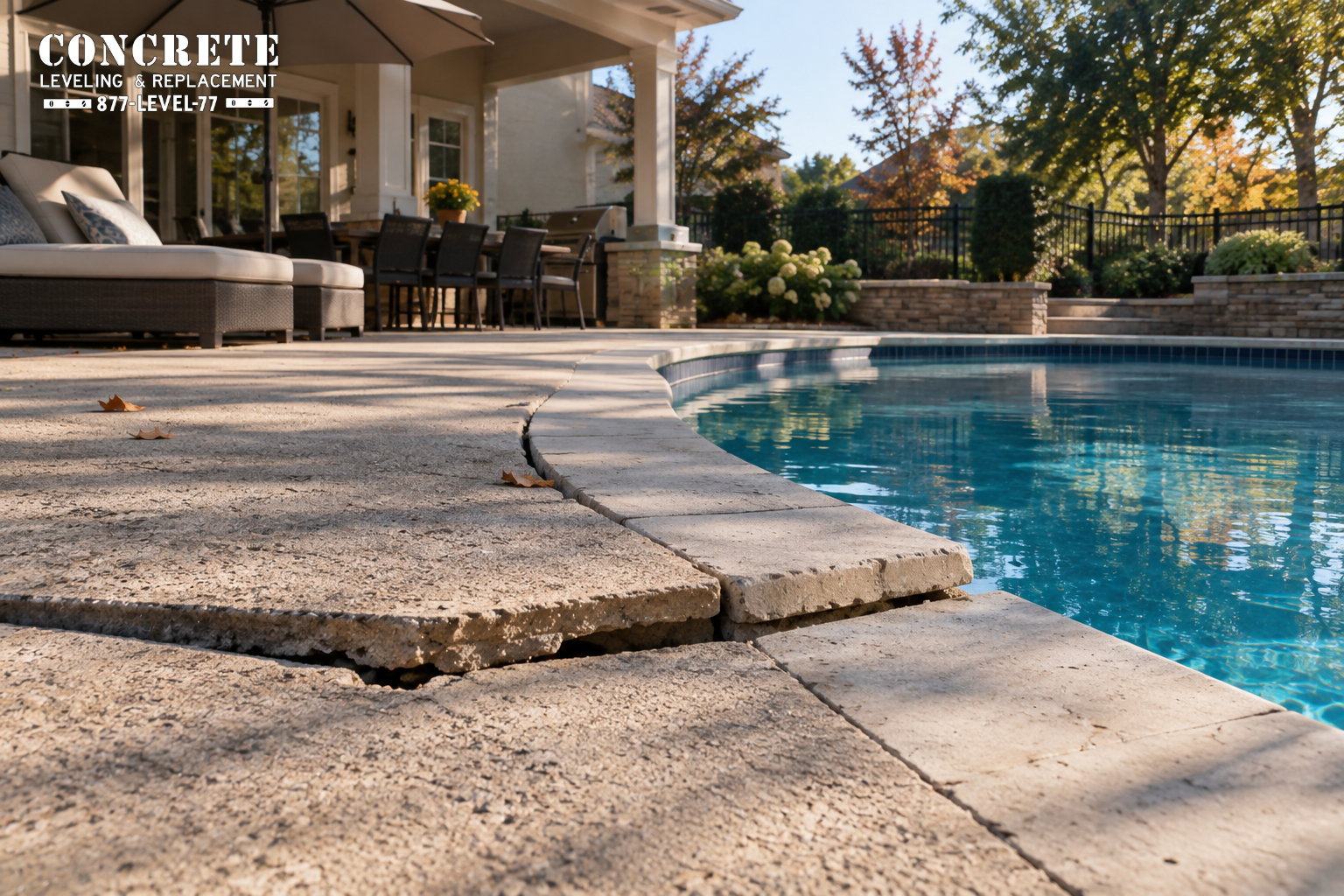
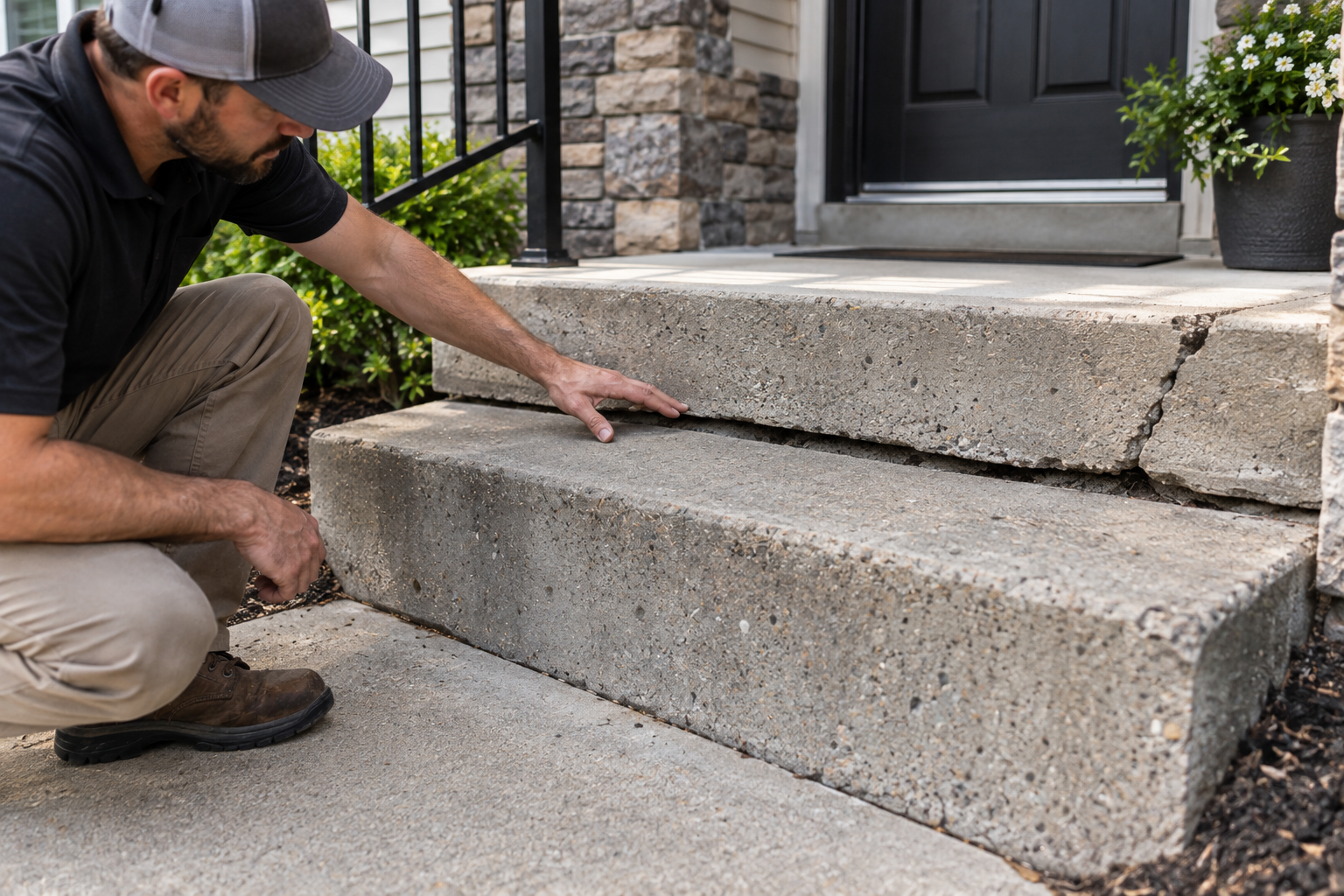
Settlement can make the slab pull away from nearby structures, creating gaps where a porch meets the house, steps connect to landings, or driveways meet garage floors. These gaps often mean the slab isn't resting evenly on the ground anymore.
These gaps can let water, debris, and pests get into areas that should be sealed. Over time, this can worsen the problem by increasing erosion and moisture intrusion. If this is happening near a porch or entryway, read our article on why an uneven porch can be a safety hazard to see how settlement affects access points.
Doors and windows that suddenly stick
Even though the settlement usually starts in slabs, it can affect the nearby framing and trim. If doors start sticking, windows bind, or trim cracks near the floor, it might be a sign that the foundation or slab is moving. This is especially important in basements, garages, and first-floor spaces.
When settlement affects interior floors, the signs might be subtle at first. A cabinet might sit unevenly, baseboards might separate slightly, or a floor might feel like it dips in one corner. A pro inspection can help figure out if it's just slab settlement or a broader foundation issue that needs a different fix.
What Causes Concrete Settlement
Soil erosion and water management problems
Water is a major cause of settlement. When gutters overflow, downspouts discharge too close to the slab, or grading directs water toward the foundation, soil can wash away, leaving a void under the concrete. Without support, the slab starts to sink.
That's why good drainage is key to preventing settlement. The Environmental Protection Agency offers tips on managing runoff and directing water away from structures, which applies directly to concrete protection. Keeping gutters clear, extending downspouts, and ensuring the ground slopes away from the foundation can help maintain stability.
Poor soil compaction before construction
If the soil under a slab wasn’t compacted properly before pouring concrete, it can settle later under the weight of the structure. This issue is common in new builds and repaired areas where fill soil wasn't stabilized. Over time, the loose soil compresses, and the slab sinks with it.
Proper soil stabilization before installation is a good safeguard. This might include grading, moisture conditioning, and mechanical compaction to create a firm base. For new projects, this preventative work is much cheaper than fixing a failed slab later.
Moisture swings, freeze-thaw cycles, and roots
Moisture level changes can cause clay-rich or unstable soils to expand and contract. In colder regions, freeze-thaw cycles can worsen this by lifting and dropping the slab repeatedly. Tree roots can also interfere by absorbing moisture, shifting soil, or pushing against concrete sections.
This is especially relevant in Michigan, where seasonal weather changes can speed up ground movement. Regular inspections and drainage maintenance are valuable for homeowners and businesses. If you're seeing weather-related damage, our article on how weather can mess with your concrete explains why seasonal monitoring is important.
How Professionals Diagnose the Problem
Visual inspection and slope evaluation
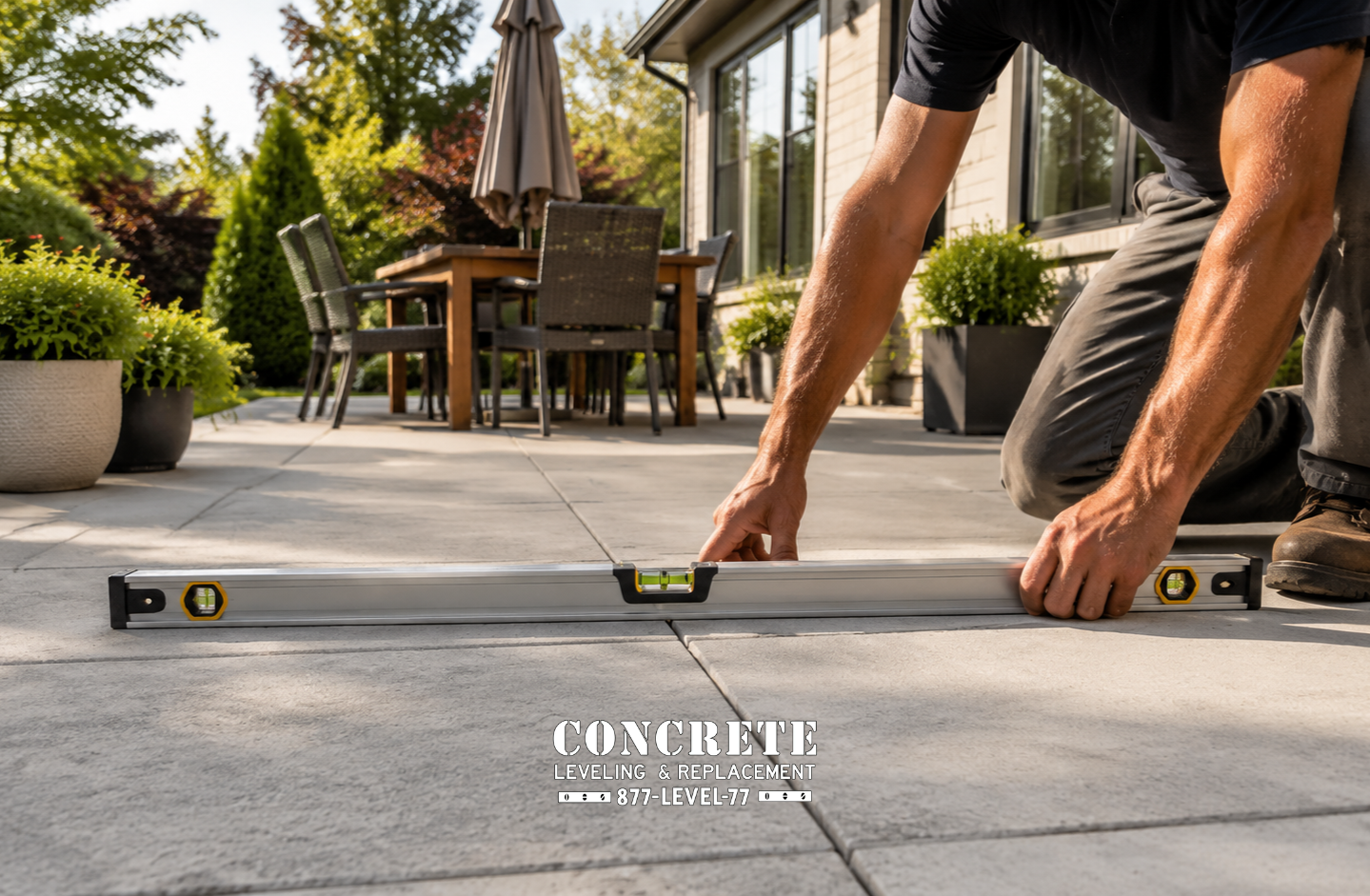
A trained technician starts by checking cracks, seams, joints, and height differences along the slab surface. They check if the concrete is settling evenly or if one section is dropping more than another. Simple measurements can reveal if the problem is progressing and whether it’s likely caused by soil movement, drainage, or a structural issue.
Technicians also look for signs like pooling water, soil voids, eroded edges, or nearby surfaces starting to separate. This inspection is important because the visible symptom is often only part of the problem. The goal is to find out why the concrete moved, not just to patch the surface.
Checking drainage and surrounding grades
Drainage evaluation is a crucial part of the process. Pros check if runoff is entering the problem area, if downspouts need extending, and if the surrounding grade directs water toward the concrete. They may also note low landscaping spots, clogged catch points, or areas where soil has eroded over time.
If settlement is tied to drainage, it’s smart to fix that before or alongside the repair. That might mean adjusting gutters or improving grading. Addressing the source helps prevent repeat settlement.
When to ask for a deeper structural review
Not every crack is a major structural failure, but some patterns need a closer look. If the settlement is severe, interior floors are noticeably sloped, or multiple signs appear at once, a more detailed assessment is needed. This is especially true if you see foundation wall cracks or major door misalignment.
A thorough diagnostic review can separate slab settlement from structural foundation movement. This matters because the repair should fit the cause. A quality contractor will explain the evidence clearly and recommend the least invasive solution that still solves the issue.
Modern Repair Methods and Why They Work
Polyurethane foam injection
Polyurethane foam injection effectively lifts settled concrete. A lightweight expanding foam is injected beneath the slab to fill voids, stabilize the soil, and raise the surface back to its original position. The process is minimally invasive, fast, and often allows the area to be used again much sooner than traditional replacement.
The foam expands to fill gaps, making it especially useful where erosion has created hidden voids. It’s cleaner and lighter than many older methods, reducing disruption to the surrounding landscape or structure. For many homeowners and businesses, this makes it a great option when the slab is otherwise in good shape.
Slabjacking and other concrete leveling methods
Slabjacking raises settled concrete by pumping material beneath the slab to restore support and elevation. The choice between slabjacking and polyurethane foam injection depends on site conditions, the amount of settling, slab thickness, and the intended use of the concrete. Both methods aim to restore level surfaces without full demolition whenever possible.
For many projects, these approaches are more affordable than replacement and can often be completed much faster. If you want more details, our concrete leveling service page explains how leveling fits into a long-term repair strategy. In cases where the slab is extensively cracked or too deteriorated to recover, replacement might be the better option.
When replacement is the better choice
Although leveling is often the go-to first option, some concrete is too damaged to save. If the slab is heavily broken, badly crumbled, or structurally compromised, replacement might provide a more durable outcome. This is especially true when repeated settlement has damaged reinforcement or joints.
Experienced contractors can explain whether repair or replacement makes more sense based on the concrete’s condition and the soil beneath it. A trustworthy recommendation should be based on what the property actually needs, not a sales pitch. This is why a family-owned company with experienced technicians can be a valuable partner when making the decision.
Real-World Example: A Settling Basement in Romulus
What the homeowners noticed
In one case in Romulus, MI, homeowners noticed hairline cracks in their basement walls and a slight dip in one area of the floor. At first, the changes seemed minor, but over several months, the floor became noticeably uneven, and one door started sticking. They also saw water pooling near the foundation after heavy rain, suggesting a drainage problem.
After inspection, it was found that soil erosion beneath part of the foundation created a void, allowing the slab to settle. The family worried the entire basement might need major reconstruction, but the issue was more localized than expected. This made the repair process much more manageable and less disruptive than they feared.
How the repair was completed
Technicians used polyurethane foam injection to stabilize the void and lift the settled section. Once the slab was supported again, the uneven floor was corrected, and the structural stress on nearby surfaces was reduced. The homeowners also addressed water management issues to help prevent repeat settlement in the future.
This case shows why early evaluation matters. By acting before the damage spread, the homeowners avoided a larger replacement project and restored the basement's usability. It also highlights how effective modern concrete repair methods can be when the cause is identified correctly, and the solution matches the problem.
Prevention Tips Every Property Owner Should Follow
Inspect cracks and low spots regularly.
A simple inspection routine can prevent a lot of damage. Walk your property a few times a year and look for new cracks, widening joints, sloped areas, or places where water is collecting. Pay special attention after storms, snowmelt, or long wet periods because those are often the times when settlement becomes easier to spot.
Keeping a record of visible changes is also useful. A photo taken at one point in time can help you compare conditions later and decide whether the issue is progressing. If you notice repeated movement, that is usually a sign that the underlying cause still needs to be addressed.
Protect drainage and maintain consistent moisture.
Good drainage is one of the strongest defenses against settlement. Keep gutters clean, make sure downspouts discharge well away from the slab, and check that soil slopes away from the building. Avoid overwatering landscaping near concrete, since excess moisture can soften the subgrade and encourage erosion.
For outdoor hardscapes, keeping nearby soil stable is just as important as maintaining the slab itself. If your issue affects a patio, steps, or adjacent entry area, it may also be worth looking into patio repair or step repair to correct trip hazards and restore proper alignment.
Plan construction and repairs around soil stability
For new concrete, proper soil compaction and grading should never be skipped. For existing concrete, repairs should take into account the soil conditions that caused the problem in the first place. That means fixing water flow, stabilizing loose areas, and using the right leveling technique rather than simply covering up symptoms.
In commercial or industrial settings, prevention should also include periodic inspections of high-traffic surfaces. If you manage a warehouse, plant, or service yard, uneven floors can affect equipment movement and safety. In those cases, factory floor repair or interior floor repair may be needed to maintain safe operation.
When You Should Call a Professional
Warning signs that should not be ignored
You should schedule a professional evaluation if you see large or rapidly changing cracks, noticeable floor slope, separated joints, pooling water near the slab, or sticking doors and windows combined with visible settlement. These symptoms can indicate that the problem is active and may continue to worsen if left alone. The sooner you act, the more repair options are likely to remain available.
In many cases, a technician can tell you quickly whether the issue is minor or whether it needs immediate attention. That guidance can save time, reduce anxiety, and help you choose the most practical repair path. It is especially useful if you are comparing repair versus replacement.
Why an honest evaluation matters
At Concrete Leveling & Replacement, the goal is to recommend the right solution for the property, not the most expensive one. Because our crews are based throughout Michigan and our technicians are not paid commission, recommendations are grounded in what the slab actually needs. That approach helps property owners make confident decisions about repairs, maintenance, and long-term planning.
If you are located in Wayne County or nearby and want a direct assessment, you can learn more on our counties we serve page or review our local service area for Romulus concrete leveling. A straightforward inspection can provide the clarity needed to move forward before the damage becomes more expensive.
Frequently Asked Questions About Early Concrete Settlement
What are the first signs of concrete settlement?
The earliest signs usually include small cracks, slight sinking, uneven edges, and water pooling in unexpected places. You may also notice a door or window beginning to stick if the movement affects nearby framing. These symptoms often appear gradually, which is why regular inspection is so important.
Can concrete settlement be fixed without replacing the slab?
Yes, many settled slabs can be repaired without full replacement. Methods like polyurethane foam injection and slabjacking can restore support and level the surface when the slab is still in reasonable condition. Replacement is usually reserved for slabs that are too damaged, too broken, or too unstable to lift effectively.
How can I prevent settlement in the future?
Focus on drainage, soil stability, and ongoing maintenance. Keep water away from the structure, inspect the property after storms, and make sure any new concrete is installed on a properly compacted base. If you suspect a recurring soil issue, a professional assessment can help identify the root cause and reduce the chance of repeat settlement.
Is settlement always a foundation problem?
Not always. Some issues are limited to the slab itself, while others involve the foundation or surrounding soil. That is why diagnosis matters. A trained contractor can determine whether you need leveling, drainage correction, structural repair, or a combination of solutions.
Take Action Before the Damage Spreads
Early concrete settlement is easier to correct than advanced slab failure, and the signs are often visible long before the repair becomes urgent. Cracks, slopes, gaps, sticking doors, and standing water are all clues that should be taken seriously. By inspecting your property regularly and correcting drainage or soil issues early, you can protect both safety and long-term value.
If you have noticed any warning signs on your driveway, sidewalk, porch, basement floor, or commercial slab, do not wait for the problem to expand. Professional evaluation can help you choose the right fix and preserve the concrete you already have. For dependable help with leveling, repair, and honest recommendations, contact Concrete Leveling & Replacement at (734) 895-3820 or email sales@concretelevelingpro.com. You can also explore our services, such as concrete pool deck repair and garage floor repair, to see how we help property owners restore safe, functional surfaces throughout Michigan.