Uneven concrete isn't just ugly to look at; it can turn your driveway, sidewalk, porch, or patio into a real safety hazard. Concrete leveling can fix surfaces that have sunk, shifted, or cracked, making them safer and better looking. It's one of the smartest ways to protect everyone on your property, keep your concrete in good shape, and avoid bigger repair bills later.
Concrete often sinks because of things like soil movement, bad drainage, erosion, or weather changes, especially in places with freeze-thaw cycles. If you've noticed these problems, services like concrete leveling and sidewalk repair can help you fix them before they get worse. Let's see why this is so important by looking at the safety risks, repair options, and long-term benefits of leveling concrete instead of ignoring it.
If you're comparing repair solutions, knowing what causes concrete to settle can help. Our guides on early signs of concrete settlement and how soil conditions impact concrete stability offer useful insights into what can cause slabs to sink and what you can do about it. Understanding the problem can help you make a safer and smarter repair decision.
Why Uneven Concrete is a Safety Risk
Common Trip Hazards
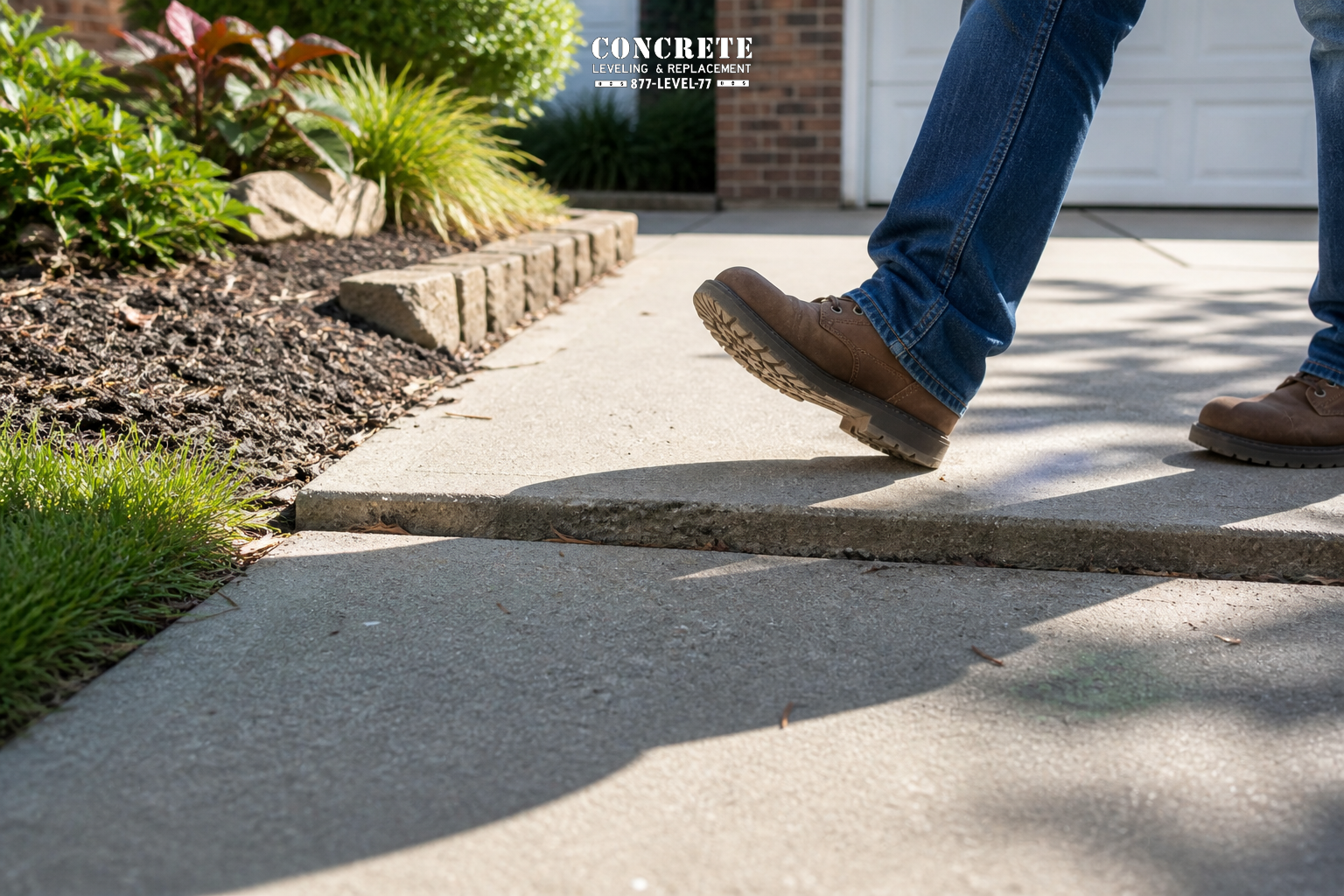
When one slab is higher than another, or when concrete sinks and creates a lip, walking becomes risky. You might not notice these changes if you know the property well, but guests, kids, older adults, and delivery workers might not see them in time. Uneven concrete is a major cause of trips and falls because the hazards are often small enough to overlook but big enough to cause injury.
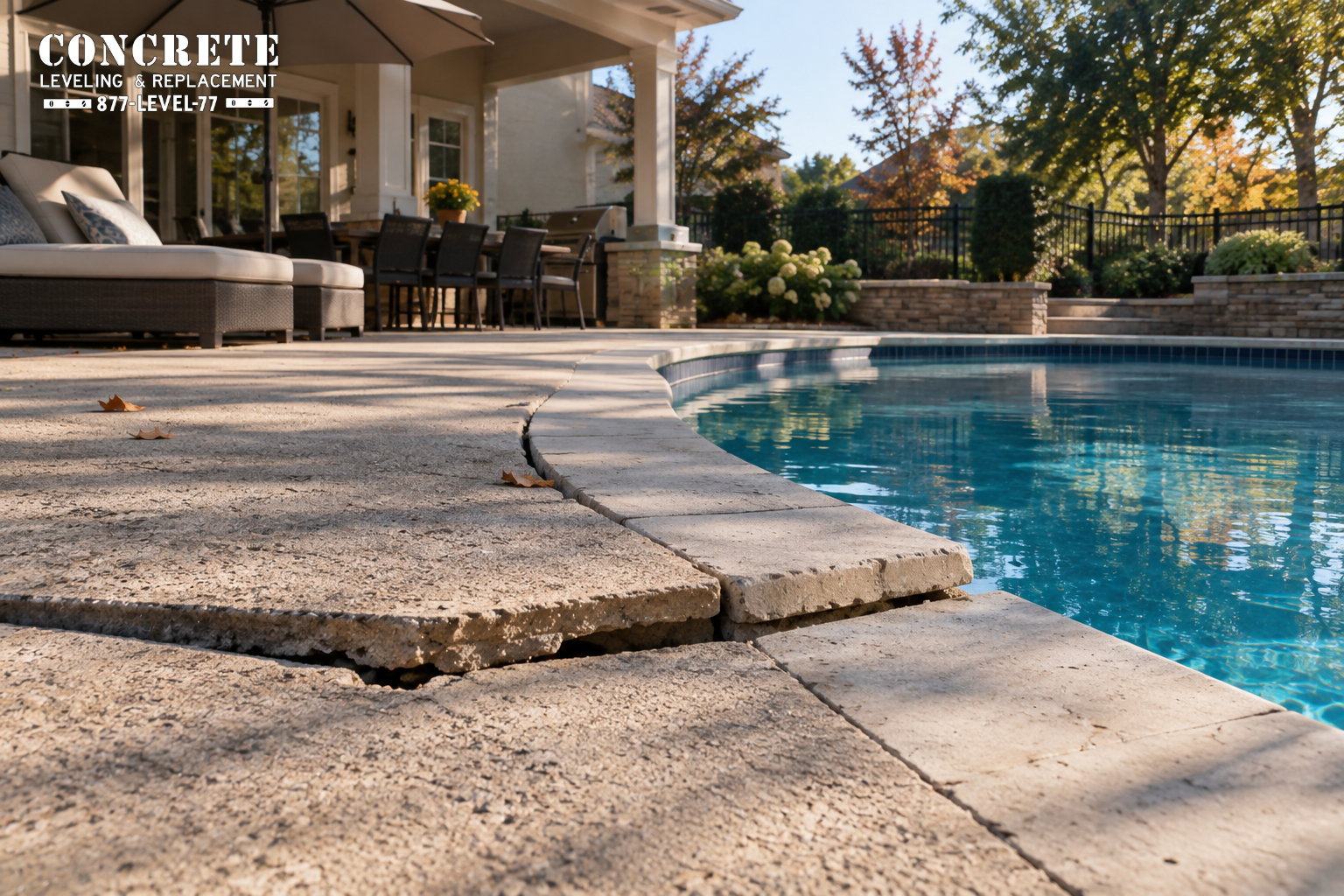
Safety concerns aren't just about sidewalks. Driveways, porch steps, garage aprons, pool decks, and inside floors can all become dangerous when they're not level. Even a small height difference can affect balance, especially when it's wet, icy, or poorly lit. That's why it's important to prevent trip hazards as part of property maintenance.
Accessibility and Liability Concerns
Uneven surfaces can also make your property less accessible. A crooked sidewalk or slanted entryway can be tough for people using walkers, wheelchairs, carts, or strollers. In business settings, this can lead to compliance issues and a poor customer experience. For businesses, this isn't just a maintenance issue; it's a liability issue that can lead to complaints or injuries.
The U.S. Consumer Product Safety Commission and other safety agencies stress the importance of maintaining walking surfaces to prevent injuries. While every property is different, the idea is the same: level and stable surfaces are safer for everyone. That's why fixing them promptly is more than just about looks.
How Concrete Leveling Works
Fast and Durable Polyurethane Injection
Modern repair methods make concrete leveling easier than ever. One popular option is polyurethane injection, sometimes known as PolyRenewal™. This process involves drilling small holes in the slab and injecting foam underneath. The foam expands, fills gaps, stabilizes the soil, and gently lifts the concrete back into place.
This method is popular because it's quick, lightweight, and less invasive than replacing the slab. It can often be finished in hours, and you can usually use the slab shortly after. If your concrete has settled due to voids or weak soil, polyurethane injection is a clean and efficient way to restore safety.
Traditional Mudjacking Still Has Its Uses
Mudjacking is still useful for some projects. It involves pumping a slurry mixture beneath the slab to raise it and works well for larger sections or budget-conscious repairs. However, the heavier material may not be ideal in every situation, particularly where the underlying soil is weak or moisture-sensitive. Picking the right method depends on the slab, why it's settled, and long-term conditions around your property.
For many property owners, the best choice comes from a thorough inspection rather than a one-size-fits-all approach. That's why working with experienced technicians is important. An accurate assessment should identify whether the slab needs leveling, crack repair, drainage correction, or more extensive solutions like concrete driveway repair or porch repair.
Why Concrete Settles
Soil Erosion and Voids
One big reason concrete sinks is that the soil underneath no longer supports it. Water can wash away fine material, leaving voids beneath the slab. Over time, the unsupported section begins to drop or crack. This often happens near downspouts, grading transitions, or places where runoff collects.
In areas with changing weather, soil conditions can shift with the seasons. Freeze-thaw cycles can expand and contract moisture in the ground, loosening support under the concrete. Poor drainage can speed this up. The Environmental Protection Agency offers general guidance on managing runoff and drainage around properties, which applies directly to concrete longevity: keep water away from the slab whenever possible. You can also check out our guide on why proper drainage is key to keeping concrete surfaces in top shape.
Poor Compaction and Aging Materials
Some slabs settle because the soil underneath wasn't compacted correctly during construction. Others settle because they're old, heavily used, or constantly exposed to moisture. Over time, even top-quality concrete can lose support if the subgrade changes. That's why leveling is often a structural improvement, not just a surface fix.
When a contractor understands why the concrete moved, the repair is more likely to last. If the issue is related to grading, runoff, or broken joints, the solution might include concrete leveling plus targeted repair work. For example, a sinking entryway might need both lifting and step repair for a safe transition at the front of the property.
Where Concrete Leveling Makes a Big Safety Impact
Sidewalks and Walkways
Sidewalks are crucial to fix because they're often used by people who might not expect hazards. A raised corner or sunken panel can create a sudden trip point. In neighborhoods, this can affect family members and visitors. In commercial areas, it can affect customers, tenants, and employees.
Professional leveling restores a smooth walking surface and reduces accident risk. It also boosts curb appeal, which matters for property value and first impressions. If a sidewalk is part of a broader safety concern, the solution might work well with concrete floor repair or exterior maintenance in nearby areas.
Driveways, Garage Aprons, and Parking Areas
Driveways and parking areas deal with frequent vehicle loading, which makes them vulnerable to settlement. When one slab edge rises, it can damage tires, scrape bumpers, or create a sharp transition that's dangerous when backing out. Level driveways improve safety and functionality, especially when vehicles, bikes, and pedestrians share space.
Commercial properties benefit even more because parking surfaces affect customer safety and traffic flow. In high-traffic areas, a level surface helps reduce claims, maintenance costs, and downtime. For facilities needing broader concrete support, repairs can be coordinated with garage floor repair or factory floor repair, depending on the property type.
Porches, Entries, and Patios
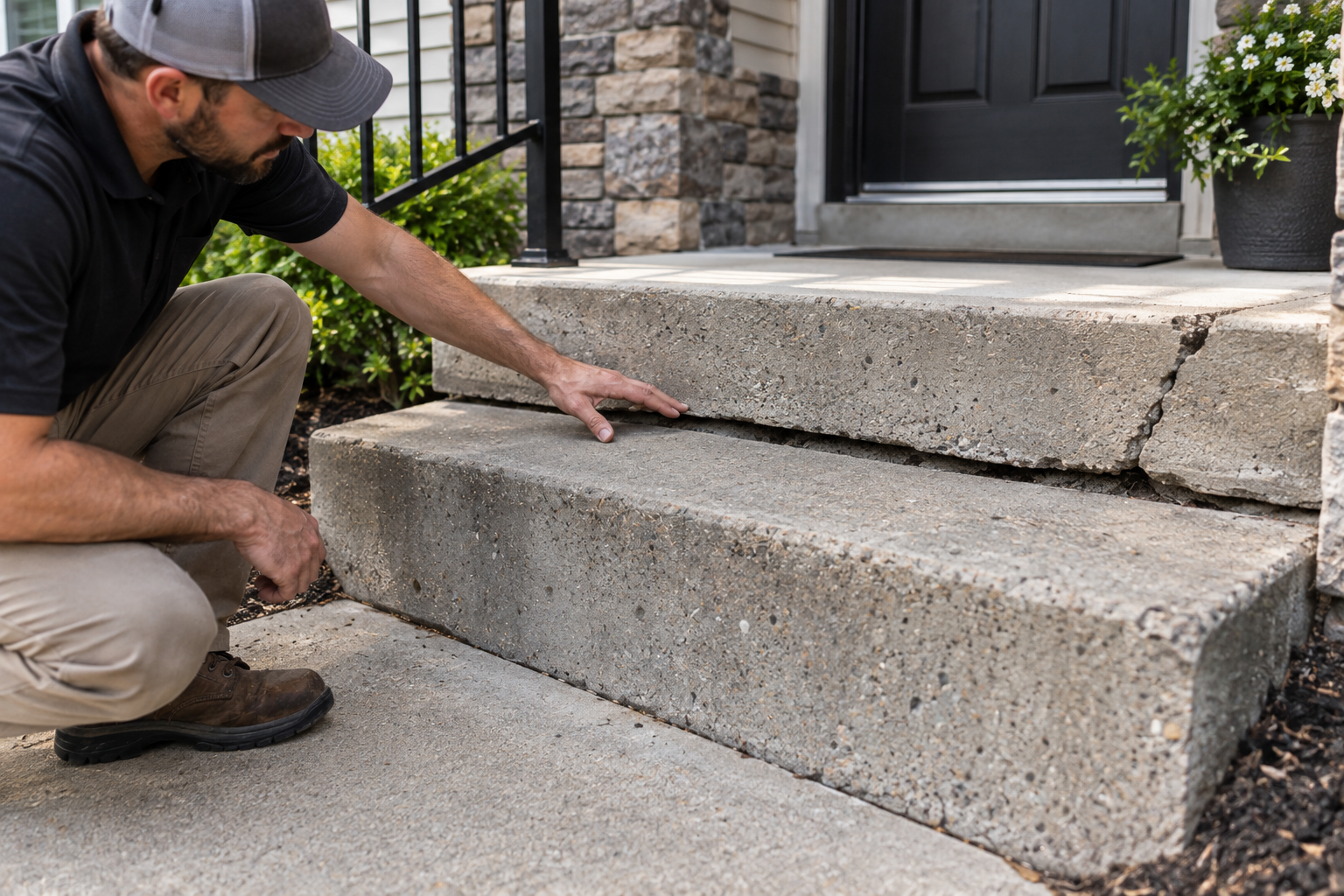
Front entries are a major safety concern due to elevation changes, weather exposure, and frequent use. A porch that has shifted even a little can create a dangerous step or a gap between the slab and the door threshold. Patio areas can also become unsafe when settled edges catch feet or collect water after storms.
In these areas, concrete leveling helps preserve the existing surface while restoring safer access. That can be important if the slab still has years of useful life left. In many cases, leveling is a practical alternative to replacement, and it can be paired with patio repair or related exterior solutions for a cleaner result.
Expert Tips for Long-Lasting Results
Start with a Thorough Inspection
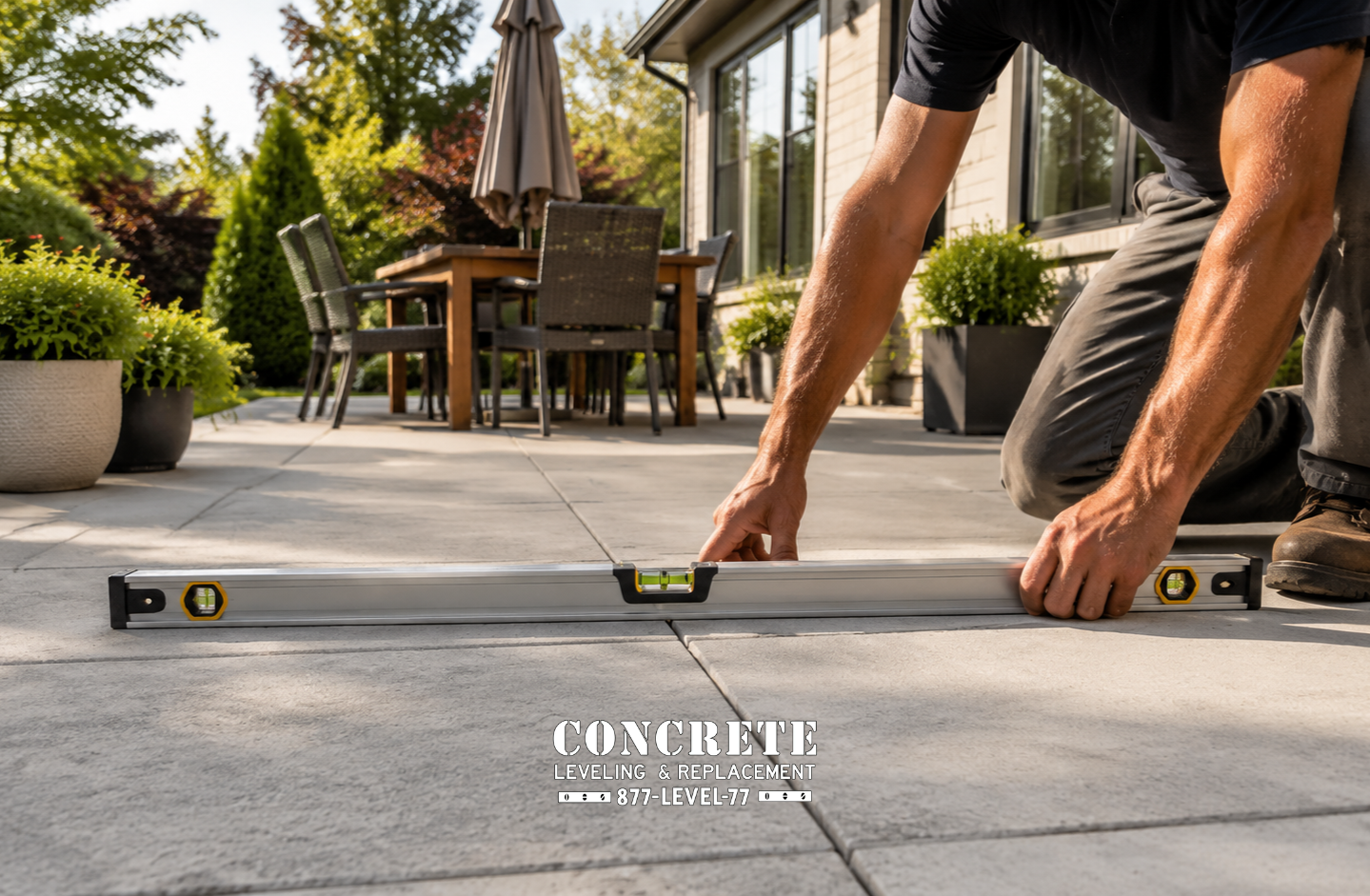
A successful repair starts with understanding why the concrete moved. Experts recommend checking for visible cracks, gaps beneath the slab, drainage issues, and signs of soil erosion. The more detailed the inspection, the better the repair plan. That's why experienced technicians often look at the surrounding grade, nearby downspouts, and adjacent slabs before recommending a solution.
This diagnostic step is crucial because leveling alone isn't always enough. If water keeps washing out the same area, the slab might settle again. A solid repair plan should address both the symptom and the cause. For local property owners, reviewing how the weather can affect your concrete can also help identify recurring seasonal problems.
Use Quality Materials and Skilled Installers
Not all repairs are equal. High-quality materials, proper lift techniques, and skilled technicians all contribute to a better outcome. In concrete leveling, precision is key. Lifting too much too quickly can create new stress, while lifting too little can leave an uneven edge behind. The goal is a smooth, stable result that blends naturally with the surrounding surface.
That's why homeowners and business owners should look for contractors who evaluate the property honestly and recommend only what's necessary. At Concrete Leveling & Replacement, for example, crews aren't paid on commission, so the focus stays on practical solutions rather than upselling unnecessary work. That approach helps protect both safety and budget.
Don't Ignore Drainage and Soil Conditions
Even the best leveling job will struggle if drainage keeps undermining the slab. Downspouts, grading, down-slope water movement, and clogged runoff paths all influence how long the repair lasts. Soil conditions also matter because expansive or weak soils can shift under pressure and moisture changes. Property owners who address these issues tend to get longer-lasting results.
For a deeper understanding of this connection, it helps to pair leveling with foundational maintenance. Our article on why concrete slabs sink and how to fix them efficiently explains how settlement starts and what can be done to prevent it from happening again.
Real-World Example: Safer Surfaces in Michigan
Residential Driveways and Walkways in Changing Weather
In places like Romulus and the surrounding parts of Michigan, changing weather patterns can put stress on concrete. Harsh winters, thaw cycles, humid summers, and shifting moisture levels all affect the soil supporting slabs. One homeowner might notice a driveway corner sinking near the garage, while another sees sidewalk panels lifting at the joint. These aren't isolated problems; they're often signs of the same underlying conditions.
In one common scenario, concrete leveling restores a driveway transition that had become dangerous for walking and parking. After lifting the slab, the area no longer catches feet or scrapes vehicles, and the property looks cleaner and more maintained. For some homes, the repair may also be combined with broader exterior improvements, such as garage floor repair or porch repair, depending on where settlement has occurred.
Commercial Properties Benefit from Quick Turnaround
Businesses often can't afford long closures or heavy demolition. That's one reason polyurethane-based leveling is so practical. It can restore safety quickly, limit disruption, and keep customer access open. For store entrances, sidewalks, and loading areas, the ability to complete repairs with minimal downtime is a big advantage.
Local businesses also benefit from working with technicians who understand regional soil and weather conditions. The right repair in the right place helps protect visitors and reduces the chance of repeated service calls. If your property has multiple problem areas, catch basin repair or curb and gutter repair may be useful alongside leveling to manage water more effectively.
FAQs About Concrete Leveling
Is Concrete Leveling a Permanent Solution?
Concrete leveling can be a long-term solution, but how long it lasts depends on the soil condition, material quality, and whether drainage issues are fixed. If the underlying cause is stable and the repair is done right, many slabs stay secure for years. The key is to solve the cause of settlement rather than just lifting the surface.
How Long Does the Process Take?
Most leveling jobs are done quickly, often in just a few hours, depending on the size and complexity of the project. That's one of the biggest perks of modern foam injection methods. In many cases, property owners can return to normal use soon after, making the process convenient for both homes and businesses.
Will the Repaired Surface Match the Existing Concrete?
Yes, leveling preserves the original slab, so the surface usually keeps its existing appearance. Small drill holes are patched after the lift, and the repaired area blends well with the surrounding concrete. This is especially helpful when the goal is to improve safety without replacing a slab that still has good structural value.
Choosing Between Leveling and Replacement
When Leveling is the Best Option
If the concrete is intact but has settled unevenly, leveling is often the best option. It can fix trip hazards, improve drainage patterns, and restore functionality without the cost and disruption of replacement. This is especially true for driveways, sidewalks, porches, and patios that still have plenty of life left.
When Replacement is Necessary
If the slab has major breakage, extensive crumbling, or structural failure, replacement may be necessary. In those cases, lifting the concrete won't fix the underlying damage. A qualified contractor should help determine whether the problem is mostly settlement or whether the slab is beyond repair.
For many property owners, the decision becomes clearer after an inspection. A trustworthy evaluation should explain the difference between a cosmetic issue, a safety concern, and a deeper structural problem. That's the kind of clarity that helps people choose the right service the first time.
Final Thoughts: Early Action Leads to Safer Concrete
It's Easier to Fix Small Problems
Concrete leveling boosts safety by tackling hazards before they become injuries, complaints, or expensive damage. It restores stable walking and driving surfaces, helps keep visitors safe, and extends the life of the concrete you already have. This makes it one of the smartest maintenance choices you can make.
Whether the issue is a sinking sidewalk, a slanted porch, or a driveway edge that's dangerous, the best time to act is early. If you're unsure what your concrete needs, a professional inspection can reveal whether leveling, repair, drainage correction, or replacement is right. Timely action protects both your property and the people who use it.
If you're ready to boost safety around your home or business, consider scheduling an evaluation with Concrete Leveling & Replacement. Learn more about our concrete leveling services and check out the counties we serve page. You can also read our article on the dangers and legal implications of uneven concrete to see why prompt repairs matter. A safer property often starts with one simple step: leveling the concrete that people walk on every day.