Why Proper Drainage is Key to Keeping Concrete Surfaces in Romulus, MI, in Top Shape
Keeping concrete in good condition isn’t just about how it looks; it’s also about making sure it stays safe and strong. One of the biggest culprits that can mess up your concrete is water. When water hangs around a slab, it can weaken the foundation, create gaps, and worsen cracks. If you’ve noticed any sinking or cracking, services like concrete leveling and driveway repair can help get things back in shape.
Let’s get straight to it: moisture is a big reason concrete starts to shift, erode, and fail. The U.S. Environmental Protection Agency mentions that handling runoff and controlling water is crucial to reducing damage. Plus, the National Ready Mixed Concrete Association stresses that concrete’s durability is all about what happens underneath and around it. For folks dealing with freeze-thaw cycles, heavy rains, and shifting soils, managing drainage is even more critical. So, understanding drainage can save you from future costly repairs.
In this guide, we’ll break down how drainage issues harm concrete, the signs to watch for, trending repairs that are making a difference, and how smart maintenance can keep your driveways, patios, sidewalks, and more in good shape for longer. If you’re in Michigan, especially around Romulus, this advice is even more important since the weather can quickly turn a minor drainage problem into a major headache.
Why Drainage is So Important for Concrete
Water: Concrete's Silent Enemy
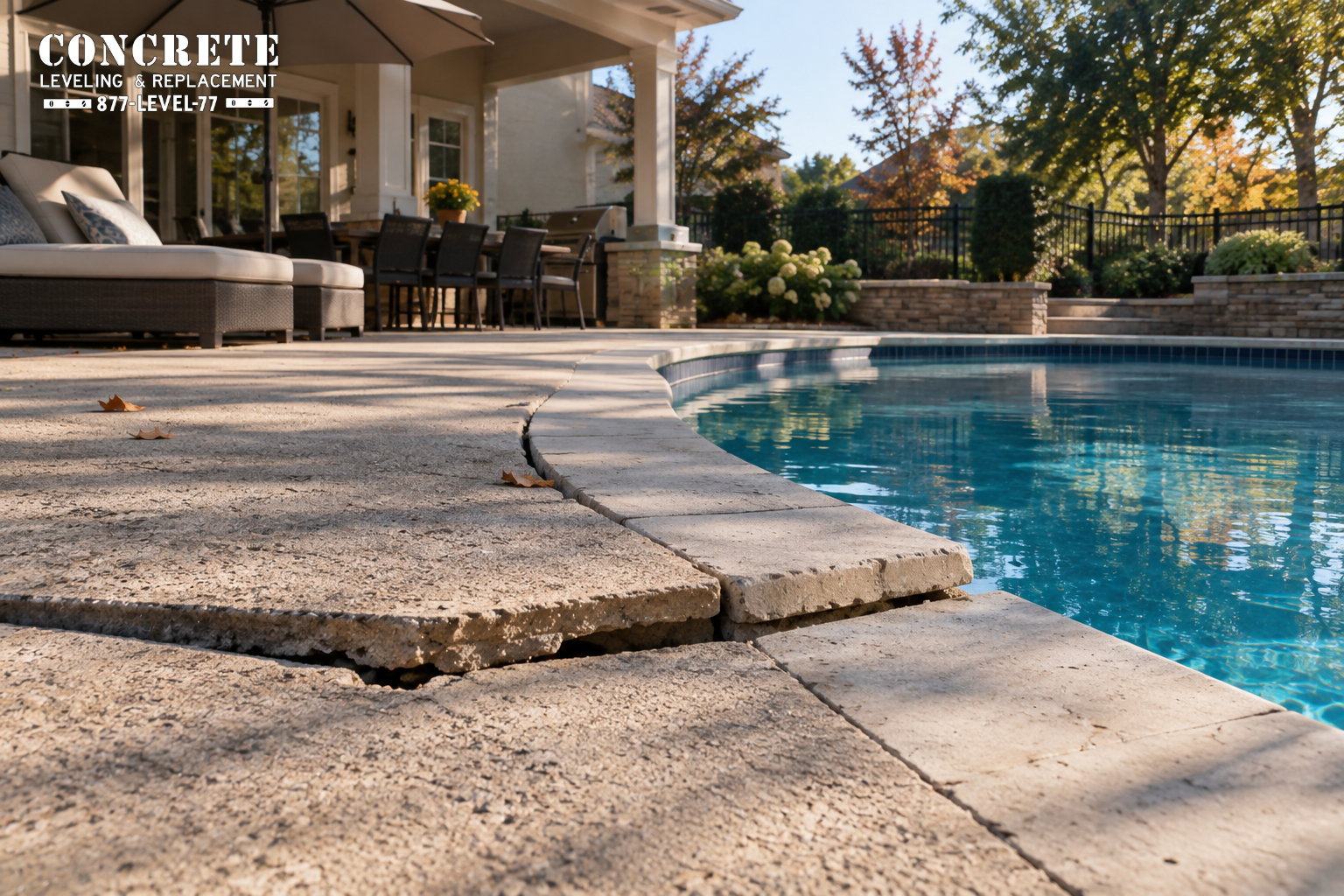
Concrete might seem like it’s built to last, but it’s not immune to water and soil changes. When water pools around a slab, it can soften the supporting soil, wash out fine particles, and leave empty spaces. Over time, this causes the slab to settle unevenly, leading to trip hazards and cracks. Even if the damage starts small, repeated wet-dry cycles can make things worse.
Water usually follows the path of least resistance. If your yard lets runoff flow toward the slab or if gutters dump water too close, the area can keep getting drenched. This ongoing saturation weakens the soil and increases the risk of slab settling unevenly. That’s why planning for drainage should be part of the concrete setup, not an afterthought.
Freeze-Thaw Cycles: Making Drainage Problems Worse
In colder areas, trapped moisture brings another problem: it expands when it freezes. Water that seeps into cracks or joints expands as it freezes, pushing the concrete apart and letting even more moisture in. The National Institute of Standards and Technology has shown how environmental conditions affect materials, and concrete is no exception. Once freeze-thaw damage starts, surfaces can flake, crack, or shift more quickly than expected.
This especially applies to Michigan, where winter cycles and spring melt can put a lot of pressure on slabs. Without good drainage, water sticks around longer, increasing the risk of heaving in winter and settling in warmer months. Proper drainage helps by moving water away before it causes lasting damage.
Common Concrete Problems from Bad Drainage
Cracking and Surface Wear
One of the first signs of drainage trouble is cracking. At first, small cracks might just look like a cosmetic issue, but once water starts seeping through, they can grow wider and deeper. Water can also weaken the surface paste, leading to scaling or a rough look. If the soil stays wet for too long, the slab might keep moving, causing new cracks even after minor repairs.
Some folks might try to patch visible cracks without fixing the drainage cause. This might look okay for a bit, but it usually doesn’t tackle the root of the problem. If water still collects nearby, the crack often reappears. A better move is to combine surface repair with a drainage fix and, if needed, targeted services like sidewalk repair or patio repair.
Settling, Sinking, and Void Formation
Too much water can wash away the soil supporting a slab, leaving small gaps that eventually collapse under the weight. When this happens, the slab starts to sink or tilt. This is where techniques like polyurethane foam injection come in handy. It fills gaps, stabilizes the base, and lifts the slab with minimal disruption. It’s one of the best ways to address drainage-related settling without needing full replacement.
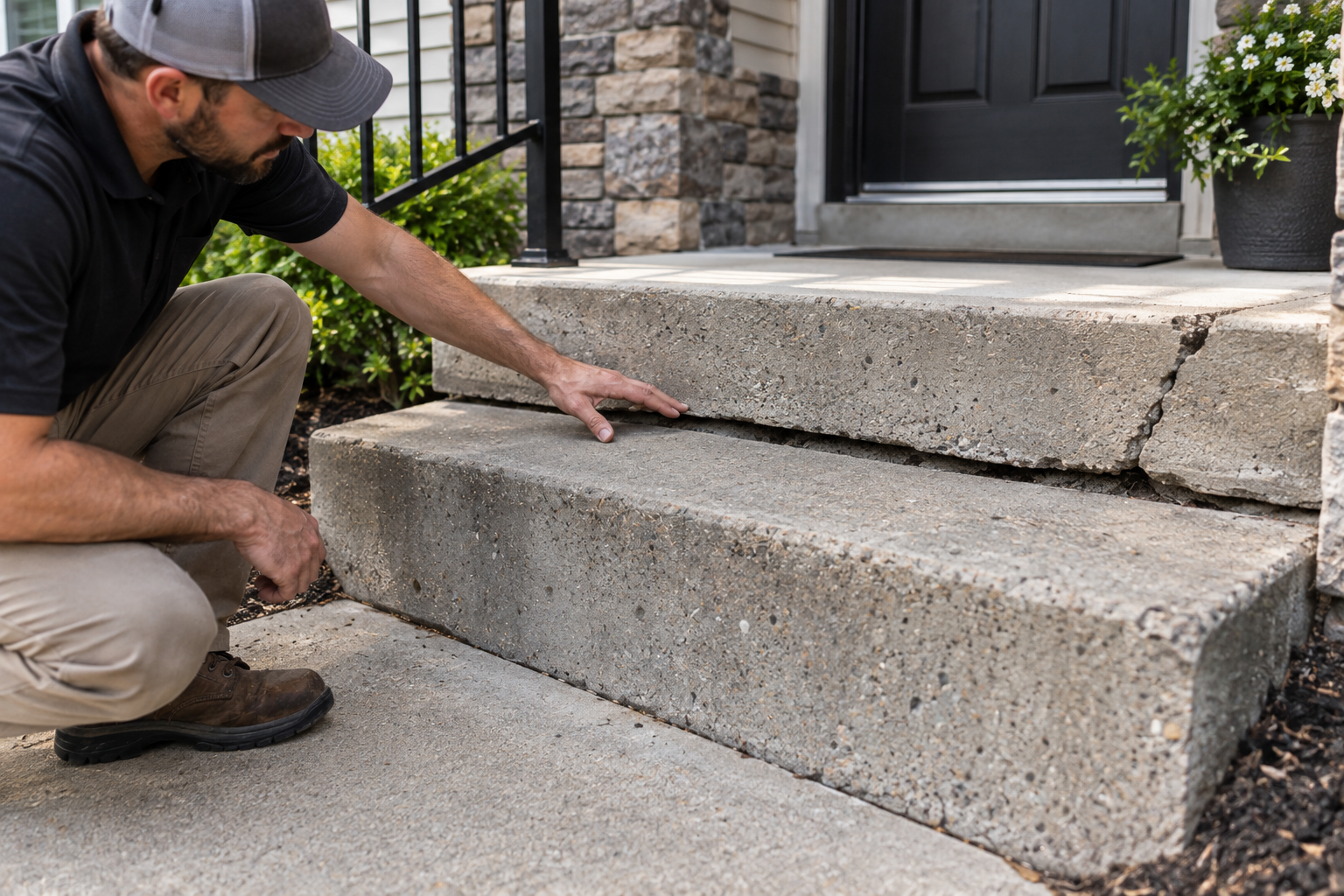
Voids are often hidden, so many don’t realize the damage until the slab becomes noticeably uneven. Walkways might tilt, driveways might crack at joints, and porch edges could become unsafe. In these situations, combining drainage fixes with porch repair or step repair can restore both function and safety.
Erosion Around Edges and Joints
Drainage problems can also erode the soil around slab edges and joints. Once the supporting material is gone, the concrete loses stability at the edges, leading to corner breaks and settling. This type of damage often happens where roof runoff is concentrated or where downspouts discharge right onto landscaping next to concrete. Over time, even a well-built slab can fail if the edges get undermined.
Regular inspections can catch these issues early. If you see soil washing away from the sides of a driveway or the ground dropping from a patio, that’s a clear sign the drainage pattern needs attention. In some cases, improving surface grading and adding proper runoff control can stop erosion before structural repairs are required.
Modern Trends in Concrete Drainage Repair
Polyurethane Foam Injection: Lifting and Stabilizing
One of the biggest trends in concrete repair is polyurethane foam injection. This method is valued because it’s fast, clean, and non-invasive. High-density foam is injected under the slab, expanding to fill gaps, stabilize the soil, and lift the concrete back to level. It can also improve drainage by reducing empty spaces that trap water.
Compared to full replacement, this approach can be more cost-effective and less disruptive. This is crucial for driveways, garage floors, walkways, and busy entryways where downtime matters. It’s not a fix-all, but when drainage issues have caused settling without severe structural failure, foam injection can be an excellent option. For more on repair choices, check out our garage floor repair and concrete floor repair services.
Permeable Concrete and Pavers
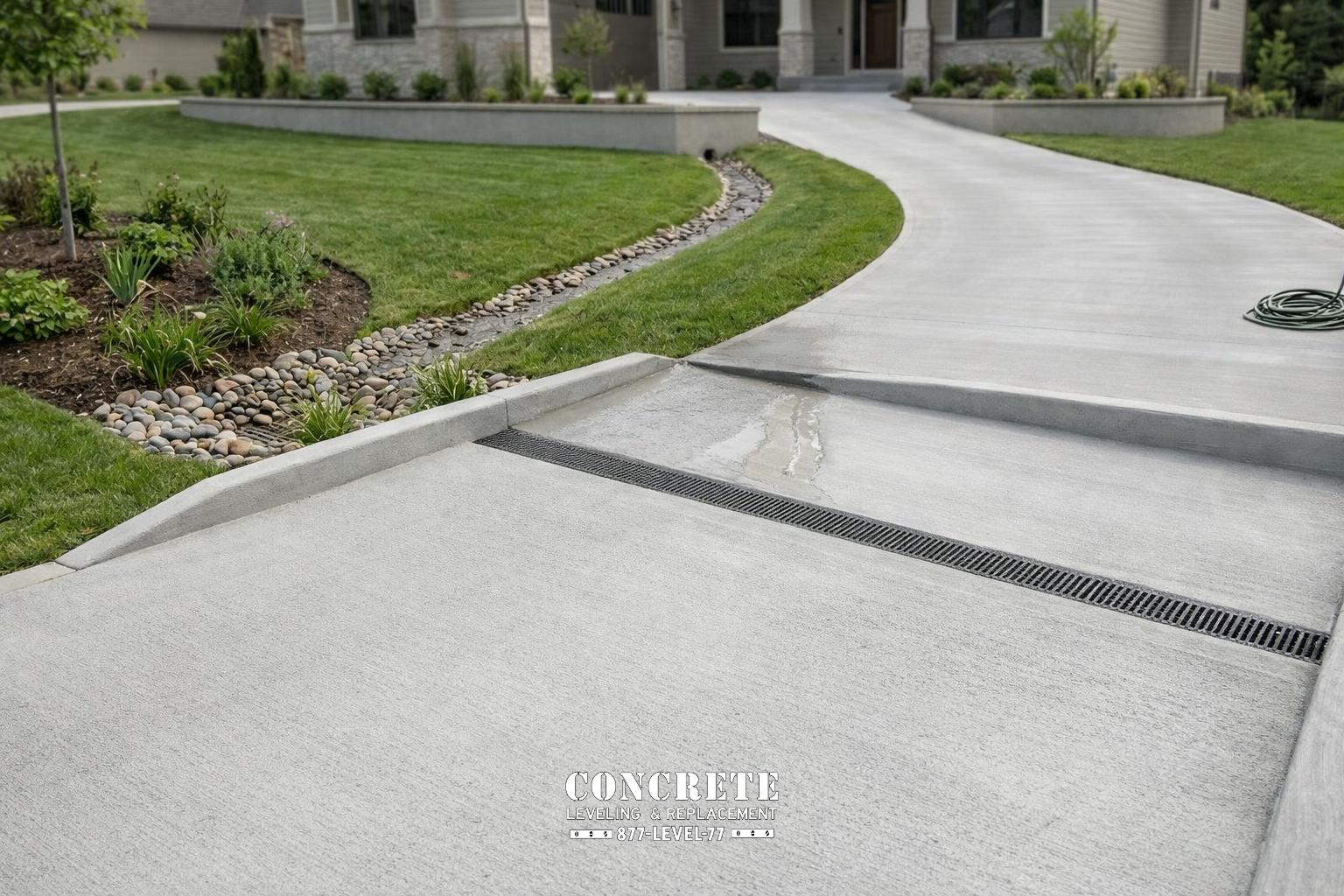
Another development is the use of permeable materials. These are designed to let water pass through the surface instead of running across it. This reduces pooling, helps manage runoff, and limits erosion. These systems are especially useful where stormwater needs better control, and they’re becoming popular for driveways, patios, and pedestrian areas.
Beyond practicality, they’re also good for the environment. Better stormwater management can relieve drainage systems and keep water away from weak concrete edges. While permeable systems need proper design and maintenance, they’re a smart long-term option for properties where pooling has been an ongoing issue.
Improved Sealing and Moisture Management
Sealers have come a long way. High-quality concrete sealers now offer more reliable protection against moisture, helping slow down damage from standing water. Sealers don’t replace drainage, but they add another layer of defense. This is especially helpful in high-traffic areas like sidewalks and pool decks.
When combined with correct grading and working gutters, sealing can meaningfully extend concrete life. The key is timing and proper application. A sealer works best on a clean, solid surface, so it should be part of a broader maintenance plan rather than a stand-alone solution.
Spotting Drainage Problems Before They Harm Concrete
Look for Standing Water
The most obvious sign of bad drainage is water that lingers after rain. If puddles remain near your concrete for hours or days, the slab is likely in a moisture-prone area. That standing water can slowly seep into joints, cracks, and edges. If you see the same wet spots after every storm, the drainage issue is likely structural rather than temporary.
Check after rainfall by walking around and noting where water settles. Pay attention to low points, downspout zones, and areas where the soil looks soft or muddy. These observations can often reveal the root cause before major damage occurs.
Watch for Uneven Surfaces
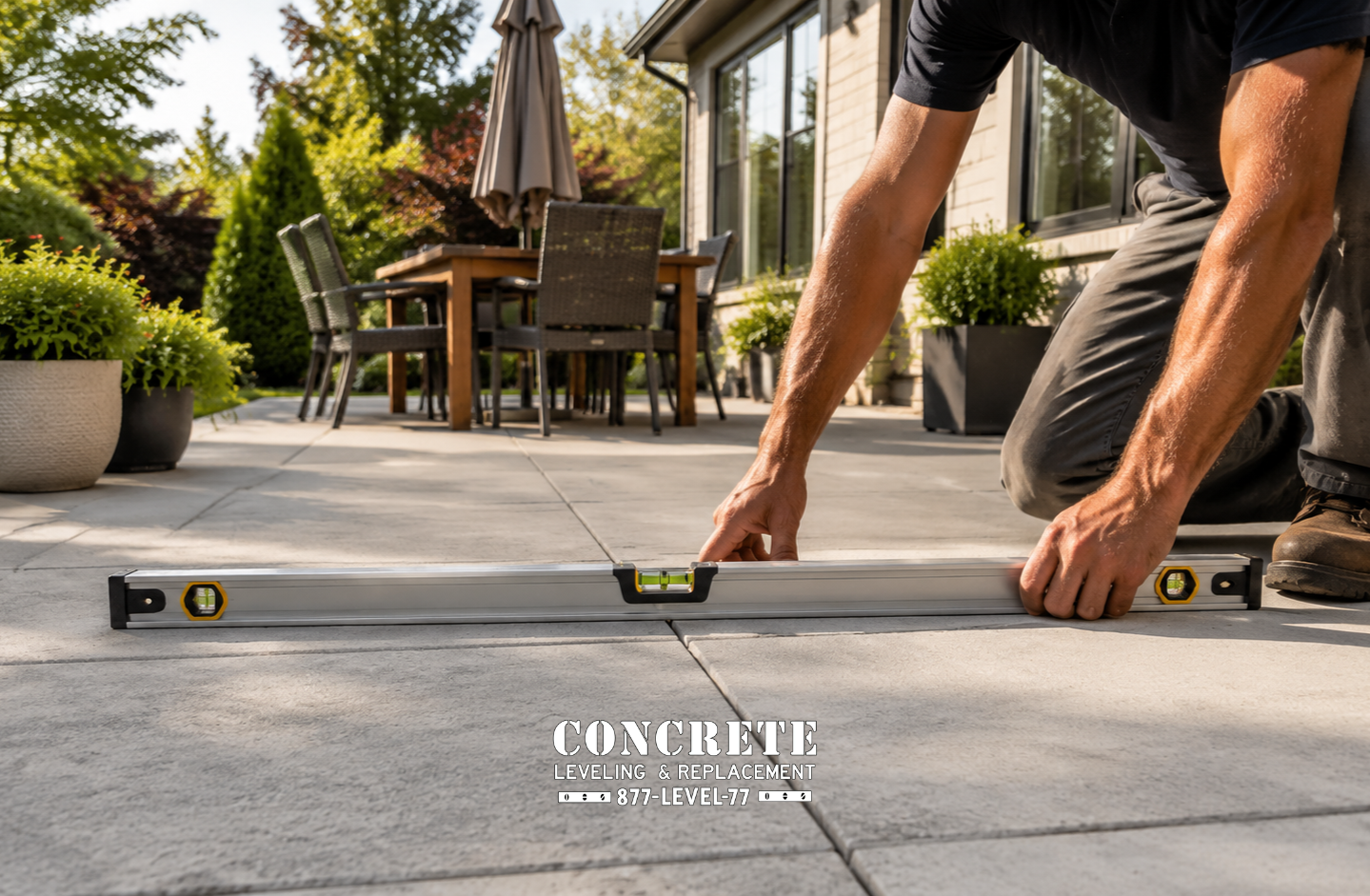
Another warning sign is a surface that no longer feels level. If one section of the driveway, walkway, or patio sits lower than the surrounding area, drainage-related settling may already be happening. Joints that separate or become irregular often indicate movement in the base below. This is where professional concrete leveling can help by restoring usable grade while addressing the support beneath the slab.
Uneven concrete isn’t just about looks. It can create trip hazards, collect water in the low spots, and speed up further erosion. The sooner the issue is recognized, the more repair options are usually available.
Check Nearby Soil and Landscaping
Drainage problems don’t always start on the slab itself. Often, the issue begins in the surrounding yard. Soil that slopes toward concrete, clogged downspouts, or landscaping that traps water close to the foundation can all lead to concrete failure. In some cases, redirecting water can make a major difference in slab longevity.
If the ground is consistently wet, you may also see plant dieback, soil washout, or staining around slab edges. These clues point to a pattern of repeated water exposure. Fixing that pattern early is one of the best ways to protect your investment.
How to Protect Concrete with Better Drainage
Keep Gutters and Downspouts in Check
Routine maintenance is one of the easiest ways to protect concrete. Gutters should be cleaned regularly, and downspouts should discharge far enough from slabs to prevent nearby water collection. Extension pipes, splash blocks, and underground drainage lines can help move water away from problem areas. The goal is simple: keep roof runoff from soaking the soil next to your concrete.
Many slab problems begin with small maintenance errors. A clogged gutter or disconnected downspout can channel large amounts of water directly against a sidewalk or driveway. Regular checks after storms can catch these problems before they cause settling.
Regrade Soil to Move Water Away
Proper grading is a strong defense against drainage-related damage. Landscaping should slope away from structures and concrete surfaces so that runoff naturally moves to drainage points. Even a small slope can make a big difference in how long water stays near the slab. If the ground has settled over time, regrading might be needed to restore proper water flow.
This is crucial for entryways and flatwork near homes where water can pool against porches or stoops. If grading corrections are needed, pairing them with catch basin repair or other water management improvements can create a stronger long-term fix.
Seal Concrete and Repair Cracks Early
Sealing concrete helps reduce moisture penetration, while early crack repair prevents water from entering vulnerable areas. A good maintenance schedule should include seasonal inspections, timely sealing, and prompt repair of joints or minor fractures. This keeps small issues from becoming expensive structural problems. It also improves the slab's appearance and helps it resist salt, weather, and everyday wear.
For those looking to get the most from their concrete, prevention usually costs less than replacement. A small investment in sealing and drainage improvements can save thousands later by avoiding major settlement or surface failure.
Real-Life Example: Foam Lifting Solves Drainage-Related Settlement
Case Study from Chicago
In the Chicago area, crews used polyurethane foam injection to lift and stabilize sunken slabs affected by drainage issues. In such cases, poor water movement likely contributed to voids beneath the concrete, making the surface unsafe and uneven. Foam injection tackled both the visible settlement and the hidden voids, restoring usability without needing full demolition.
This type of repair works best when drainage issues are understood and corrected at the same time. If the water problem is ignored, even a successful lift might be temporary. That’s why smart repair planning includes an inspection of grading, runoff, and soil support.
Why Local Conditions Matter in Michigan
In places like Romulus, Michigan, the weather can change quickly from wet conditions to freezing temperatures and back. This makes drainage especially important because it amplifies soil movement and moisture damage. Concrete surfaces that might hold up well in a dry climate can fail much sooner when water repeatedly reaches the base and freezes.
Local expertise matters because the best solution depends on the property’s soil, slope, and water flow patterns. A family-owned contractor with experience in leveling and replacement can evaluate whether drainage correction, foam lifting, or partial replacement is the most practical choice. That’s the kind of honest assessment property owners need to protect long-term value.
FAQ: Common Questions About Drainage and Concrete
How Can I Tell if Drainage is Damaging My Concrete?
Look for puddling, cracks, sinking slabs, erosion around edges, and water pooling near joints. If you see the same wet areas after storms or notice that the slab has started to tilt, drainage is likely part of the problem. The earlier you catch it, the more repair options you have.
Is Repair Better Than Replacement?
Not always, but often yes. If the slab is structurally sound and the main issue is settling or voids from drainage, leveling can be faster and less expensive than replacement. If the concrete is severely broken or beyond stabilization, replacement might be the better long-term choice. A professional evaluation can help determine the best path.
How Long Do Drainage-Related Concrete Repairs Last?
With proper maintenance, drainage-aware repairs can last for many years. The lifespan depends on how well the water issue is corrected, the soil conditions, and how much traffic the slab receives. Polyurethane foam injection, for example, can provide lasting results when paired with grading and runoff improvements.
What Should I Fix First?
Start with the water source. Clean gutters, redirect downspouts, check the slope of the yard, and repair obvious drainage failures. After that, address the concrete damage itself with leveling, sealing, or repair as needed. Fixing the water issue first gives the repair a much better chance of lasting.
Wrapping It Up: Protect Your Concrete by Managing Water
Proper drainage isn’t just a nice upgrade for concrete surfaces; it’s one of the most important ways to keep them strong and safe. Water that pools, saturates soil, or washes out support can lead to cracking, settling, erosion, and costly structural damage. The good news is that many of these problems can be prevented or corrected with the right mix of drainage improvements, maintenance, and targeted concrete repair.
If your driveway, sidewalk, patio, porch, or commercial slab is showing signs of water-related damage, the best next step is a professional inspection. Services such as driveway repair, sidewalk repair, and concrete leveling can restore function while a drainage plan addresses the root cause. For honest evaluations and practical solutions, Concrete Leveling & Replacement is ready to help.
If you want to protect your concrete investment, don’t wait for the next storm to reveal a bigger problem. Review your drainage, inspect your slabs, and take action early. To learn more or schedule an evaluation, contact Concrete Leveling & Replacement at (734) 895-3820 or visit our website today.