Concrete may look solid and permanent, but its long-term performance depends heavily on what is happening underneath it. Soil conditions influence whether a driveway stays level, a sidewalk remains safe, or a slab begins to crack and sink over time. When the ground shifts, holds too much water, or was never compacted correctly, even high-quality concrete can lose support and fail early.
That is why understanding the relationship between soil and concrete is so important for property owners, builders, and facility managers. If you are already seeing signs of settlement, learning more about concrete leveling and driveway repair can help you make a smarter decision before the damage spreads. In many cases, the best repairs start with identifying the soil problem first, not just patching the visible surface.
Below, we will explore the soil types that affect concrete stability, the warning signs of foundation movement, modern repair methods, and best practices that help concrete last longer. We will also look at how climate, drainage, and compaction shape the performance of slab-on-grade surfaces in real-world conditions.
For a broader look at our service areas, you can also visit our counties we serve page to see how we support property owners across Michigan.
Why soil conditions matter so much for concrete
Concrete depends on stable support
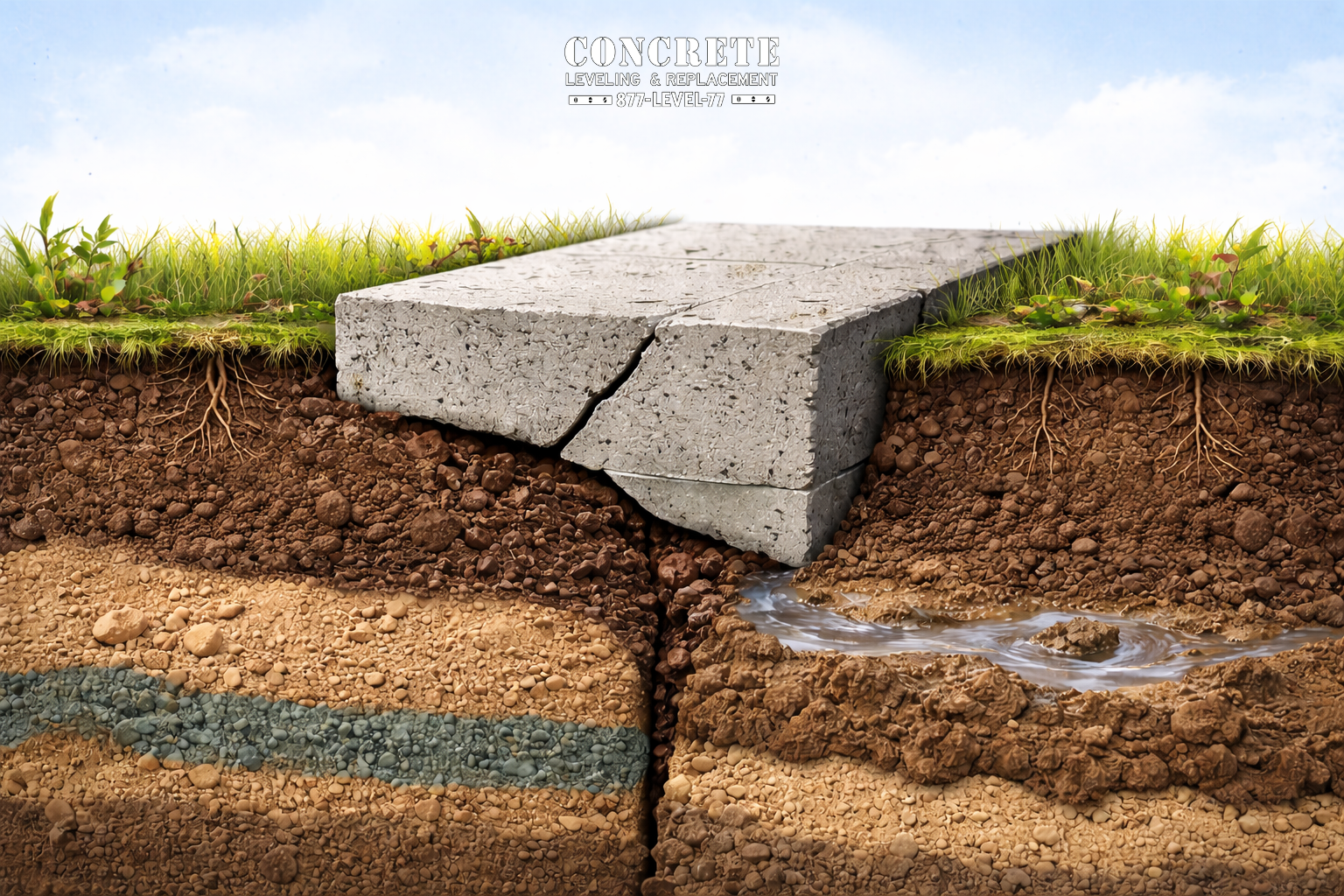
Concrete is strong in compression, but it is not designed to float on unstable ground. A slab performs well only when the soil underneath it provides consistent support across the entire surface. If parts of the subgrade settle, wash out, or expand, stress builds in the concrete and eventually shows up as cracking, tilting, or sinking.
This is especially important for slabs-on-grade, driveways, porches, sidewalks, and commercial floor sections. These surfaces are in constant contact with the ground, which means the soil beneath them becomes part of the structure itself. When that base changes, the concrete above it must absorb the movement, and that is when problems start.
Moisture is often the hidden culprit.
One of the biggest forces affecting concrete stability is water. Excess moisture can soften soil, erode fine particles, and create voids beneath slabs. In colder climates, water can also freeze and expand, leading to seasonal heaving and shifting that is especially hard on exterior concrete.
According to the U.S. Environmental Protection Agency, poor drainage and improper grading can contribute to water intrusion and long-term property damage. You can learn more about drainage and water management best practices through the EPA, which provides helpful guidance on environmental conditions that affect buildings and land use. This is why drainage planning is not just a landscaping concern; it is a structural concern too.
Common soil types and how they affect concrete slabs
Expansive clay soils
Clay soils are one of the most common reasons for settlement and movement. They expand when wet and shrink when dry, creating a constant cycle of pressure changes beneath concrete. That movement can lead to uneven support, slab cracking, and noticeable changes in grade from one season to the next.
Research and industry experience consistently show that expansive soils are a major source of foundation and slab trouble. The National Institute of Building Sciences explains that soil volume change can create significant structural movement when foundations are not designed for local ground conditions. For a related example of how our team evaluates these issues in the field, see our article on why concrete slabs sink and how to fix them efficiently.
Sandy and loose soils
Sandy soils drain well, which is helpful in many situations, but they can lack the cohesion needed to hold concrete in place if they are not compacted properly. Loose sandy subgrade can shift under load, especially around driveways, patios, or entryways that experience repeated vehicle or foot traffic. Over time, this can create small voids that turn into bigger settlement problems.
When sandy soil is combined with poor base preparation, the slab may begin to move almost immediately after installation. That is why compaction and base design matter just as much as the type of soil itself. A well-compacted subbase can turn a marginal soil condition into a reliable support layer, while a poorly prepared base can fail even under a light load.
Silty soils and mixed subgrades
Silty soils often fall somewhere between clay and sand in behavior, but they can still become unstable when wet. They may hold moisture longer than desired, lose bearing strength after heavy rain, or erode more easily if drainage is poor. In mixed soil conditions, the performance of the slab can vary from one area to another, which makes settlement harder to predict.
This is one reason experienced contractors recommend testing the soil before building or repairing concrete surfaces. The more the soil composition changes across a site, the more important it is to design the support system with those differences in mind. In some cases, a shallow repair is not enough unless the underlying soil issue is addressed, too.
Warning signs that soil is affecting your concrete
Cracks, slopes, and uneven transitions
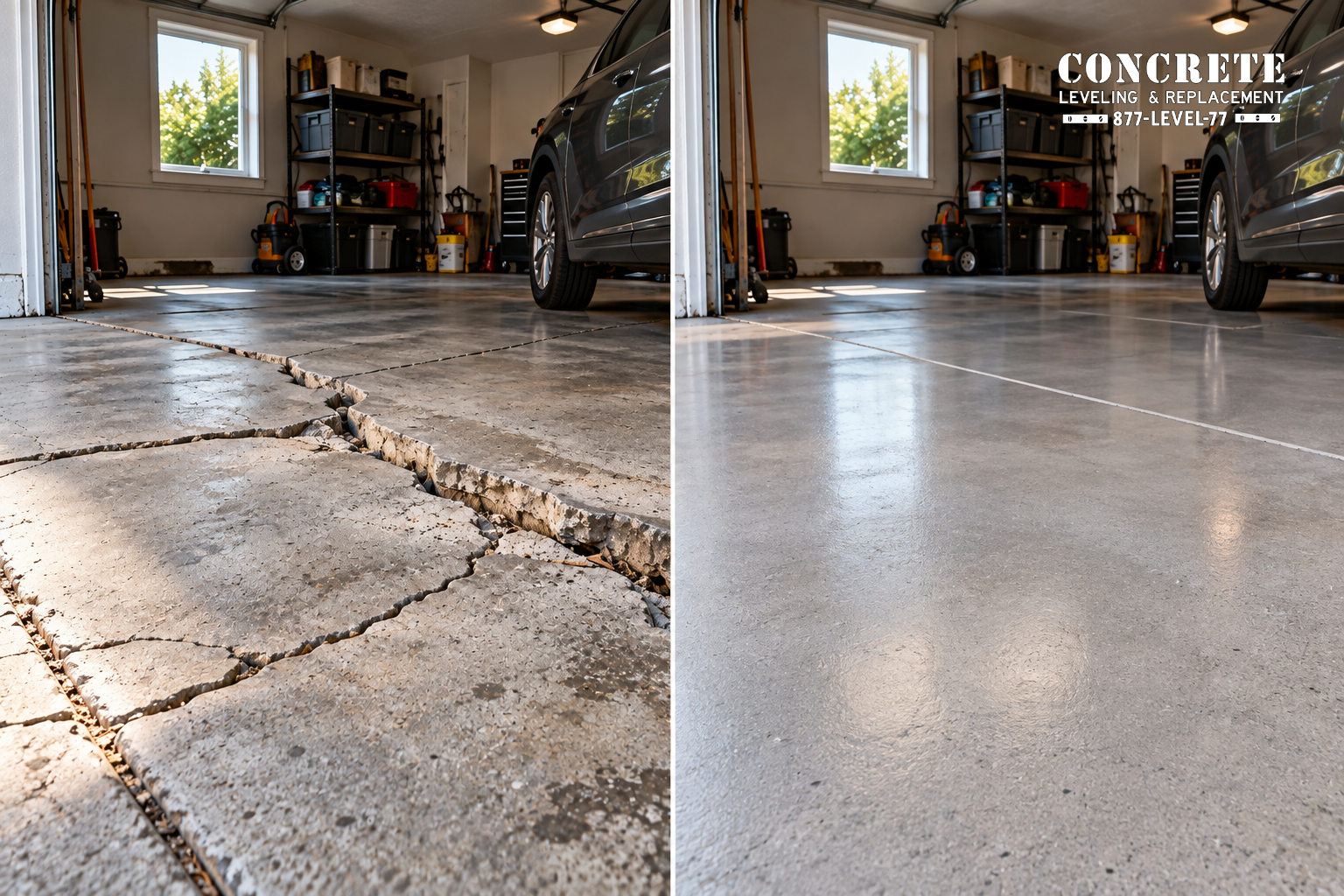
The most visible warning signs of soil-related concrete movement are cracks, sloped slabs, and misaligned joints between sections. You may notice a driveway edge that no longer meets the garage floor cleanly, or a sidewalk panel that sits higher than the one next to it. These are often signs that one section of soil is settling faster than another.
Another common clue is repeated cracking after previous repairs. If a crack keeps coming back, the problem may not be the concrete itself but the ground below it. In those cases, a more complete evaluation is needed to determine whether leveling, stabilization, or partial replacement is the better option.
Water is pooling around the foundation.
Standing water near slabs, porches, or foundations is a serious warning sign. Water that lingers around a structure can weaken the soil, carry away fine particles, and increase the chance of settlement. It can also worsen freeze-thaw damage in colder months, especially in exterior concrete that experiences repeated wet-dry cycles.
If you notice puddling after rain, it may be a sign that grading, drainage, or gutter discharge needs attention. Our team often evaluates these issues alongside the concrete itself because the root cause is frequently connected to water movement. In many cases, fixing the drainage pattern is just as important as repairing the slab.
Sticky doors, wall cracks, and floor movement
Not all soil problems start with concrete. Sometimes the first signs appear inside the home or building. Doors that suddenly stick, floors that feel sloped, or cracks forming near baseboards and interior corners can all suggest that soil movement is affecting the structure.
For a more detailed look at related hazards, our post on the dangers and legal implications of uneven concrete explains why small elevation changes can become major safety concerns. When in doubt, early inspection is always better than waiting for the problem to worsen.
Why soil testing and compaction should happen before construction
Soil testing reveals bearing capacity
One of the most important steps in preventing future concrete problems is testing the soil before the slab is built. Soil testing helps determine composition, moisture content, density, and bearing capacity, all of which affect how much support the ground can provide. Without this information, builders are making assumptions that may not match the actual site conditions.
Good testing also helps identify whether a site contains expansive clay, loose fill, or other problematic conditions. That information can guide foundation design, slab thickness, reinforcement decisions, and drainage planning. The National Institute of Standards and Technology offers useful technical resources on construction materials and performance standards that support better decision-making in the building process.
Compaction creates a stronger base.
Even good soil can fail if it is not compacted correctly. Compaction reduces air gaps, improves load distribution, and helps prevent future settlement. When a slab is poured on poorly compacted fill, the ground may compress later under the weight of the structure, causing the concrete to sink or tilt.
Proper compaction is especially important around new additions, patios, and driveways where fill soil may have been introduced during grading. A strong base does not happen by accident; it is the result of careful preparation and quality control. That is why experienced contractors pay close attention to subgrade conditions before concrete is placed.
Drainage planning protects the subgrade.
Drainage is one of the most overlooked parts of long-term concrete performance. If water collects near a slab, it can saturate the soil, weaken support, and create long-term instability. Good drainage systems move water away from the structure before it can seep into the ground underneath.
This is especially important around downspouts, low spots, and hardscapes that sit close to the foundation. When drainage and grading are aligned, concrete tends to remain more stable and repairs last longer. When they are not, even the best surface repair can be short-lived.
How modern concrete leveling helps stabilize sinking slabs
Polyurethane foam injection as a modern solution
One of the most effective trends in the concrete leveling and repair industry is polyurethane foam injection. This method involves injecting lightweight, water-resistant foam beneath a sunken slab. As the foam expands, it fills voids, compresses loose soil, and gently lifts the concrete back toward its original position.
The process is fast, efficient, and far less disruptive than full replacement. It also reduces waste because the existing slab is preserved instead of being demolished. In many repair situations, it is an environmentally responsible choice that saves time, lowers material use, and restores safety quickly. If you want to learn more about this type of repair, our concrete leveling service is designed for exactly these conditions.
Why does this method work so well on soil-related settlement
Polyurethane foam works because it addresses both the symptom and part of the cause. It lifts the slab, but it also helps stabilize the voids and weak spots underneath. That makes it especially useful where soil erosion, washout, or compaction failure has created uneven support.
This method is popular for sidewalks, garage floors, pool decks, steps, and other slabs that need a reliable fix without demolition. It is also useful when access is limited or when time matters, such as in commercial settings. Because the foam cures quickly, many surfaces can be put back into service sooner than with traditional replacement methods.
When leveling is better than replacement
Not every slab needs to be torn out and rebuilt. If the concrete is still structurally sound, leveling can often restore performance at a much lower cost than replacement. That is why an honest evaluation is so valuable. The right answer depends on the cause of the movement, the condition of the slab, and how much structural support remains.
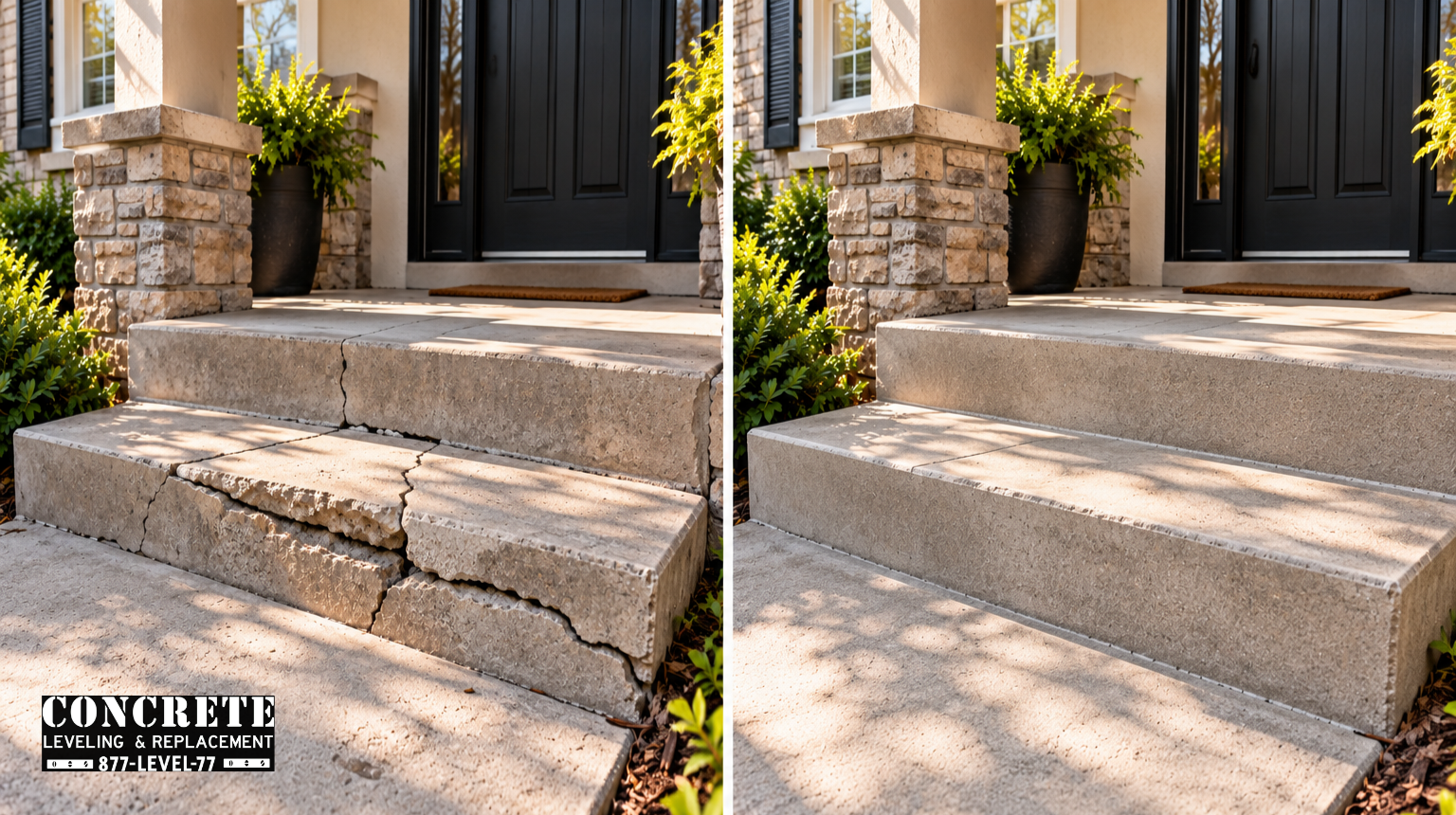
At Concrete Leveling & Replacement, we focus on practical recommendations based on what the property actually needs. For example, if a porch or entry step has settled but is still in good shape, our step repair and leveling options may be enough to restore safety and appearance without unnecessary demolition.
Best practices to prevent future concrete problems
Control water before it reaches the slab
The easiest way to protect concrete is to keep water from undermining it. That means maintaining gutters, extending downspouts, correcting grading issues, and eliminating low spots that collect runoff. Even a small drainage problem can cause soil movement over time, especially if the same area stays saturated after every storm.
Property owners should also inspect areas where roof water or surface runoff tends to gather near concrete. If water is repeatedly landing in the same zone, the soil there may become soft and unstable. That can lead to a settlement that would have been easy to prevent with a better drainage path.
Use the right concrete repair strategy for the surface
Different concrete surfaces face different loads, and repair strategies should match those conditions. A garage floor, for example, may require a different approach than a sidewalk or patio because vehicles, foot traffic, and temperature swings all affect performance differently. Matching the fix to the use case helps improve durability.
For homeowners dealing with settlement on outdoor living spaces, our patio repair and concrete pool deck repair services can help restore level surfaces while reducing trip hazards. In commercial settings, specialized repairs may also be needed for concrete floors, curbs, or loading areas where heavier traffic puts additional stress on the subgrade.
Inspect early and fix small issues quickly.
Minor unevenness often becomes a bigger problem if it is ignored. A small void today can turn into a large settlement area after one wet season or one freeze-thaw cycle. Regular inspections help catch the early signs before they spread across larger sections of the slab.
That is particularly important in places with seasonal moisture swings, where soil expands and contracts throughout the year. In Michigan, these conditions can be especially challenging because moisture, freezing temperatures, and thaw cycles all influence ground movement. For property owners in the region, early action usually means simpler repairs and lower long-term costs.
Real-world example: why localized soil evaluation matters
A lesson from expansive soils
In one documented case study from Charleston, SC, contractors addressed foundation problems linked to expansive clay soils by performing soil testing and designing a more customized foundation approach. The result was improved long-term stability and less risk of additional structural movement. That type of example shows why one-size-fits-all concrete solutions often fall short when the soil varies from site to site.
Expansive soils do not just affect one property type. They can impact residential porches, commercial sidewalks, industrial floors, and even exterior steps. The key is recognizing that the soil itself may be driving the problem, which means the repair must be chosen accordingly.
What this means for properties in Michigan
Michigan properties often deal with seasonal moisture variation, which can change how soil behaves throughout the year. A site that seems stable in the summer may become much more vulnerable after a wet spring or frozen winter. That is why local experience matters when evaluating settlement and recommending repairs.
Our crews work throughout Michigan, including Wayne, Oakland, Macomb, and Washtenaw counties, so we see firsthand how local ground conditions affect concrete surfaces. For property owners who want a service-area overview, the counties we serve page provides a helpful starting point. A local assessment can reveal whether the issue is soil-related, drainage-related, or the result of another structural factor.
How to know whether you need leveling, repair, or replacement
Start with a professional inspection
The first step is always a careful inspection. A qualified contractor should look at slab movement, visible cracking, soil conditions, grading, drainage patterns, and surrounding structures before making a recommendation. That assessment should explain not only what is wrong, but why it happened.
If the concrete is structurally intact and the problem is primarily settlement, leveling may be the best solution. If there is severe deterioration, multiple failed patches, or extensive structural breakage, replacement may be the better long-term option. The right answer should be based on evidence, not guesswork.
Look at the whole system, not just the surface.
Concrete does not fail in isolation. The surrounding environment, water flow, base preparation, and soil movement all play a role in its performance. That means a good repair plan should consider the full system, not just the visible crack or the uneven edge.
For commercial properties, this can include curb and gutter conditions, catch basin drainage, and nearby flatwork that channels water toward or away from the slab. In high-traffic spaces, a broader evaluation helps ensure that repairs are durable and that safety concerns are addressed across the property. If needed, services such as catch basin repair and curb & gutter repair can support the concrete surface by improving water control.
Frequently asked questions about soil and concrete stability
Can bad soil really cause concrete to sink?
Yes. Soil that is poorly compacted, overly wet, expansive, or eroded can absolutely cause concrete to sink. The slab is only as stable as the support underneath it, so when the subgrade changes, the concrete changes with it. That is why soil issues are one of the most common root causes of settlement.
Is leveling always enough to solve the problem?
Not always. Leveling can restore elevation and safety, but it works best when the slab is still in good condition, and the underlying issue is manageable. If the concrete is badly broken or the soil problem is severe and unresolved, replacement or additional drainage work may be needed.
How do I reduce the risk of future settlement?
Focus on drainage, compaction, and regular inspections. Make sure water moves away from the structure, keep gutters and downspouts clear, and address early signs of sinking before the slab becomes more damaged. Preventive care is almost always less expensive than major structural repair.
For added insight into seasonal damage, our guide on how weather can mess with your concrete explains how freeze-thaw cycles, rain, and temperature swings can intensify soil-related issues over time.
Conclusion: Protect the concrete by addressing the soil beneath it
Soil conditions have a direct impact on the stability, safety, and lifespan of concrete surfaces. Clay that expands, sand that shifts, water that collects, and subgrade that was never compacted properly can all create problems that show up as cracks, sinking, or uneven slabs. The good news is that many of these issues can be managed when they are identified early and addressed with the right repair strategy.
If your driveway, sidewalk, porch, or floor is starting to settle, the most effective next step is a professional evaluation that looks below the surface, not just at the visible damage. In many cases, modern concrete floor repair or leveling can restore usability, improve safety, and extend the life of the existing slab without full replacement. When you are ready for honest answers and practical solutions, Concrete Leveling & Replacement is here to help with thoughtful recommendations and experienced service.
To learn more or request an evaluation, contact our team at 30443 Ecorse Rd, Romulus, MI 48174 or call (734) 895-3820. You can also explore our service options and find the repair that best fits your property’s needs.