How Long Does Concrete Leveling Last?
Thinking about fixing that sunken or uneven concrete? Concrete leveling is a smart way to bring back the safety and look of your driveway, sidewalk, patio, or even a commercial floor without ripping everything out. If you're considering concrete leveling services, you're probably wondering how long it will last.
Here's the gist: Quality concrete leveling can last for many years, sometimes even decades. But its longevity depends on things like the method used, the soil condition underneath, water drainage, traffic, and whether the initial cause of the problem is fixed. As people seek longer-lasting, less disruptive repair solutions, the National Ready Mixed Concrete Association offers insights into concrete best practices. And let's not forget the NIOSH, which reminds us how uneven surfaces are more than just an eyesore—they're safety hazards.
What Concrete Leveling Actually Does
How slab lifting works
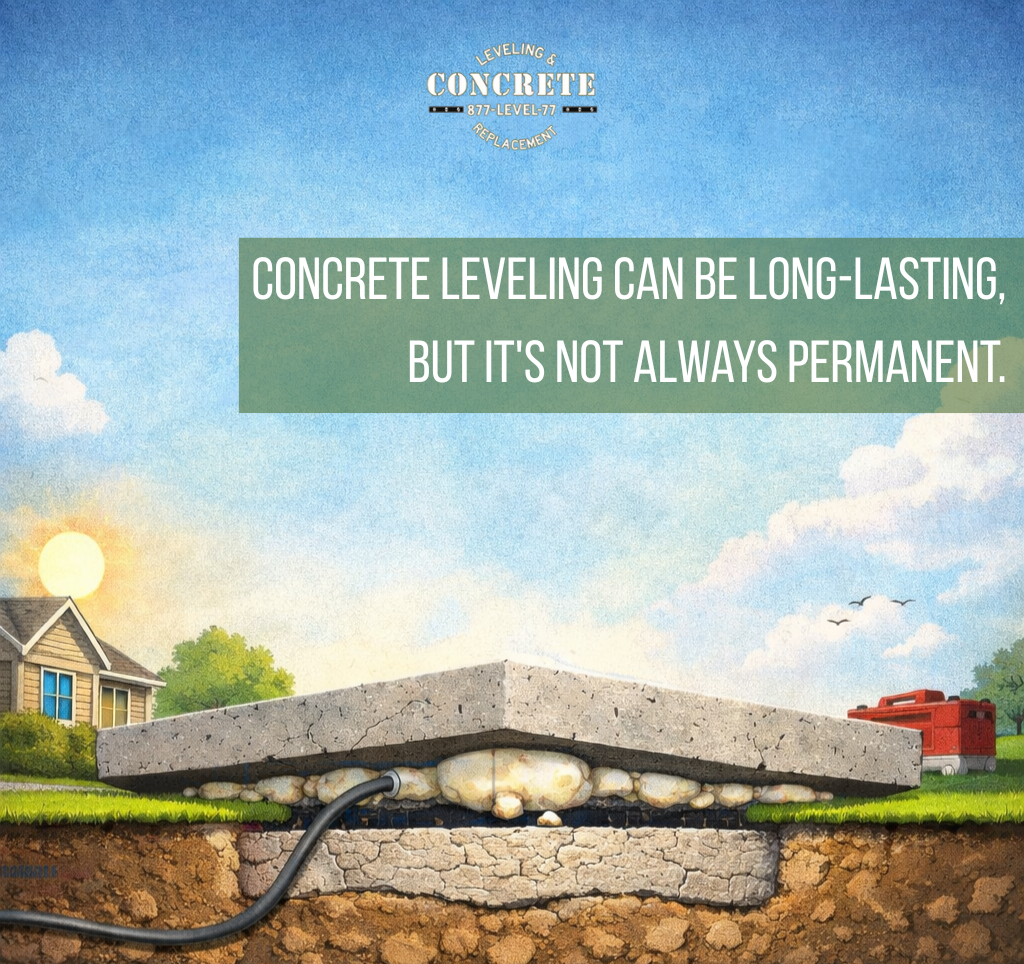
Concrete leveling, also known as slabjacking or mudjacking, fixes uneven concrete by injecting a material beneath the slab to fill the gaps and raise it up. This not only levels the concrete but also stabilizes the base to prevent further sinking.
Choosing the right method often depends on the type of slab and how bad the problem is. Traditional mudjacking uses a cement-based slurry, while newer methods like polyurethane foam expand under the slab and set quickly. If you're weighing options for a walkway or entryway, check out our sidewalk repair services. For bigger jobs, you might want to look into driveway repair options.
Why is it different from replacement?
Concrete leveling isn't the same as pouring new concrete. Replacement involves removing the entire slab and putting in a new one, which is necessary if the concrete is too far gone. Leveling is more about preserving what you have by correcting the problem before it becomes a major headache.
For slabs with good surface condition but poor support underneath, leveling is often the best choice. But if your slab has major cracks or is falling apart, something like concrete floor repair or even replacement could be more cost-effective in the long run.
How Long Does Concrete Leveling Usually Last
Typical lifespan expectations
There's no exact expiration date for leveled concrete. If done right, it can last for many years, especially if the soil is stable and water is directed away from the area. Many people think of leveling as a short-term fix, but that's not always the case. In a well-prepared situation, it can be a long-lasting solution.
The soil condition and the quality of the repair matter more than the material used. If the ground keeps shifting or if water isn't managed, even the best leveling job might need touch-ups. That's why a thorough evaluation is so crucial before starting the work.
Polyurethane foam versus mudjacking
The method you choose can significantly affect how long the repair lasts. Polyurethane foam is popular because it sets quickly and adds minimal weight, making it a strong option for both residential and commercial slabs. Mudjacking, which uses a heavier slurry, can also be effective but might not be the best choice for every situation.
Think about what your slab needs. For a small porch, a fast-setting polyurethane might be perfect. For a larger commercial area, mudjacking might still be the way to go. If you're considering options for outdoor living areas, our patio repair services can provide more insights on how different methods work together.
What Determines How Long the Repair Will Hold
Soil movement and compaction
Soil conditions are one of the main reasons concrete starts to sink. If the soil wasn't compacted properly when the slab was first laid, it can compress over time and create voids. Factors like clay, erosion, and weather cycles can also move the ground under the concrete. If the soil keeps moving after leveling, the slab might settle again.
A good contractor will check the soil conditions before recommending a fix. Ignoring this can lead to a temporary solution. For example, if water pools near a sidewalk, addressing drainage issues can help make the leveling last longer. For those with trip hazards, our step repair services often complement leveling when stairs or landings are uneven.
Drainage and water management
Water is a big enemy of concrete, not because it dissolves it, but because it changes the ground supporting it. Poor drainage can wash away soil and create voids under a slab, leading to sinking and cracking. Fixing drainage issues when you level the concrete can make repairs last longer.
The U.S. Environmental Protection Agency offers tips on managing runoff and site drainage to reduce erosion. If you're interested in how weather affects concrete, our article on how weather can mess with your concrete is a good read.
Traffic load and slab use
A walkway doesn't deal with the same stress as a driveway or a commercial loading area. The more weight and vibration a slab experiences, the more crucial it is to have a stable subgrade and appropriate repair material. Heavy traffic can shorten the life of a lift if the slab is already compromised.
This is especially true for commercial properties. A floor used by forklifts needs more than just a quick fix; it needs stabilization to handle the load. For these projects, exploring factory floor repair or interior floor repair may be part of a bigger maintenance plan.
Signs a Leveling Repair Is Holding Up Well
Stable elevation and even joints
One way to see if the repair is working is by checking the joints and edges. If the slab remains level and the joints align, the repair is likely doing its job. Doors should open and close smoothly, and water should drain away instead of pooling.
It's wise to inspect the area after major weather changes. Heavy rain or snowmelt can reveal whether the soil below is still stable. These small checks can help catch problems early, saving you money in the long run. That's why many people opt for ongoing concrete maintenance instead of waiting for bigger issues.
Minimal new cracking
Some small cracks may remain or appear after leveling, especially on older concrete. But if new cracks keep popping up, it might mean the slab is still unstable. In such cases, leveling alone may not be enough.
That's why we often look at more than just the visible settlement line. We consider the slab's age and load demands. If you're seeing multiple warning signs, our guide on signs your driveway, patio, or sidewalk needs professional leveling may help you decide on the next step.
When Concrete Leveling Is Not Enough
Severe cracking and surface breakdown
Leveling works best when the slab is still strong enough to be useful. If the concrete is breaking apart, lifting it won't restore the damaged surface. In these situations, repair or replacement might be the better choice. The goal is to improve safety and durability, not just to raise concrete that's beyond repair.
Commercial properties often discover this during inspections, especially where joints and drainage systems have failed. In such cases, a combination of leveling and repair may be needed. Sometimes, our concrete floor repair or replacement solutions offer a better long-term fix because they tackle both elevation and surface issues.
Repeated settlement from unresolved causes
If a slab has been lifted but keeps sinking, the root cause wasn't fixed. This can happen if downspouts dump water next to the concrete, grading slopes toward it, or the soil is unstable. Releveling without solving the problem isn't usually a good investment.
In these cases, a thorough site assessment is needed. The aim is to find out if the problem is isolated or part of a bigger drainage or soil issue. A reliable contractor will explain if more work is needed before another lift makes sense. That's what customers expect when they reach out to Concrete Leveling & Replacement.
Real-World Examples and Market Trends
Residential trip hazard corrections
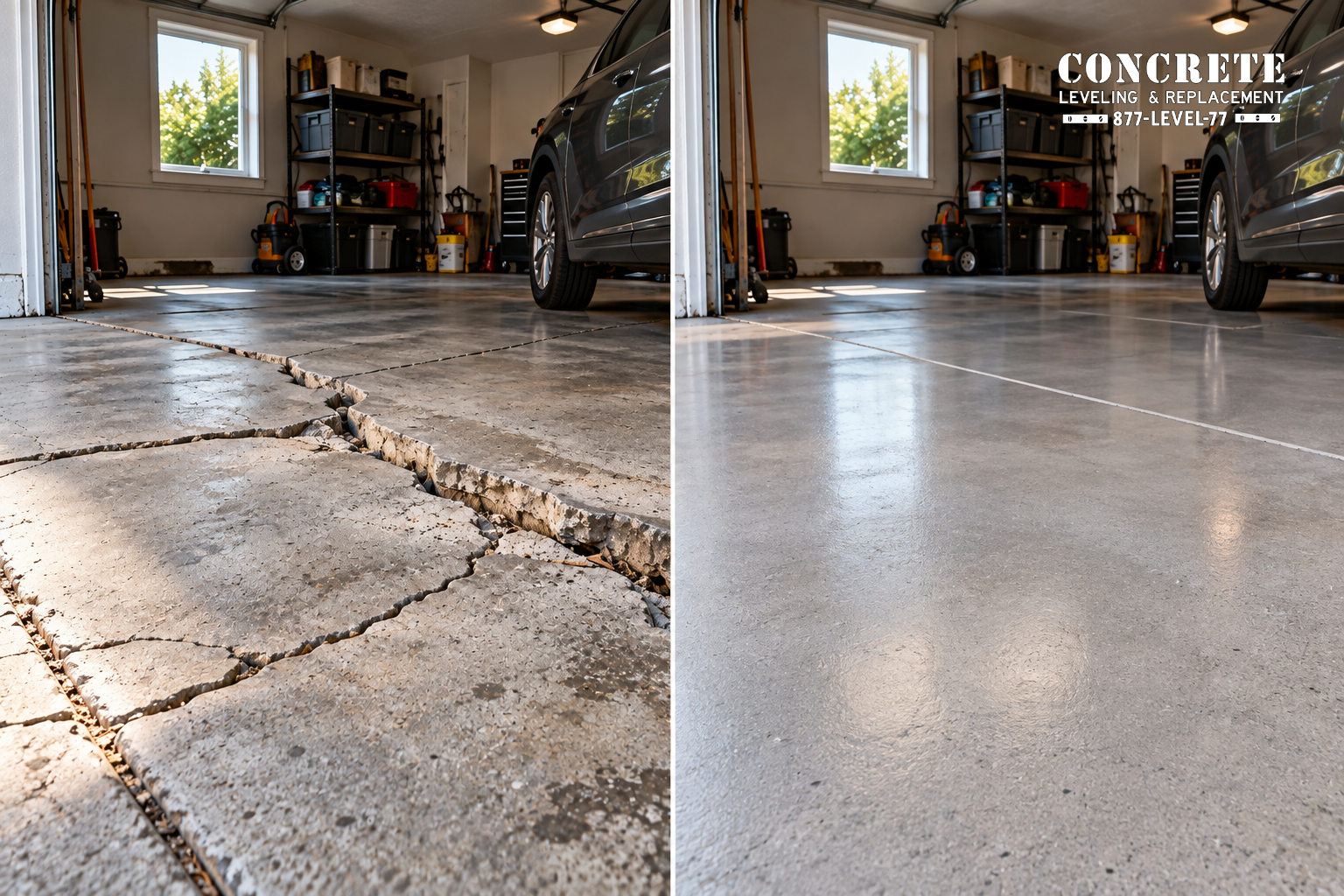
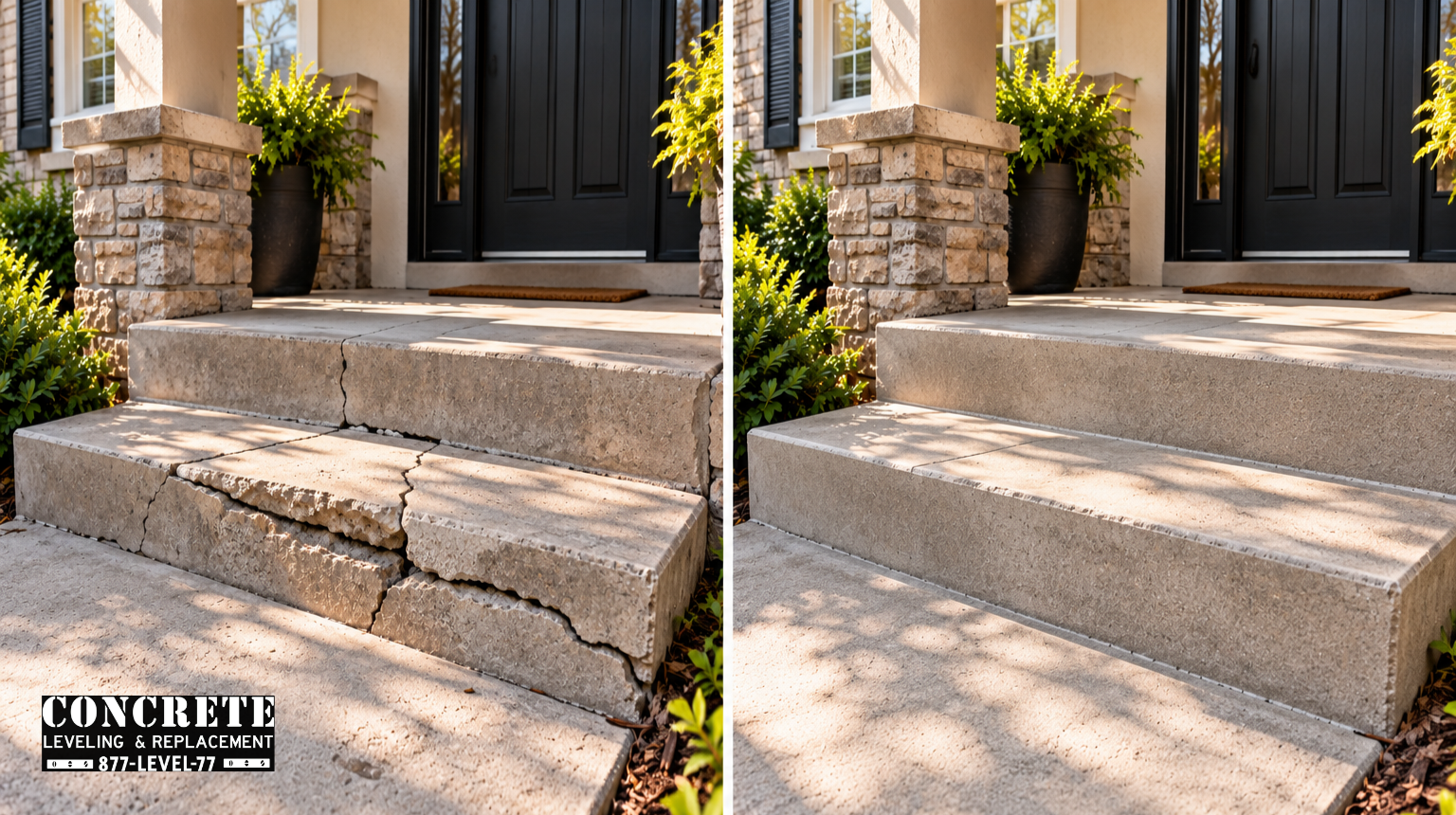
Concrete leveling is often used to fix sidewalks or walkways that have become trip hazards. This repair can quickly improve safety around homes, especially near entry points and garages. A good lift usually eliminates the uneven edge, letting homeowners avoid the hassle and cost of full replacement.
Case studies show how effective this can be. A project in Kendall, Wisconsin, used leveling to correct a trip hazard and restore safe access. For those dealing with front-entry issues, our porch leveling guide offers tips on whether lifting is enough or if rebuilding is better.
Commercial slab stabilization
Commercial properties often need leveling for areas like loading docks and entry slabs. A well-known case involved a Home Depot facility using concrete leveling to restore usability without replacing the whole section. This shows leveling isn't just for homes—it's a smart choice for businesses needing quick fixes with minimal downtime.
For building owners, less downtime can be more cost-effective than the repair itself. A fast-curing polyurethane system might keep things running smoothly, while a larger mudjacking job could be effective for heavier-duty needs. Either way, choosing the right method determines whether the repair lasts a few seasons or many years.
Market growth and innovation
The concrete leveling industry is growing fast. Recent data shows a rise in self-leveling concrete and related technologies. This growth reflects a shift towards faster, more sustainable repair methods. Property owners are increasingly choosing preservation over demolition when slabs can still be saved.
These trends matter because new materials and equipment are changing what's possible in slab repair. Faster curing times and improved material strength contribute to longer-lasting results. As the market grows, top contractors are refining how they assess conditions and recommend the right solutions for each job.
How to Make Concrete Leveling Last Longer
Fix drainage first
If you want the repair to last, start by addressing drainage. Redirect downspouts, fix low spots, and make sure water isn't soaking the area under the slab. Even a strong lift can fail early if runoff keeps eroding the subgrade. Keeping water away from the structure always improves long-term durability.
This is especially crucial in areas with lots of rain or snow. If your slab sits near a driveway edge or patio, consider looking into driveway repair or patio repair options alongside leveling to address the whole system.
Choose the right method for the slab.
Not every repair needs the same material. Smaller residential areas often do well with polyurethane foam because it sets quickly with minimal disturbance. Larger areas might benefit from mudjacking or a hybrid approach. The best method depends on the slab's thickness, condition, and the soil type beneath it.
That's why professional evaluation matters. A good contractor will explain the differences and why one method may work better than another. If the slab is part of a larger system, our porch repair services and pool deck repair solutions can help create a more durable result.
Schedule maintenance and inspections
After leveling, periodic inspections are key to protecting your investment. Watch for new cracks or changes in slope. If the slab starts moving again, addressing the issue early can prevent more serious damage later. Many repairs fail not because they were done poorly, but because follow-up maintenance was ignored.
Preventive attention is almost always cheaper than waiting for bigger problems. This is especially true for high-use areas like sidewalks and entrances. If you're unsure whether a problem is localized or part of a bigger issue, our team can review related areas through services like catch basin repair or curb and gutter repair.
Frequently Asked Questions About Concrete Leveling Longevity
Is concrete leveling a permanent fix?
Concrete leveling can be long-lasting, but it's not always permanent. If the underlying issues are fixed and the soil is stable, the repair can last for years. If not, the slab might settle again. Think of leveling as a durable fix rather than a forever solution.
How do I know if I need leveling or replacement?
If the slab is mostly intact and just uneven, leveling is often a good first step. But if it's badly broken or compromised, replacement might make more sense. A good evaluation should help you weigh cost, durability, and disruption.
Can leveling be done in cold weather?
Often, yes. But the conditions have to be right. Some materials work better in cooler temperatures, and weather can impact cure times. An experienced contractor will know when to go ahead and when to wait for better conditions.
Conclusion: The Lifespan Depends on the Cause, Not Just the Lift
So, how long does concrete leveling last? It can last a long time when done right, with the right material, and if the underlying issues are fixed. In many cases, leveling offers years of reliable service, preventing small problems from becoming costly replacements. Its longevity depends on soil stability, drainage, traffic, climate, and the quality of the work itself.
If you're dealing with uneven concrete in Romulus or nearby areas, getting a professional inspection that looks below the surface is a smart next step. A knowledgeable team can advise whether leveling, repair, or replacement is the best long-term value. At Concrete Leveling & Replacement, we focus on honest evaluations and practical solutions to improve safety and extend the life of your existing concrete. To learn more, call (734) 895-3820, email sales@concretelevelingpro.com, or visit our service area overview on the counties we serve page to get started today.