Why Level Concrete Floors Matter in Industrial Operations
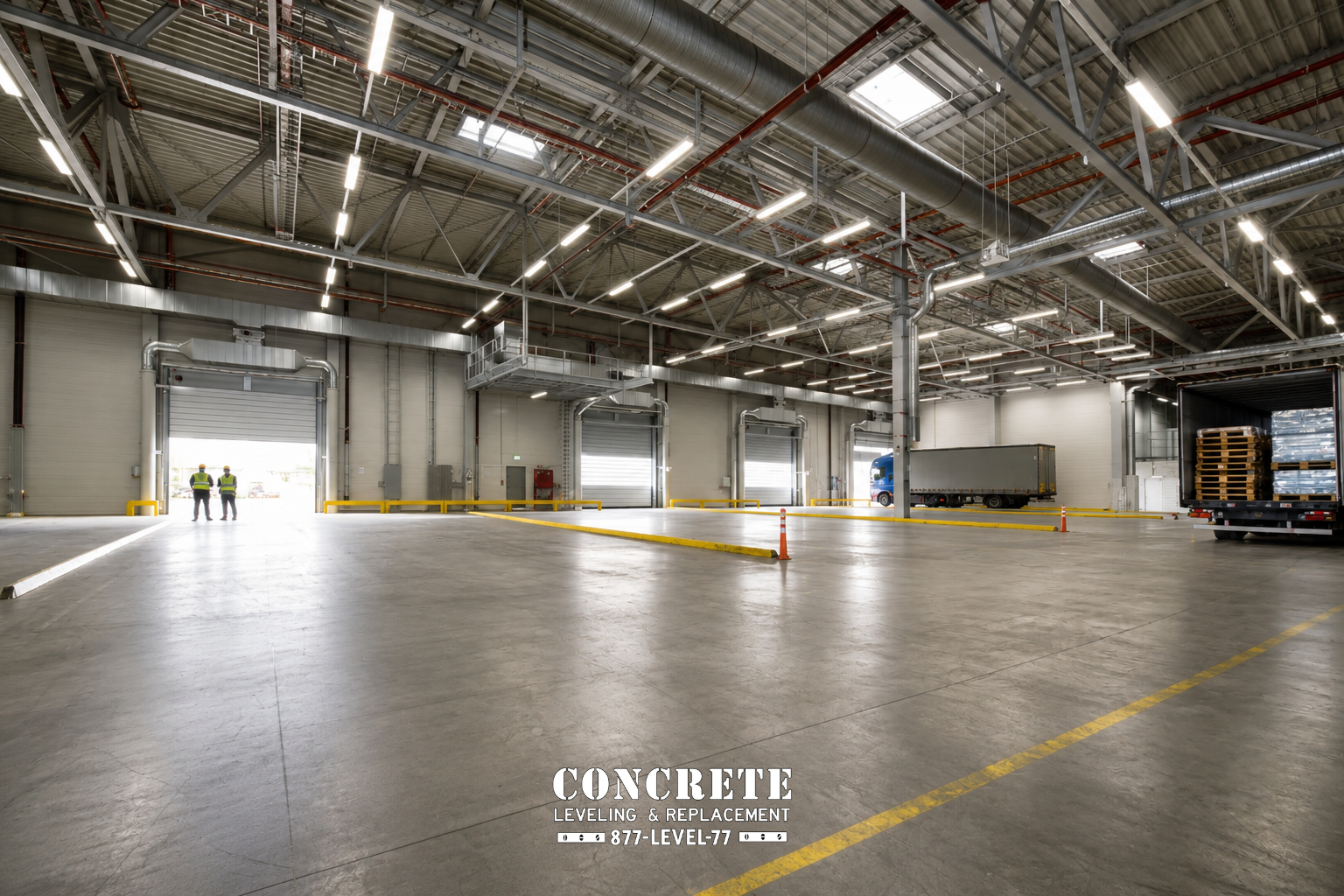
In industrial facilities, the condition of the floor affects more than just the way it looks. A level concrete floor means safer movement, steadier equipment performance, and better day-to-day productivity. Whether you're using forklifts, pallet jacks, conveyor systems, or automation, even small changes in flatness can cause big problems. These issues can slow down operations and increase risk. For businesses that rely on dependable surfaces, investing in concrete leveling is a practical way to protect both people and assets.
Uneven floors can cause trip hazards, unstable loads, premature equipment wear, and poor drainage. They can also create hidden inefficiencies that add up over time, like slower travel paths, more frequent repairs, and constant adjustments to racks and machinery. In industrial settings, floor tolerances aren't just nice to have; they're essential for performance. For more on how precise floors affect industrial use, check out this discussion on super-flat floors.
How Floor Levelness Improves Safety
Reducing slip, trip, and fall hazards
The most immediate safety benefit of a level floor is reducing trip hazards. In busy industrial spaces, workers move quickly while carrying inventory, pushing carts, or operating equipment. A small lip at a joint or a sunken slab can lead to ankle injuries, dropped materials, or collisions. OSHA identifies walking-working surface hazards as a major workplace concern. Maintaining level surfaces is one of the simplest ways to reduce these risks. You can find more on OSHA’s workplace safety standards at osha.gov.
Supporting safer equipment traffic
Forklifts and other powered industrial trucks need stable surfaces to operate predictably. When a floor dips or heaves, loads can shift unexpectedly, tires can bounce, and operators may lose confidence in maneuvering tight aisles. This is especially important where there is little room for error. A level floor ensures consistent wheel contact, improves braking control, and reduces the risk of cargo tipping or striking nearby racks.
Helping drainage and housekeeping stay under control
Leveling also helps with better housekeeping. In industrial facilities, pooling water, chemical residues, and dust can create hazards that affect both safety and sanitation. When floors slope unintentionally, liquids collect in low spots and make cleaning harder. Properly leveled concrete directs water where it should go, protecting employees and equipment. Many managers see concrete floor repair as part of a broader facility safety plan, not just a quick fix.
Why Efficiency Depends on Flat, Stable Surfaces
Smoother workflow and faster movement
Efficiency in a warehouse or plant often comes down to small gains repeated thousands of times. When aisles are flat and predictable, material handlers can move more confidently, equipment vibrates less, and traffic patterns become more efficient. Even minor floor irregularities can slow operations more than many managers expect. A smoother floor reduces constant corrections from operators and supports steadier travel speeds, especially in high-volume environments.
Protecting machinery and stored inventory
Unlevel floors can cause hidden wear on mechanical systems. Wheels, bearings, casters, and suspension components all take more abuse when surfaces are rough or uneven. In some plants, even storage racks can shift slightly if settlement changes load distribution over time, leading to maintenance issues, product damage, and downtime. Industry best practices favor durable, well-designed slabs that resist shrinkage and durability problems. For a deeper dive into industrial floor failures, you can read more at the University of Johannesburg.
Making automation work as intended
Automated systems need precise surfaces. Very narrow aisle forklifts, automated guided vehicles, and robotics are more sensitive to elevation changes than traditional systems. Super flat floors minimize variation in flatness and levelness, helping automated equipment track correctly and reducing shutdowns caused by misalignment. As more facilities adopt automation, precise floors are becoming a strategic infrastructure issue.
Common Causes of Uneven Industrial Floors
Soil movement and settlement
One common reason industrial slabs lose levelness is soil movement beneath the concrete. Poor compaction, erosion, moisture changes, and freeze-thaw cycles can weaken subgrade support. Once that support changes, the slab begins to settle, crack, or slope. In regions with seasonal weather shifts, these issues can appear gradually and then worsen quickly after heavy rain or harsh winters.
Poor drainage and water intrusion
Water is one of the most damaging forces affecting concrete stability. If drainage around a facility is inadequate, water can wash soil away from below the slab or saturate the base until it loses strength. This problem is especially relevant in industrial properties where runoff, roof drainage, or loading dock activity adds moisture pressure. A facility that ignores drainage often ends up repairing the same slab later. For related reading on drainage and concrete performance, see our guide to proper drainage.
Wear, loading, and structural stress.
Industrial floors carry much heavier loads than residential slabs. Repeated traffic from forklifts, stock carts, pallet loads, and machinery can stress joints and slab edges over time. If the original design didn't account for actual use, the floor may begin to fail earlier than expected. This is why strong initial design, durable materials, and consistent maintenance are essential. When a slab has already settled, a professional evaluation can determine whether leveling or replacement is the better long-term solution.
Modern Concrete Leveling Techniques That Restore Performance
Polyurethane injection for fast, minimally invasive repair
One effective modern solution for uneven slabs is polyurethane injection, also known as foam lifting. In this process, a lightweight expanding foam is injected beneath the slab to fill voids, lift the concrete, and stabilize the base. Compared with heavy demolition and replacement, this method is quicker, cleaner, and less disruptive to operations. It's especially useful when a facility can't afford long shutdown periods.
Polyurethane repair can be completed with small access points and often reaches serviceable strength quickly, making it a strong fit for commercial and industrial properties where minimizing downtime matters. For a practical example of how this repair works, see the explanation from Dry Michigan.
Traditional leveling and slab stabilization
In some cases, other leveling approaches may be better, especially when the problem involves deeper structural concerns or widespread damage. Slab stabilization can involve filling voids, correcting support conditions, and restoring the surface profile so the floor performs properly again. The best method depends on factors like settlement extent, slab thickness, traffic load, and facility tolerance requirements. A good contractor will recommend the most practical solution for the actual conditions.
Why replacement is not always necessary
Many business owners assume a damaged floor must be torn out and replaced. In reality, leveling often solves the safety and performance issue at a much lower cost and with far less downtime. According to industry sources, concrete leveling can be 50% to 70% cheaper than full replacement, which can be a major financial advantage for facilities managing maintenance budgets wisely. That cost difference often makes leveling the first option to evaluate before committing to demolition. For more on cost comparisons, see the breakdown at Concrete Leveling Detroit.
What Industrial Facility Managers Should Look For
Visible warning signs on the floor
Managers should regularly look for obvious signs like cracks, gaps at joints, standing water, chipped edges, or slabs lower than adjacent sections. These warning signs can indicate unstable support beneath the floor. If pallet jacks or forklifts start to bounce, catch, or vibrate in certain areas, that's another clue the slab may need attention. Problems are often easier and cheaper to solve when caught early.
Equipment behavior as an early indicator
Floor issues don't always announce themselves through visible damage. Sometimes the first sign is a machine that no longer runs smoothly across a certain path or shelving that appears out of alignment. If equipment operators report that loads feel unstable or they need to slow down in specific areas, the floor may be contributing to the issue. Regular inspections should include both visual checks and operational feedback from the people who work on the floor daily.
Maintenance patterns that signal deeper trouble
Another clue is recurring maintenance in the same location. If one part of the floor seems to crack, loosen, or settle repeatedly, the underlying issue is likely structural rather than cosmetic. Facilities should track these problem areas and evaluate whether drainage, subgrade support, or loading conditions are part of the cause. This kind of preventive thinking can save significant money by reducing repeated patchwork repairs.
Case Studies and Real-World Results
Automated warehouse improvements
In an automated warehouse, precise floor tolerances can dramatically improve productivity. One distribution center upgraded to super flat floors to support very narrow aisle forklifts and automated guided vehicles. The result was better alignment, fewer operational interruptions, and reduced wear on equipment. This type of improvement isn't just about a smoother ride; it's about keeping the facility aligned with modern logistics demands. The benefit is clear when equipment movement must be reliable every hour of the day.
Manufacturing plant stabilization
A manufacturing plant facing uneven sections near production lines used polyurethane injection to restore levelness without replacing the entire slab. That allowed operations to continue with minimal disruption while improving equipment performance. Instead of shutting down for extensive demolition, the company returned the floor to usable condition quickly. Stories like this show why modern leveling methods are valuable for industrial owners needing fast, practical results.
Local climate and industrial concrete in Michigan
In Michigan, freeze-thaw cycles, moisture changes, and seasonal soil movement can make slab problems more likely. Businesses in Romulus and surrounding areas often need solutions that address both current settlement and the conditions that caused it. That's why local expertise matters. A contractor familiar with regional soil behavior and weather patterns can identify the root cause more accurately and recommend a better long-term fix. To see how local service areas are organized, visit our counties we serve page.
Best Practices for Industrial Floor Maintenance
Schedule regular inspections
Routine inspections should be part of every industrial maintenance program. Catching small problems early makes repair more affordable and reduces the chance of downtime. Facility teams should inspect joints, edges, traffic lanes, drainage paths, and high-load zones on a regular schedule. Inspections are especially important after major weather events or any incident involving water intrusion.
Control water before it reaches the slab
Good drainage is one of the simplest ways to protect concrete floors over time. Downspouts, grading, trench drains, and runoff management all matter. If water is allowed to collect around a building or seep beneath a slab, settlement can continue even after a repair. That's why concrete leveling should often be paired with drainage corrections or site improvements. Without solving the source of the problem, the slab may eventually move again.
Choose repair methods based on actual conditions.
Not every floor problem needs the same solution. Some issues can be corrected with leveling, while others may need deeper repair, joint work, or partial replacement. The best contractors evaluate soil conditions, drainage, load demands, and the age of the slab before recommending a treatment. Businesses that want a broader view of repair options can explore our factory floor repair and concrete floor repair services for more targeted support.
How Level Floors Affect Long-Term Cost and Asset Value
Lower repair and replacement expenses
Level floors help facilities avoid a cycle of escalating damage. When a slab is properly supported, the business is less likely to face repeated patching, joint repair, or equipment wear caused by vibration and instability. Over time, that means lower operating costs and fewer surprise expenses. In many cases, leveling can extend the life of an existing floor by years, which is a major financial benefit.
Less downtime and fewer disruptions
Downtime is one of the most expensive hidden costs in industrial operations. A full slab replacement can interfere with production schedules, shipping, staffing, and customer commitments. By contrast, leveling is often completed much faster and with less interruption. That speed allows managers to protect revenue while still addressing a serious flooring issue. For facilities that operate on tight deadlines, that difference can be decisive.
Improved property confidence and resale value
A well-maintained industrial floor also supports asset value. Prospective buyers, tenants, and inspectors notice whether a facility has been kept in good condition. Level, functional floors suggest that the property has been managed responsibly and that major hazards have been addressed. That can make a building more attractive in the marketplace and reduce the likelihood of deal-breaking concerns during due diligence.
Frequently Asked Questions About Industrial Concrete Leveling
How do I know if my concrete floor needs leveling?
If you see cracks, pooling water, uneven transitions, or equipment that no longer travels smoothly, the floor may need leveling. Even if the slab looks acceptable at first glance, recurring maintenance problems or subtle slopes can indicate a deeper issue. A professional inspection is the best way to confirm the cause and determine the right solution.
Is leveling better than replacement?
In many situations, yes. Leveling is often more cost-effective, faster, and less disruptive than full replacement. It restores functionality while preserving the existing slab. However, if the concrete is severely deteriorated or structurally compromised, replacement may still be the better long-term option. The right answer depends on the condition of the floor and the goals of the facility.
How long does the repair process take?
Many leveling projects can be completed within a day, depending on the size of the area and the severity of the settlement. That makes the process especially useful for industrial properties that cannot afford long closures. The exact timeline depends on access, curing requirements, and whether additional repairs are needed.
Where can businesses get help in the Romulus area?
For businesses needing an honest evaluation and practical repair recommendations, our team at Concrete Leveling & Replacement provides experienced service across industrial and commercial properties. We are family-owned, do not use commission-based sales, and focus on what the property actually needs. If you need support with uneven industrial concrete, you can explore our concrete leveling services or contact us for an assessment in Romulus, MI.
Conclusion: Level Floors Create Safer, Smarter Industrial Spaces
Level concrete floors are more than just a finishing detail. They are a foundational part of industrial safety, equipment reliability, and operational efficiency. When floors are flat and well-supported, workers move more safely, machines perform more consistently, and maintenance costs stay better controlled. Businesses that address settlement early can save money, reduce downtime, and improve the long-term value of their property.
If your industrial floor shows signs of cracking, sinking, or uneven performance, now is the time to act. A professional evaluation can reveal whether leveling, repair, or a different solution will best protect your operations. To learn more about your options, review our interior floor repair solutions, or contact Concrete Leveling & Replacement to discuss a practical plan for restoring a safer, more efficient floor.