Pool Deck Repair Tips: Fix Sinking Concrete Before It Gets Worse
An uneven pool deck isn't just unsightly. It can cause tripping accidents, mess with drainage, and indicate bigger underlying problems that could get worse over time. If you've noticed a slab edge lifting, water collecting in low spots, or the concrete sinking near the pool's edge, it's time to take action. We'll cover why pool decks settle, what signs to look out for, and why fixing these issues early can save you time and money.
People often think a small dip in concrete is no big deal. However, sinking slabs can compromise the safety and value of your entire outdoor area. Fortunately, many pool deck problems can be fixed without replacing the whole thing, especially if you catch them early. If you need help with other concrete surfaces, we offer concrete leveling and concrete pool deck repair to efficiently restore stability and looks.
By understanding the causes and addressing the issue quickly, you can protect the rest of the structure, save on repair costs, and make your pool area safer for family and friends. For more info on concrete durability and maintenance, check out the National Institute of Standards and Technology or browse the CDC's home and recreation safety resources.
Why Pool Decks Sink
Soil Movement Underneath
Sinking concrete often starts below the surface. When the soil beneath a pool deck shifts, washes away, or compacts unevenly, the slab loses support and begins to settle. This is especially common in areas with poor drainage or where the soil wasn't properly compacted initially. Even small changes in the ground can lead to noticeable dips and uneven seams.
Water and Drainage Issues
Since pool areas are constantly exposed to water, drainage problems are a common cause of concrete settling. Water can seep under the slab through joints, cracks, or gaps around the edges, softening the soil and eroding its support. Once that support is gone, the slab may tilt or sink. If you’re worried about water management around other concrete surfaces, we also offer patio repair and sidewalk repair services to tackle similar settling issues.
Freeze-Thaw Cycles and Seasonal Stress
In places with cold winters, freeze-thaw cycles can speed up damage. Water trapped under or inside concrete expands when it freezes, widening gaps and causing more movement in the slab. According to the Federal Highway Administration, moisture and freeze-thaw exposure are major contributors to concrete stress, making proactive care important.
Signs Your Pool Deck Needs Attention
Uneven Edges and Trip Hazards
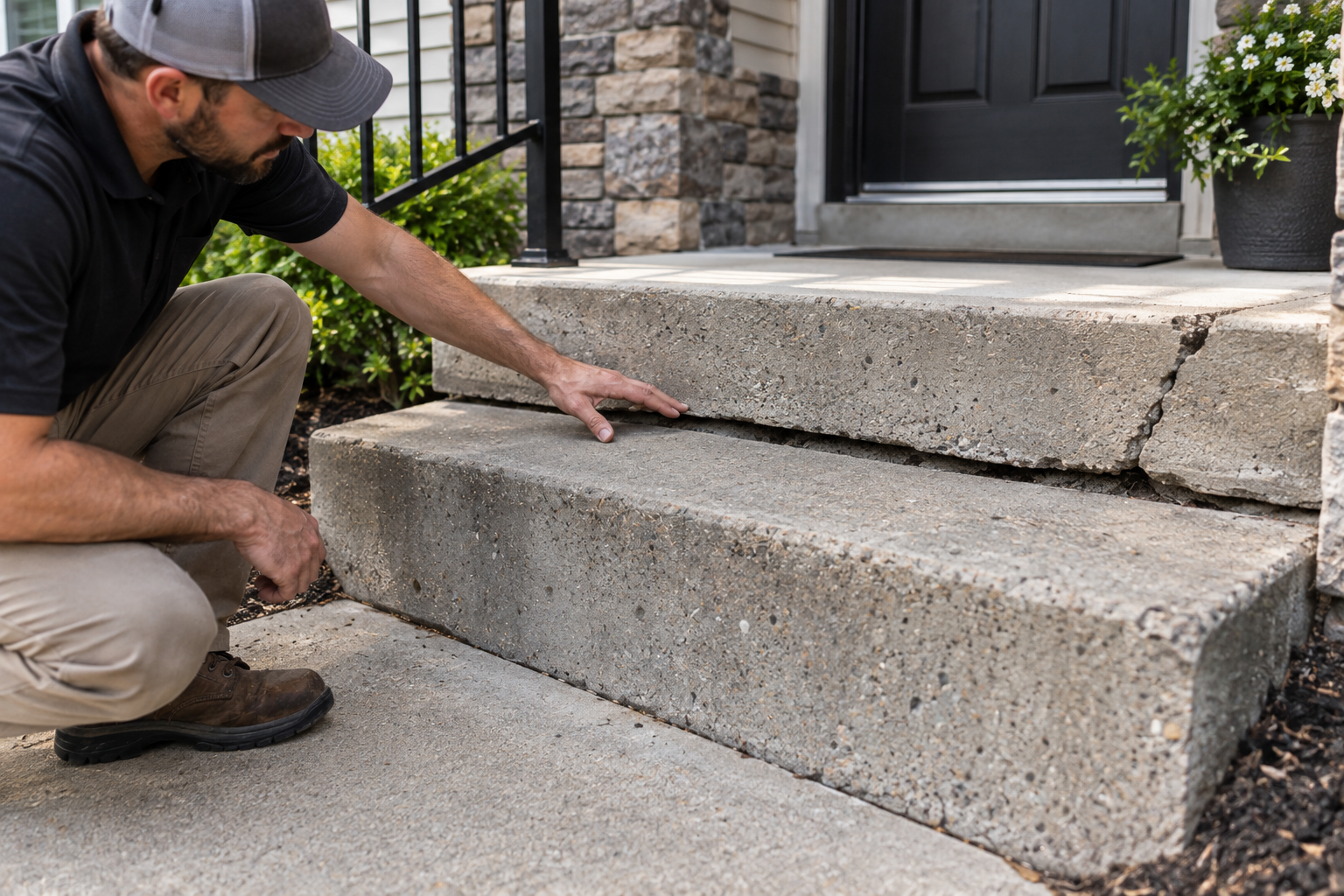
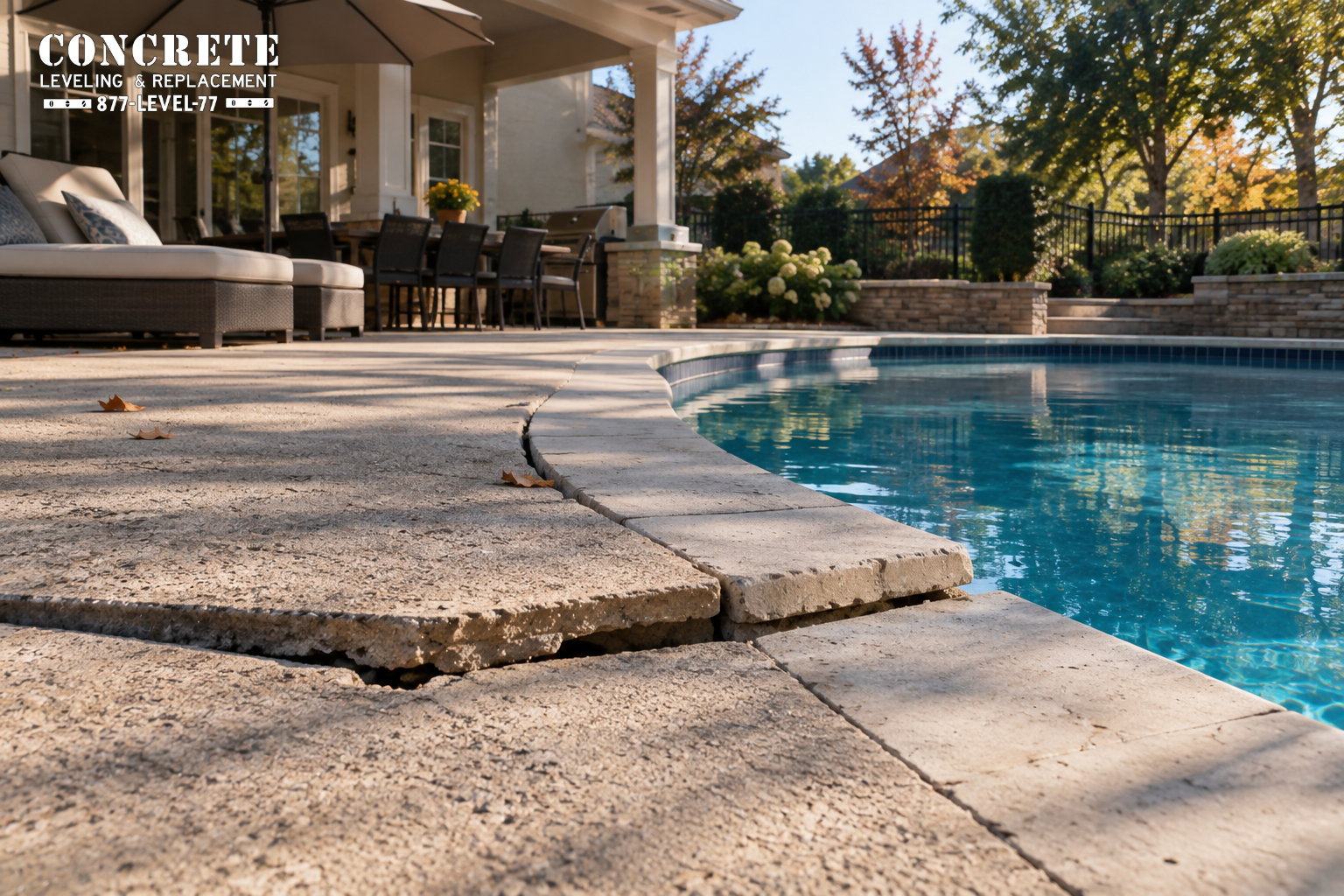
The most obvious red flag is a height difference between sections of the deck. If one panel sits higher than another, people walking barefoot or carrying pool gear can easily trip. Uneven edges near steps, coping, or seating areas are especially risky because pool decks are often busy and wet. A small height difference can quickly become a serious safety concern.
Cracks, Gaps, and Separated Joints
Cracks aren't always an emergency, but they do offer clues. If a crack comes with sinking, sloping, or widening separation, the slab is likely moving rather than just aging. Gaps between the deck and the pool edge can let in more water, making the problem worse. When concrete starts to separate like this, the surrounding slabs may soon follow.
Water Puddles and Drainage Problems
Standing water is another sign that a deck isn't level anymore. Pool decks should drain water away from the pool and walking areas, not collect it in low spots. When puddles linger after rain or cleaning, they can cause surface wear, create slippery conditions, and signal a settling issue that won't resolve on its own. These signs often show up before significant structural movement.
Why Fixing Early Saves Money and Stress
Smaller Problems Are Easier to Fix
Fixing a minor sinking issue is usually simpler and cheaper than replacing a larger section later. When a slab is lifted early, the surrounding concrete often stays intact, reducing labor and material costs. Waiting too long allows voids to expand and adjacent panels to shift, turning one repair area into several. Early intervention is key to protecting your repair budget.
Damage Can Spread to Connected Sections
Pool decks are often poured in connected panels, so movement in one part can affect the rest. If one slab sinks, it can stress neighboring slabs, joints, and coping. That ripple effect is why a cosmetic issue can turn into a broader repair project. A timely fix can stabilize the affected area and help preserve nearby concrete.
Safety, Liability, and Peace of Mind
For homeowners, the biggest benefit of early repair is safety. Pool areas naturally involve wet feet, quick movement, and frequent guests, making trip hazards riskier than in other parts of the property. For commercial or community pools, liability concerns are even greater. Addressing sinking concrete early reduces the chance of injuries and helps maintain a cleaner, professional-looking space.
How Professional Pool Deck Repair Works
Inspection and Diagnosis
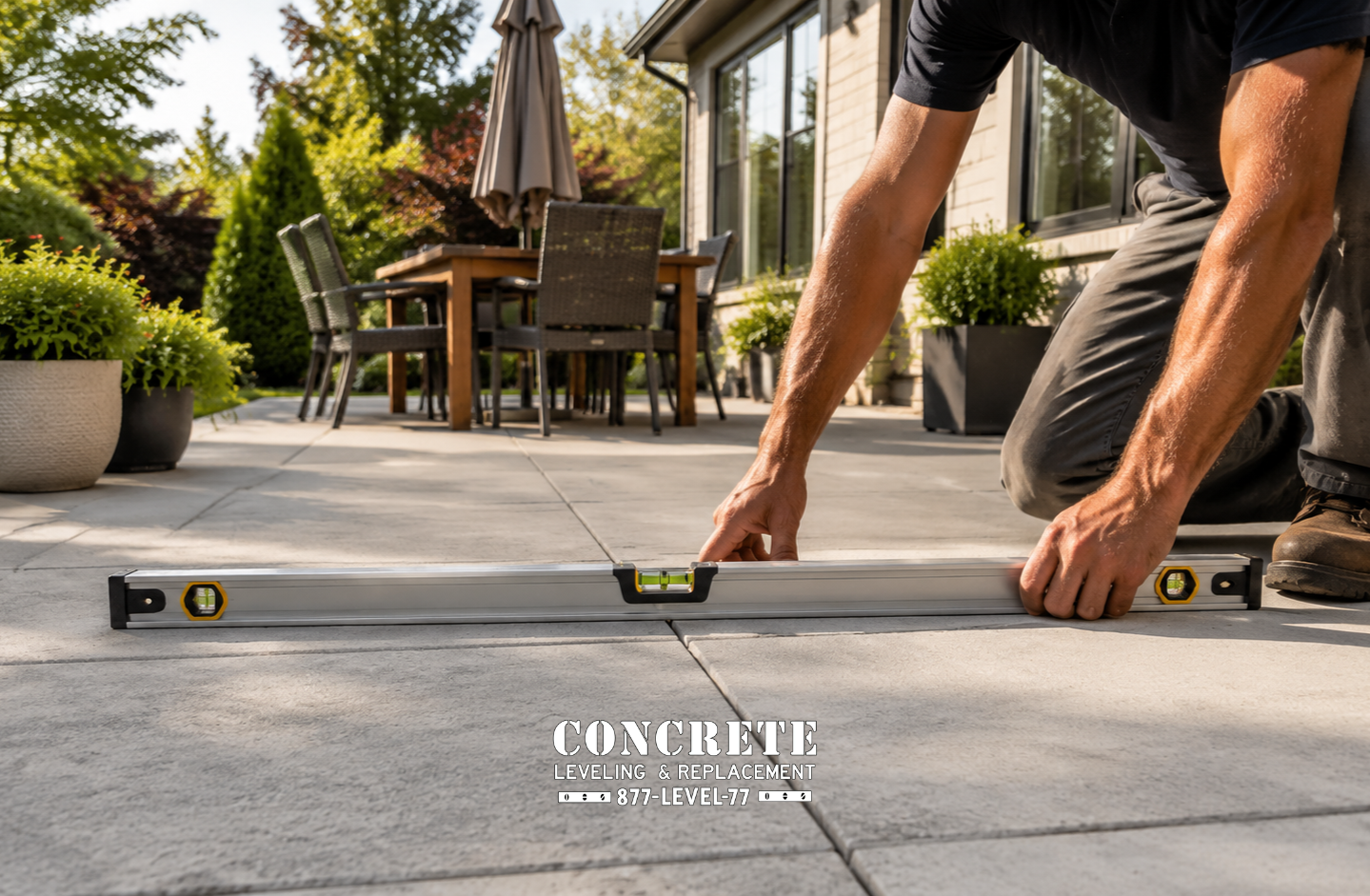
Every successful repair starts with pinpointing the cause. A qualified concrete contractor will inspect the slab, drainage, joints, and visible cracks to see if the issue is settlement, erosion, poor compaction, or something else. Honest evaluations matter because a deck that has lost support needs a different solution than one that's just surface-damaged. Our team at Concrete Leveling & Replacement uses practical assessments to recommend what your property actually needs, not a one-size-fits-all fix.
Leveling the Slab and Filling Voids
When sinking concrete is still structurally sound, leveling is often the best solution. The process restores elevation by raising the slab back to its intended position and filling the space beneath it. This can improve the walking surface, reduce trip hazards, and help redirect water away from vulnerable spots. In many cases, leveling works well along with related services such as concrete leveling and concrete floor repair when the property has multiple settlement concerns.
When Replacement Might Be Better
Not every deck can be saved. If the concrete is severely broken or deteriorated, replacement could be a more durable, long-term option. The key is getting an honest recommendation based on condition, not guesswork. In many cases, targeted repair can extend the life of a good slab, while replacement is for concrete that's too compromised to restore safely.
Common Repair Methods for Sinking Concrete
Polyurethane Foam Injection
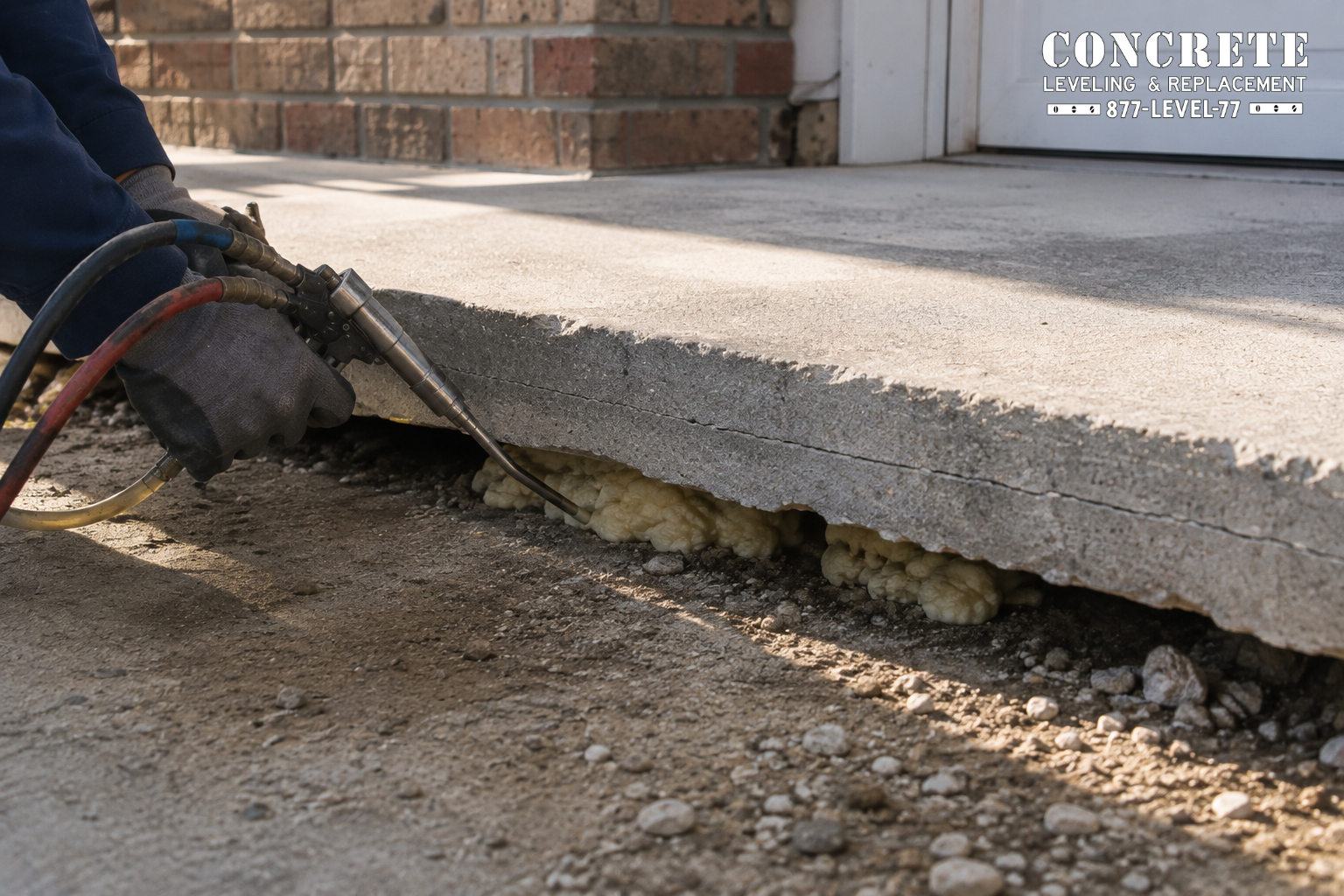
Polyurethane foam injection is popular for lifting settled slabs because it's fast, lightweight, and effective at filling voids under concrete. The expanding material helps stabilize the base and can restore the slab with minimal disruption to the surrounding area. It's especially useful when you want a clean, efficient repair that doesn't require tearing out the deck. For a closer look at this method, see our blog on why polyurethane foam injection is a smart choice for concrete repairs.
Mudjacking and Slab Stabilization
Mudjacking is another proven approach for lifting concrete. It involves pumping a specialized slurry beneath the slab to raise and stabilize it. The best method depends on the slab thickness, the degree of settlement, access around the pool, and the condition of the subgrade. A knowledgeable contractor can explain the tradeoffs so you can choose the right option for your property.
Drainage Corrections and Base Improvements
Repairing the slab is only part of the solution if drainage caused the problem. Sometimes, the surrounding grade needs reworking, downspouts redirected, or soil erosion addressed to prevent future sinking. This is where experience matters: a well-repaired deck should be supported by a better foundation than before. If drainage is affecting nearby structures, related services like catch basin repair can also help reduce water-related damage around paved areas.
What Happens If You Wait Too Long
Cracks Get Bigger and Costlier
Concrete doesn't fix itself. A small crack can widen, a minor slope can become a major drop, and a shallow void can grow into a larger unsupported area. As the slab moves, stress builds at joints and weak points, making the deck more difficult and expensive to restore later. Acting early keeps the damage manageable.
The Pool Area Becomes Less Functional
A sinking deck affects more than just looks. It can interfere with furniture placement, water flow, foot traffic, and the overall comfort of the outdoor space. If the deck slopes the wrong way, water may run toward the pool or gather near seating areas instead of draining away. The result is a less enjoyable pool environment that feels neglected even if the pool itself is in good shape.
Surrounding Structures May Be Affected
If you ignore settlement, nearby concrete features can also be stressed. Steps, walkways, porches, and patios connected to the pool area may start to move or crack as the ground shifts. In some cases, the issue spreads across the property, becoming part of a larger concrete repair plan. Our porch repair and step repair services are often helpful when settling has impacted more than just the deck.
How to Protect Your Pool Deck After Repairs
Improve Drainage Around the Pool
Good drainage is one of the strongest defenses against future settlement. Make sure water moves away from the deck and doesn't pool along the edges or near low spots. Check for clogged drains, misdirected downspouts, and areas where landscaping might trap water near the slab. A few grading improvements can make a big difference in long-term stability.
Watch for Early Warning Signs Each Season
Inspect the deck at the start and end of each swimming season. Look for new cracks, changes in elevation, puddles, or gaps along the coping. Spotting problems early helps prevent the need for more extensive repair later. Seasonal inspections are simple but are one of the easiest ways to protect your investment.
Keep the Area Clean and Free of Erosion Sources
Debris, soil washout, and repeated water overflow can all lead to future issues. Keep gutters, drains, and nearby landscaping maintained so excess water doesn't keep pushing into the same weak spots. If your property has broader concrete concerns, a full review of adjacent slabs may show whether your pool deck is part of a larger drainage pattern. In those cases, concrete driveway repair or interior floor repair may also be relevant if the same soil movement affects other surfaces.
Why Choose a Local Concrete Expert
Experience with Michigan Conditions
Concrete repair isn't the same everywhere. In Michigan, freeze-thaw cycles, moisture, and varying soils create conditions that demand practical experience. A contractor who understands local settlement patterns can identify the most likely cause faster and recommend a repair plan that fits the environment. That local knowledge helps avoid wasted time and unnecessary costs.
Honest Recommendations Without Pressure
One of the biggest concerns property owners have is being pushed into unnecessary replacement. That's why it helps to work with a team whose recommendations are based on the condition of the concrete, not sales quotas. At Concrete Leveling & Replacement, our technicians aren't paid commission, which keeps the focus on the right solution for your property. That approach is especially valuable when deciding whether a pool deck needs repair, leveling, or full replacement.
Service Coverage and Convenience
Our crews are located throughout Michigan, so we can travel without added costs in many service areas. We work with residential, commercial, and industrial properties, which means we understand how different spaces use concrete and what level of durability they require. To check service availability in your area, visit our counties we serve page to learn more about regional coverage.
FAQ: Uneven Pool Deck Repair
Is Sinking Concrete Always a Big Problem?
Not always. Some sinking slabs are still structurally sound and can be lifted successfully. The key is determining whether the concrete is stable enough to repair and whether the underlying issue can be fixed. A professional inspection is the best way to separate a manageable settlement problem from a slab that is too damaged to restore.
Can I Just Patch the Surface?
Surface patching might improve looks temporarily, but it doesn't fix the underlying support issue. If the slab is still moving, the patch is likely to crack or separate again. For long-term results, the base problem needs attention, not just the top layer. That's why leveling and drainage corrections are often more effective than cosmetic patching alone.
How Soon Should I Schedule a Repair?
As soon as you notice sinking, sloping, or trip hazards. The earlier the issue is evaluated, the more likely a less invasive and more affordable solution will work. Delaying the repair gives erosion and settlement more time to spread, increasing the scope of the work. When the deck is near a pool, prompt action is also important for safety.
What If My Whole Property Has Uneven Concrete?
If the pool deck is settling, other slabs around the property may be experiencing similar soil conditions. It's smart to have driveways, walkways, patios, and porches checked during the same visit so a broader pattern of movement can be identified. Besides pool areas, we also provide garage floor repair and curb and gutter repair for properties affected by similar foundation or drainage challenges.
Take Action Before Your Pool Deck Gets Worse
An uneven pool deck isn't a small cosmetic flaw. It's often a sign that the soil beneath the slab has shifted, drainage is failing, or the concrete isn't fully supported. The sooner you address the issue, the better your chances of saving the slab, reducing costs, and improving safety around the pool. A timely repair can restore a clean, level surface and help you avoid a much larger project later.
If you've noticed sinking concrete, cracking, or pooling water around your pool area, now is the right time to get an honest assessment. Concrete Leveling & Replacement brings over 25 years of concrete leveling experience and more than 20 years of concrete replacement knowledge to properties across Michigan. Call (734) 895-3820 or visit our website to request an evaluation and take the first step toward a safer, longer-lasting pool deck.