Why an Uneven Porch Can Be a Safety Hazard
At first glance, an uneven porch might not seem like a big deal, but it can quickly turn into a serious safety issue. Even slight changes in height or slope can create tripping hazards for family, friends, and delivery folks. These problems often sneak up on you, which is why regular check-ups and early repairs are key.
If you own or manage property, knowing the risks is the first step to preventing injuries and avoiding costly repairs down the line. Notice sinking steps or cracks? Services like porch repair and concrete leveling might be all you need to make things safe again. For more about related hazards, check out our post on dangers and legal implications of uneven concrete.
Uneven concrete isn't just annoying; it's a well-known cause of falls and injuries. According to the U.S. Consumer Product Safety Commission, falls are a top cause of home injuries, and uneven surfaces are a big part of the problem. For more on preventing falls, the CDC’s falls prevention resources are a great place to start.
What Makes an Uneven Porch Dangerous?
Trip Hazards Happen in a Snap
Don't underestimate the risk of an uneven porch just because the problem seems small. Even a tiny bump can catch a shoe, throw off balance, or trip someone carrying groceries. Studies show that even small changes in walking surfaces can be risky, especially when visibility is low or when people are distracted.
Entrances are prime spots for trip hazards because people focus on opening doors or stepping down. If the porch is sinking on one side, your body might compensate unexpectedly, leading to a fall. Wet weather makes it worse by reducing traction and visibility.
Serious Injuries from Falls
Falling from a porch can lead to sprains, fractures, or even head injuries. While older adults are more vulnerable, anyone can get hurt if the porch isn't stable. A simple misstep could lead to a long recovery, medical bills, or missed work.
For property owners, a porch issue can quickly turn into a legal mess. Slip-and-fall claims often start with a hazard that could have been fixed sooner. Compare repair costs to the potential cost of an injury claim, and it's clear that prevention is the smarter move.
Porches See Lots of Foot Traffic
The front porch gets a lot of use more than a crack in the backyard or side yard. Guests, residents, delivery drivers, and even emergency services rely on it being safe. Because porches are primary entry points, any defects can be more dangerous than other concrete issues.
This is why professionals often advise pairing porch checks with other fixes, like sidewalk repair and step repair. If nearby surfaces are also settling, the whole entry path can become a connected hazard.
Common Causes of an Uneven Porch
Soil Erosion and Settlement
One common reason porches become uneven is soil movement beneath the slab. When soil shifts or compacts over time, the concrete loses support and starts to sink. This is especially likely if water drains toward the foundation or if the base wasn’t properly compacted during construction.
Settlement doesn’t always happen evenly. One corner might drop faster, creating a noticeable slope. This often means the underlying problem is active, so a professional evaluation is crucial before the damage spreads.
Poor Drainage
Water is one of the biggest threats to concrete stability. Overflowing gutters or downspouts too close to the house can soften soil and create voids beneath the slab. Over time, this weakens the base, leading to sinking or cracking.
Homeowners often overlook drainage because concrete damage appears first. Fixing the surface without addressing drainage can cause repeated issues. Sometimes, pairing porch repair with services like catch basin repair or grading corrections can help reduce future settling.
Tree Roots and Nearby Growth
Tree roots can lift part of a porch while other sections stay put, causing an uneven surface. Roots can push up the slab or disturb the soil enough to trigger later settlement. Shrubs and plants too close to the porch can also mess with water flow and make maintenance harder.
That's why experts suggest checking the entire entry zone, not just the visible problem area. If the porch is part of a larger concrete system, issues might also appear in nearby areas like the driveway. Our article on signs your driveway, patio, or sidewalk needs professional leveling shows how these signs often appear together.
Why Modern Concrete Leveling is Changing Repairs
Fast and Less Messy Foam Injection
Polyurethane foam injection is a rising star in concrete repair. It lifts settled slabs quickly and with minimal disruption. The foam expands under the concrete, filling voids and stabilizing the base.
For many porches, this means less downtime and mess compared to traditional methods. It's practical when the concrete is sound but has sunk. Under the right conditions, it's an effective solution that supports safety without a full rebuild.
Focus on Preventive Maintenance
More property owners are choosing regular inspections to catch settlement early, before major cracking happens. This is especially useful for concrete entrances where small movements can have big safety impacts.
Preventive care often includes checking slope, caulking joints, and watching for seasonal changes. If your property has a history of settling, it's wise to review nearby surfaces too, including concrete driveway repair and patio repair. Addressing the entire system can reduce the chance of recurring hazards.
Importance of Quality Materials
High-quality materials and proper installation are crucial. Whether lifting, patching, or partially replacing a porch, the repair should support long-term performance. Following recognized standards helps ensure the surface remains safe and usable through seasonal changes.
For general standards and safety info, resources like the Occupational Safety and Health Administration provide useful context on how slips and falls happen and why surface conditions matter.
Spotting Warning Signs Before They Get Worse
Check for Visible Slope or Separation
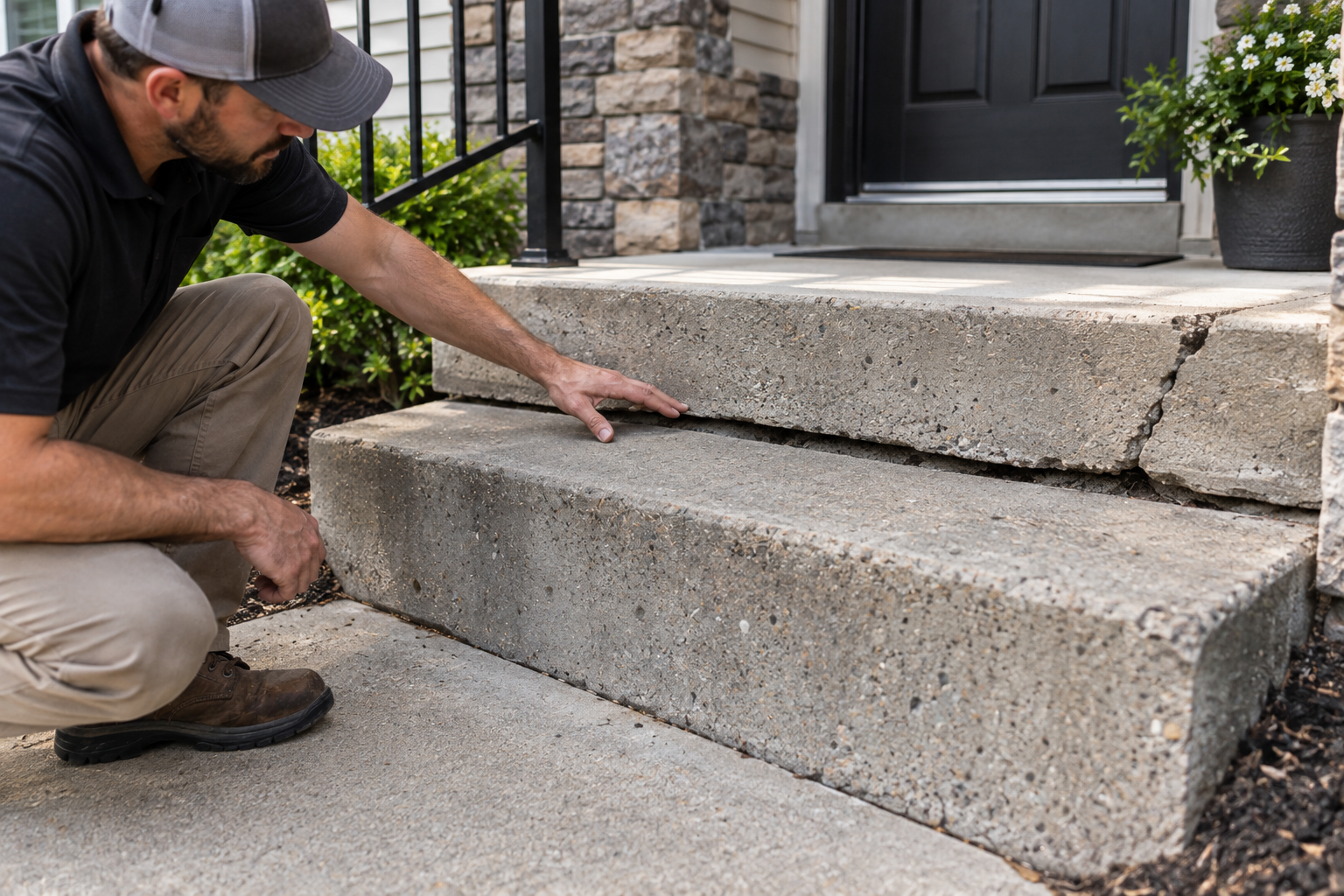
The clearest sign of trouble is a porch that doesn't look level. You might notice one side dipping, a gap between the porch and house, or a step that feels off. Cracks around the edge can also indicate movement underneath.
If the surface has shifted enough to create a noticeable lip, don't assume it's only cosmetic. Even a small step can be dangerous when someone is distracted. A professional inspection can help determine whether leveling, patching, or a more comprehensive repair is needed.
Check Doors, Railings, and Joints
Uneven concrete often affects more than just the slab. You might notice doors sticking, railings pulling away, or joints widening as the surface settles. These signs can mean the movement is affecting the surrounding structure, making early attention crucial.
When porches connect to stairs or landings, problems may spread into the step system too. That's why related repairs like step repair are often evaluated with leveling work. Fixing only one part of the entry can leave other hazards.
Watch for Seasonal Changes
Concrete movement often becomes noticeable after heavy rain, freeze-thaw cycles, or droughts. In Michigan, fluctuating temperatures can make soil expansion more dramatic. This is why porches that seem stable in summer may reveal issues in spring or after a harsh winter.
Homeowners in Romulus and nearby areas should watch for changes after major weather events. If the porch suddenly appears more uneven, there may be active soil or drainage issues that need attention. A local evaluation can help figure out the best repair method.
Real-World Example: A Romulus Porch Restored in One Day
Homeowner Noticed the Change
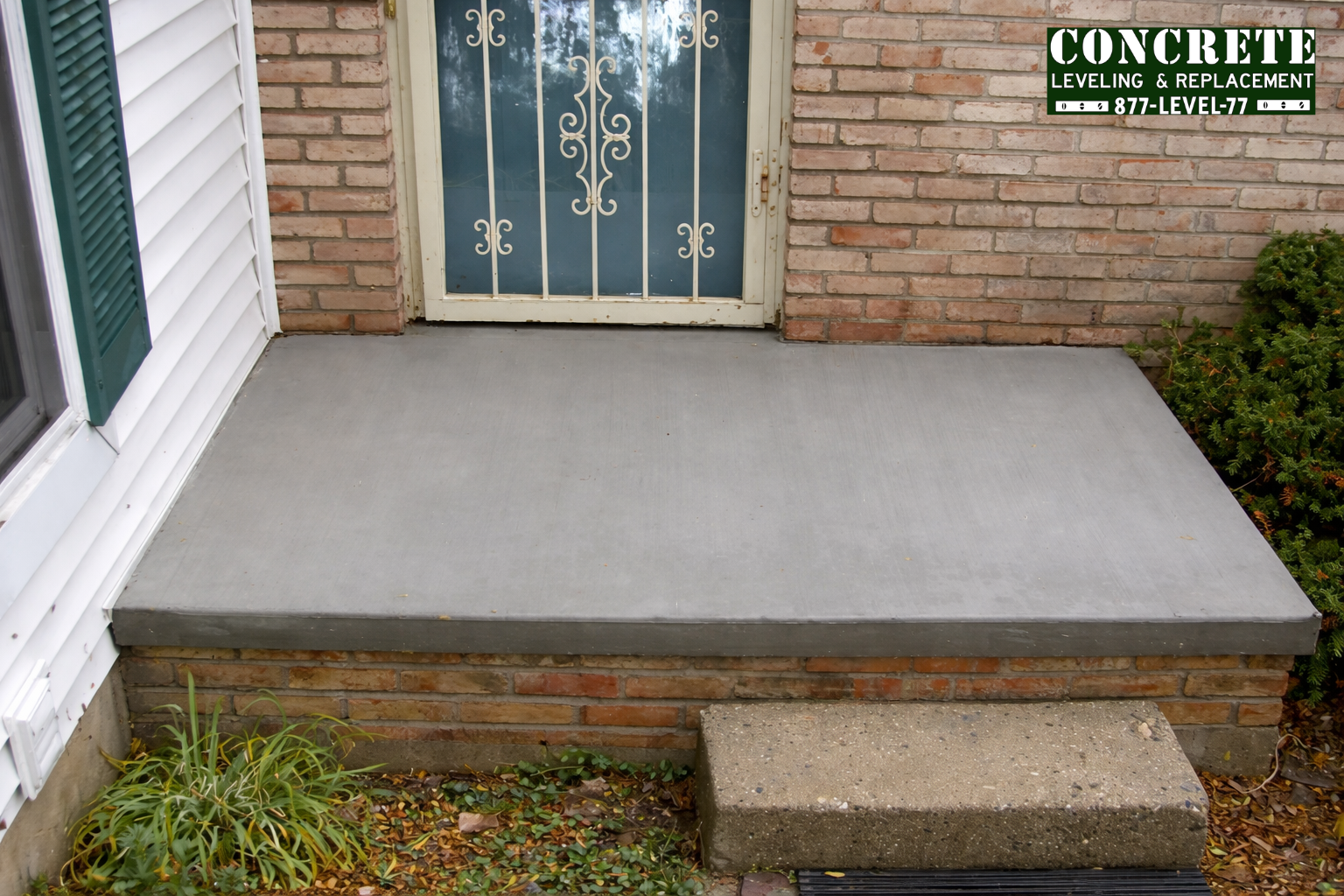
A homeowner in Romulus noticed their porch was sinking near one corner. It seemed minor at first, but the slope became more obvious, creating a tripping concern. After an evaluation, it was determined that the slab was a good candidate for polyurethane foam injection. The concrete was sound, but the base had settled, causing unevenness.
Quick and Low-Impact Repair
The repair was completed in a single day with minimal disruption. Once the slab was lifted and stabilized, the entry hazard was eliminated, and the porch returned to a more level position. This is why many prefer leveling over full replacement when conditions allow.
For those considering similar work, understanding the difference between repair methods is helpful. Our page on concrete floor repair and guide on fixing sinking concrete efficiently provide background on how to address support loss.
Safety, Liability, and Property Value
Preventing Injuries is Priority
The main reason to fix an uneven porch is safety. People expect a stable entrance, and a hidden trip hazard increases injury chances, especially for kids and older adults.
Slip-and-fall injuries are a top cause of claims in the U.S., and entrance hazards are common culprits. Even minor falls can have lasting effects, so dealing with porch movement early makes sense. Prevention usually costs less than recovery after an accident.
Liability Risks Grow Fast
For landlords, business owners, and property managers, an uneven porch can open the door to more than just physical injury. If someone is hurt because a hazard was ignored, documentation becomes important in any claim. Regular inspections and prompt repairs show that the property is responsibly maintained.
This is especially true for customer-facing properties. Businesses should keep entrances accessible and safe and not wait for complaints to inspect concrete surfaces. When problems are found early, solutions are simpler and more affordable.
Well-Maintained Concrete Enhances Curb Appeal
A level porch improves a home's or building’s appearance. A clean, even entry creates a strong first impression and suggests the property is well-cared for. That matters to buyers, tenants, and visitors alike.
If curb appeal is a concern, addressing the porch alongside other surfaces like the front walk or driveway makes sense. Our guide to improving curb appeal by fixing exterior concrete explains how targeted repairs can add both value and safety.
Best Practices for Long-Term Protection
Inspect the Porch Regularly
Regular checks are a simple and effective way to prevent bigger problems. Look for cracks, sinking corners, loose joints, ponding water, or changes in feel. Even if the concrete seems stable, a quick visual check each season can catch issues early.
Many property owners find it helpful to inspect after heavy rain or the first signs of new cracking. If the porch is part of a larger system, check nearby areas too. Our page on porch repair explains the solutions typically used for movement or deterioration.
Proactive Drainage Management
Drainage is crucial for concrete stability. Keep gutters clean, extend downspouts away from the foundation, and ensure soil slopes away from the porch. Standing water should be fixed quickly, as repeated saturation weakens support soils.
If water consistently collects near the entry, the problem might be bigger than the porch. In such cases, a professional might recommend grading corrections to prevent repeated settlement. Good drainage is not just maintenance; it’s a foundation-protection strategy.
Fix Issues Before They Worsen
Small defects can become bigger, costlier problems if ignored. A tiny gap or slope can widen with freeze-thaw cycles, and cracks can lead to further settling. Prompt repairs are usually the most economical choice, preserving the concrete you already have.
That’s why concrete leveling is a valuable part of the repair industry. Instead of removing the entire porch, a professional can restore the slab, stabilize the base, and extend its life. Addressing the root cause often results in a safer, more durable porch.
When to Call a Professional
If the Porch is Visibly Uneven
If you can see a slope or sinking section, it's time to get an expert opinion. Visible defects often mean the issue has progressed. Waiting can lead to more cracks and movement.
A qualified concrete specialist can determine if lifting, patching, partial replacement, or a full rebuild is best. Honest evaluation is important because not every porch problem needs the same solution. The right repair should match the cause, condition of the concrete, and long-term needs.
If Drainage or Soil Issues are Suspected
When the porch keeps settling after rain or repairs, the underlying cause may still be active. Soil erosion or drainage failures often need a broader fix than surface patching. A professional can help identify whether stabilization is needed before final repairs.
This is where experience matters. Concrete Leveling & Replacement has years of experience evaluating concrete movement, soil conditions, and settlement patterns. Our non-commission approach means recommendations are based on what the property needs.
If the Porch is Part of a Larger Entry System
Sometimes a porch issue is connected to surrounding surfaces, like steps or walkways. In these cases, it might be more efficient to address the entire entry path. This approach can improve safety and make the finished result look more consistent.
For more guidance, explore related services like interior floor repair when settlement affects more than the exterior, or review our counties we serve page for local availability. If you're near Romulus, a quick consultation can help determine the next step.
Final Thoughts: Don’t Ignore a Sloping Porch
An uneven porch isn't just unattractive; it's a safety hazard that can lead to trips, falls, and liability issues. The good news is that many porches can be effectively repaired if the problem is caught early and the right method is used.
If you've noticed settlement, cracking, or changes in your porch, now's the time to act. Preventive inspection, drainage fixes, and professional concrete leveling can restore safety while protecting the slab's life. For homeowners and businesses, it's a smart investment in peace of mind and property value.
Ready to secure your entryway? Contact Concrete Leveling & Replacement for an evaluation and straightforward recommendations. Call (734) 895-3820 or email sales@concretelevelingpro.com to schedule service and see if repair or leveling is right for your porch.