Why Is Your Concrete Cracking (And When Should You Be Concerned)
Concrete cracks are a common headache for property owners. They often start small and can become bigger problems if not addressed. A tiny crack in your driveway or sidewalk might seem harmless, but over time, it can collect water, expand, and lead to uneven surfaces or even structural damage. In places like Michigan, where the weather swings from one extreme to another, knowing why concrete cracks is key to protecting your property.
In this guide, we'll dive into the main reasons for concrete cracks, point out which cracks are normal and which need attention, and help you figure out when it's time to call in a professional. We'll also talk about repair options, give you some prevention tips, and share real-life examples so you can tackle issues before they turn costly. If you're curious about repair options as you read, feel free to check out our concrete leveling services and driveway repair solutions to see how we fix damaged slabs.
For a deeper understanding of why concrete behaves the way it does, it helps to look at authoritative sources. According to the Portland Cement Association, concrete is strong when compressed but prone to cracking from shrinkage, movement, and environmental stress. The U.S. Department of Energy adds that moisture management and insulation impact how building materials handle freeze-thaw cycles. You can find more on these topics from the Portland Cement Association and the U.S. Department of Energy.
The Most Common Reasons Concrete Cracks
Freeze-thaw cycles and seasonal moisture changes
In cold areas, freeze-thaw damage is a leading cause of concrete cracking. When water seeps into small cracks or pores in concrete and freezes, it expands and causes pressure. Repeated freeze-thaw cycles can slowly wear down the surface, make small cracks larger, and even lead to scaling or spalling. This is particularly true in Michigan, where harsh winters can be tough on driveways, sidewalks, porches, and patios.
This process is so damaging because concrete is naturally porous. Once moisture gets in, it's hard to keep it out without proper sealing and drainage. The National Weather Service notes that repeated freeze-thaw events can be especially harsh when temperatures hover around freezing, causing water to move in and out of the material. That's why good drainage and regular maintenance are crucial. If you have surfaces that are already shifting or settling, our sidewalk repair services can help fix tripping hazards and prevent further damage.
Soil movement and settlement beneath the slab
Concrete often cracks because the ground underneath causes problems. Expansive clay soils, erosion, poor compaction, and changes in moisture can all shift the support beneath a slab. When this support becomes uneven, the slab starts to settle or rise unevenly, creating cracks along stress points, joints, or corners. This is why concrete issues can suddenly appear after heavy rain, snowmelt, or drought.
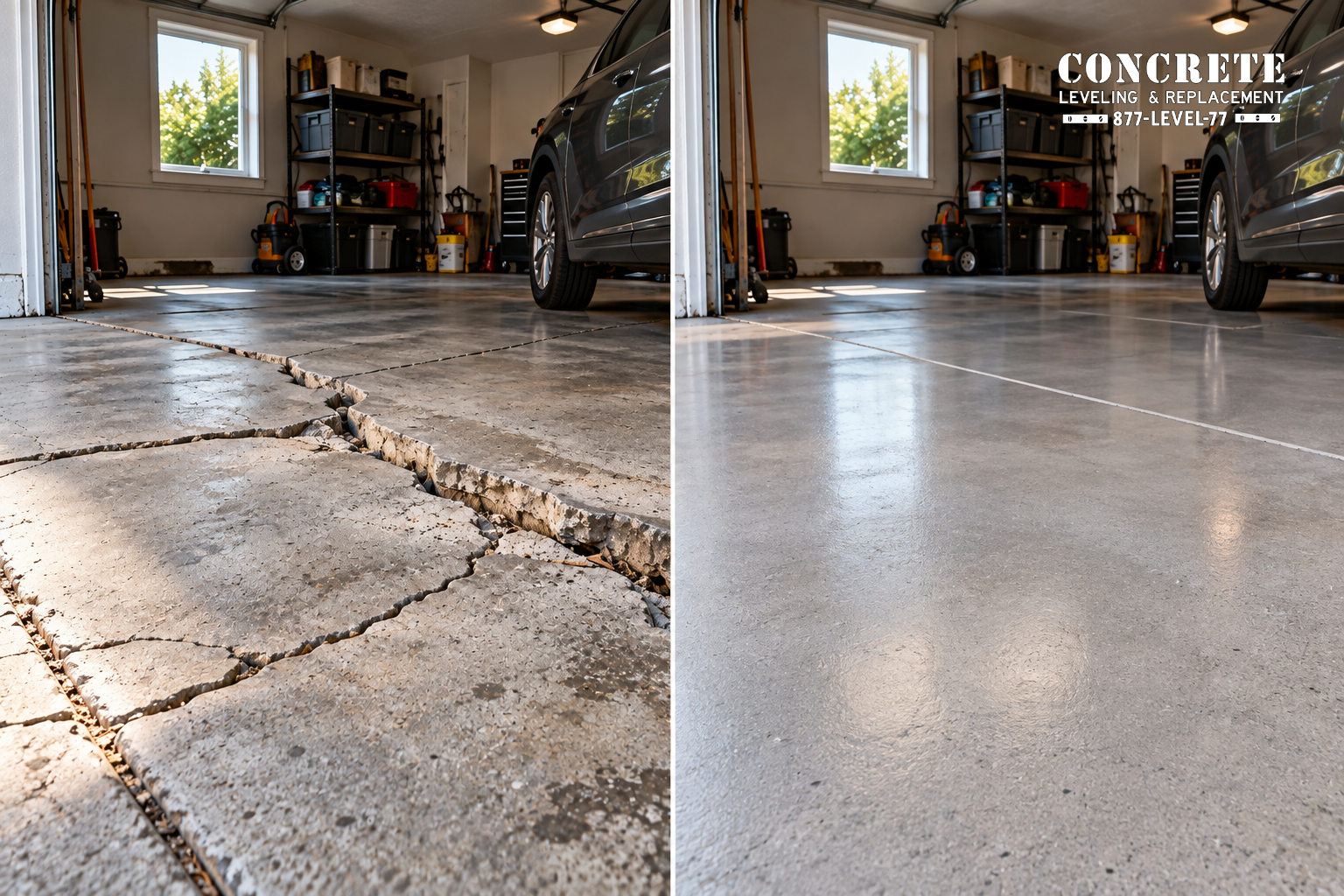
In areas with shifting soils, damage might show up as one side of a slab sinking lower than the other. You might notice a patio sloping toward the house, a sidewalk lip creating a trip hazard, or a garage floor cracking near the front. When settlement is the problem, just fixing the crack often isn't enough because the movement continues. In these cases, a service like concrete leveling can be a better long-term fix because it addresses the root cause.
Poor construction practices and weak curing
Not all cracks are due to weather or soil. Sometimes, issues start during installation. Improper mixing, too much water, inadequate reinforcement, poor finishing, and rushing the curing process can weaken the slab from the start. Concrete that doesn't cure properly is more likely to crack early, especially in high-traffic areas or places exposed to temperature swings soon after being laid.
Experts stress that curing is just as important as mixing. Concrete gains strength over time, and if it dries too quickly or faces harsh conditions before it hardens, the surface can shrink unevenly and crack. Homeowners might not notice the problem until months later, when small fractures begin to appear across a driveway or porch. In these cases, repair options depend on whether the slab is structurally sound or if replacement is a smarter choice. If the damage extends beyond surface cracking, our patio repair services can help restore both appearance and function.
Plastic shrinkage cracks from rapid drying
Plastic shrinkage cracks occur when newly placed concrete loses moisture too quickly before it has had time to set. Hot temperatures, low humidity, and wind can speed up evaporation from the surface, creating a pattern of shallow, often random cracks. These cracks usually appear early and are narrow, but they matter because they can affect the surface's longevity and allow future moisture intrusion.
Concrete industry guidelines recommend managing evaporation during placement by using proper curing methods, windbreaks, shade, and timing adjustments. The American Concrete Institute emphasizes that controlling moisture loss during the early hours after placement is critical for long-term durability. For general reference, check out standards and technical guidance from the American Concrete Institute. While these cracks may not always signal structural failure, they indicate that the slab was stressed during the early stages of hardening.
Overloading and surface stress
Concrete is strong but has its limits. Excessive weight from vehicles, equipment, dumpsters, storage, or concentrated loads can cause slabs to crack. This is especially true when the concrete wasn't originally designed for heavy-duty use. A residential garage floor may handle normal vehicle traffic fine, but begins to crack if subjected to heavy machinery or repeated loading in one spot.
Overloading is often a bigger issue on already weakened slabs because existing hairline cracks can widen under repeated stress. In commercial or industrial settings, this can quickly create safety and liability issues, which is why regular inspections matter. If your property includes a loading area or a high-use floor that's starting to fail, our garage floor repair and factory floor repair options might be worth checking out.
Which Cracks Are Normal, and Which Ones Are a Problem?
Hairline cracks that are often cosmetic
Not every crack means there's a serious structural issue. Very thin hairline cracks are common in concrete, especially as the material cures and naturally shrinks. These small fractures often remain stable for years and may be mostly cosmetic if they're not growing, leaking, or causing movement. In many cases, they can be monitored and sealed before they become bigger problems.
Still, even minor cracks deserve attention because they can let in water and salt. Once moisture enters the crack, freeze-thaw cycles can make it worse, especially in colder climates. Sealing a hairline crack early is typically much cheaper than dealing with a slab that's settled or broken apart later. A simple inspection twice a year can help you decide whether the crack is stable or changing over time.
Cracks that widen, shift, or create trip hazards
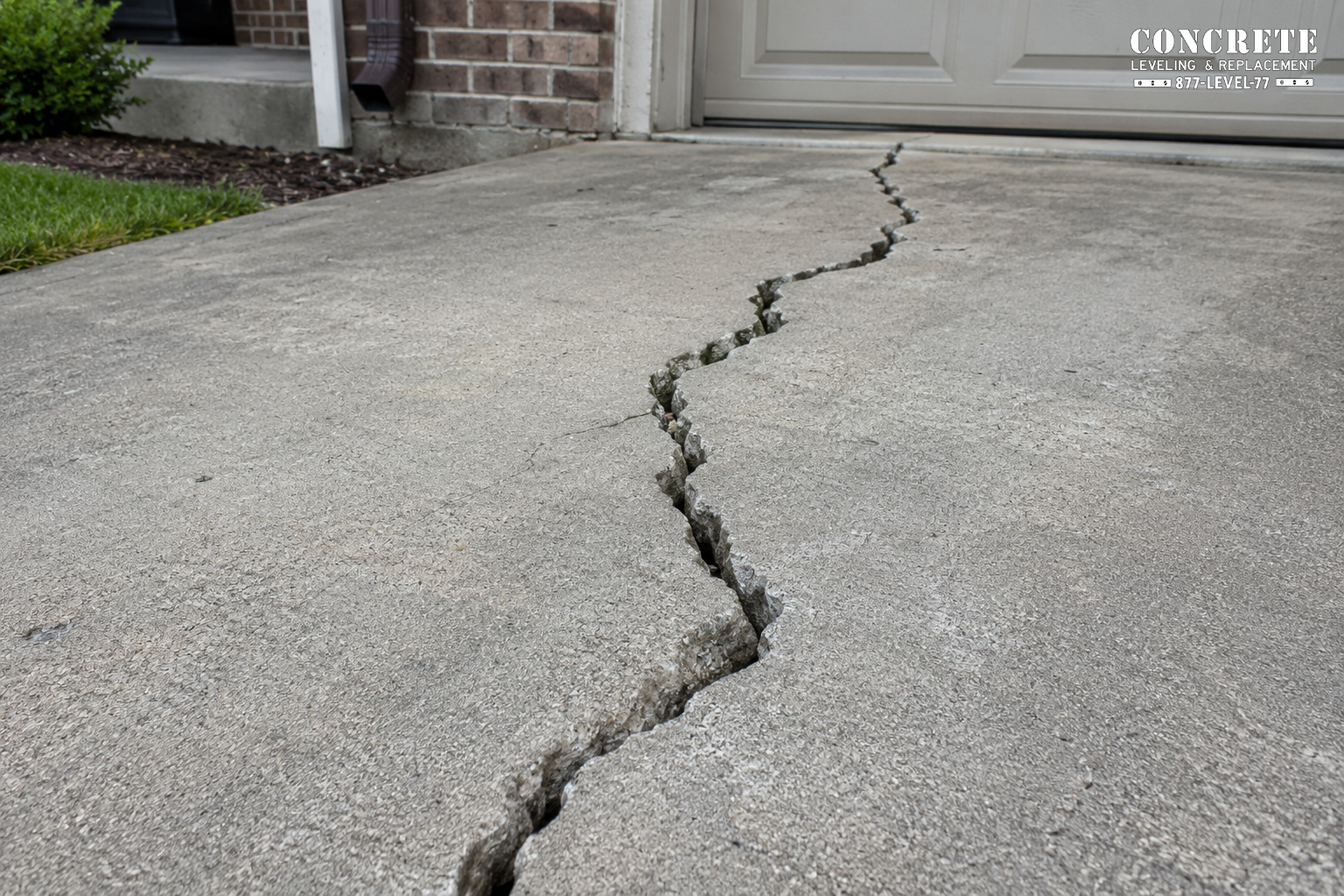
A crack becomes more concerning when the two sides of the slab are no longer level. Vertical displacement, or a raised edge on one side, indicates that the concrete may be moving due to settlement, erosion, or heaving. These changes are not just cosmetic. They can create trip hazards, make mowing or snow removal difficult, and show that the subgrade is no longer supporting the slab evenly.
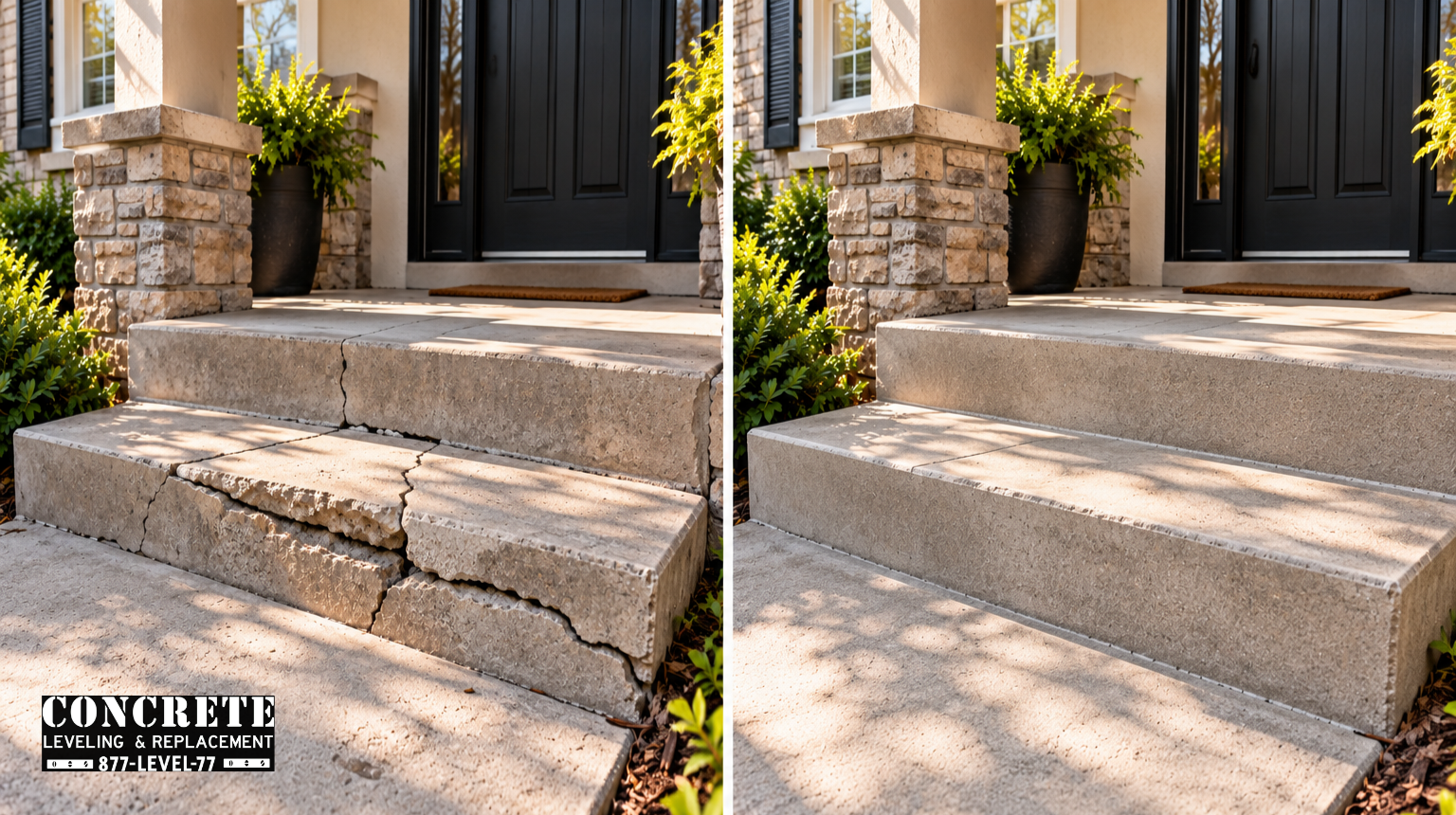
When a crack widens over time, it usually means the underlying problem is ongoing. The same goes for cracks that extend across multiple sections, branch in several directions, or keep reopening after patching. In these cases, a professional evaluation is the safest approach because the concrete may need leveling, stabilization, or replacement rather than just a basic filler. If the problem is affecting access around your home or business, our step repair services may be helpful.
Cracks that allow water intrusion
Water leakage is one of the clearest signs that a crack should not be ignored. Even if the crack isn't wide, any opening that lets water through can lead to soil erosion, basement seepage, frost expansion, or further slab movement. Water infiltration is often why a crack gets worse from one season to the next.
If you notice puddling near the crack, damp soil beneath the slab, or water entering an adjacent interior space, the issue may be broader than the visible line on the surface. This is especially true near garages, porches, basement walkouts, or pool areas. For surfaces exposed to heavy moisture, it might make sense to evaluate drainage and repair together, not separately. In some cases, interior or floor repair services can help address related damage inside the structure.
How to Inspect Concrete Cracks Like a Pro
Measure the width and monitor changes.
The first step is simple: document the crack. Take clear photos, measure its width, and note the date. If the crack is very fine and stays the same over several months, it may be stable. If it expands, darkens, or begins to change direction, that usually suggests active movement and a greater need for professional assessment.
Many property owners find it helpful to mark both ends of a crack with a pencil or waterproof marker and check it after seasonal weather changes. This creates a basic record of movement without requiring special tools. If you manage a commercial property, a log of inspections can also support maintenance planning and help prioritize the most urgent repairs.
Look for related warning signs around the slab.
Cracks don't happen in isolation. Pay attention to nearby symptoms like pooling water, soil erosion at the edges, sticking doors, gaps at joints, uneven expansion joints, or drainage flowing toward the slab. These clues can reveal whether the root cause is settlement, poor grading, or moisture pressure. In many cases, the crack is only the most visible part of a bigger issue.
You should also inspect adjacent surfaces such as walkways, curbs, and entry steps. A settlement problem often affects several connected structures at once. If one section of the property is dropping, nearby concrete may follow. For property owners who want to understand the broader picture, our related articles on early signs of concrete settlement and proper drainage offer helpful background.
Evaluate whether the crack is active or dormant.
A dormant crack has likely stopped moving, while an active crack continues to widen, shift, or create new damage around it. Determining the difference matters because active cracks usually need a repair strategy that addresses movement, not just the surface opening. A dormant crack may only need sealing or cosmetic restoration.
One practical test is to observe the crack after several weeks of wet weather, freezing temperatures, or heavy use. If it continues to change, you may be dealing with an ongoing structural or soil-related issue. That's the point at which a professional inspection becomes important, especially if the slab is part of a frequently used driveway, porch, or sidewalk.
Why Romulus, MI, Properties Are Especially Vulnerable
Freeze-thaw exposure in Michigan winters
Michigan weather creates ideal conditions for concrete wear. Cold winters, thaw cycles, spring moisture, and changing temperatures all work against concrete durability. In places like Romulus, driveways and sidewalks often see repeated freeze-thaw stress over many seasons, which can turn small imperfections into visible cracking and settlement. The combination of snow, ice melt, and water saturation makes timely maintenance especially important.
According to public construction and weather resources, repeated freeze-thaw stress is one of the most common reasons exterior concrete deteriorates in northern climates. That's why local property owners benefit from sealing, proper drainage, and routine inspections before winter begins. For help with problem slabs, our driveway repair and patio repair services are designed to address the types of damage that show up most often in this region.
Expansive soils and uneven support
Local soil conditions are another major factor. Clay-heavy soils can hold moisture, expand, and then contract as conditions change, which places pressure on concrete slabs above them. When the soil beneath a slab shifts, the concrete may crack, sink, or tilt. These soil-related changes are especially troublesome because they often continue unless the drainage or support problem is fixed.
This is why concrete leveling is often a better solution than a quick patch. By lifting and stabilizing the slab, the repair helps restore the surface while reducing the effect of future movement. If you're comparing options for a sinking slab, our soil conditions guide explains how local ground conditions affect long-term concrete performance.
Repair Options: What Works Best for Different Types of Cracks
Sealing and patching small surface cracks
For narrow, stable cracks that are mostly cosmetic, sealing may be the simplest and most cost-effective solution. Sealants help keep out water, dirt, de-icing chemicals, and debris that can expand the crack over time. Patch materials can also improve appearance and reduce the risk of surface breakdown. Still, patching only works well when the slab is otherwise sound.
If the crack is caused by active movement, patching is usually temporary. That's why an honest inspection matters. A good contractor should explain whether the crack is a surface defect or a symptom of a larger issue. At Concrete Leveling & Replacement, our technicians are not paid on commission, so recommendations are based on what the property actually needs rather than on upselling a bigger repair.
Concrete leveling for settled slabs
When a slab has dropped because of soil movement or voids underneath it, leveling can be the most effective solution. Modern polyurethane injection is popular because it is efficient, minimally invasive, and able to restore elevation without full replacement in many cases. The process fills voids, stabilizes the base, and lifts the slab back toward its original position.
This approach is especially useful for sidewalks, driveways, porches, steps, and patios that have become uneven but are still structurally viable. It can also be less disruptive than removal and replacement, saving time and reducing material waste. If you're dealing with a sinking section of concrete, our concrete leveling service is designed to address that type of problem directly.
Replacement when damage is too advanced
Sometimes, concrete is beyond repair. If the slab has severe structural cracking, crumbling edges, widespread spalling, or repeated failure from the same issue, replacement may be the most practical option. Replacement is often recommended when the concrete has lost too much integrity to safely support use or when repairs wouldn't last long enough to justify the cost.
Choosing replacement over repair is not a sign that the original concrete was worthless; it's simply recognizing that some damage is too advanced. Experienced contractors should explain the difference clearly, show you why a slab is failing, and help you choose the option that makes the most sense for your budget and long-term goals. For more on what influences repair longevity, see our article on how long concrete leveling lasts.
How to Prevent Concrete Cracking Before It Starts
Maintain good drainage around the slab.
Water management is one of the most effective ways to reduce cracking. Downspouts should direct water away from concrete, grading should slope away from the structure, and low spots should be corrected before water repeatedly pools near the slab. The less water that reaches the base or enters the surface, the less likely the concrete is to suffer from freeze-thaw damage or erosion.
Drainage improvements are often a smart first step because they protect both the concrete and the surrounding foundation or landscaping. If your property has standing water, runoff issues, or persistent dampness near paved areas, a repair without drainage correction may only delay the next failure. That's why prevention and repair should be planned together whenever possible.
Use quality materials and proper installation methods
Strong concrete starts with strong installation practices. Proper mix design, correct reinforcement, appropriate joint placement, and sufficient curing time all contribute to a more durable slab. A professionally installed surface is less likely to crack prematurely and more likely to perform well under local weather conditions and day-to-day traffic.
Industry best practices also emphasize that the right installation method depends on the use case. A patio, garage floor, curb, and commercial sidewalk each have different load and exposure requirements. That's why a one-size-fits-all approach often leads to problems later. When a contractor understands the site conditions, the repair or replacement plan can be tailored to last longer.
Schedule routine inspections and early repairs
Small cracks are much easier to manage than major structural damage. Routine inspections in spring and fall can help catch early warning signs before they spread. Look for changes after heavy rain, deep freezes, or periods of drought, since those conditions often reveal hidden movement in the slab.
If a crack is starting to widen, water is getting in, or a slab is becoming uneven, early repair can save significant money. This is especially true for high-use surfaces such as driveways and walkways, where safety becomes a concern as soon as the surface shifts. Our catch basin repair and curb and gutter repair services may also help when drainage-related failures are part of the bigger problem.
Frequently Asked Questions About Cracked Concrete
How can I tell if a concrete crack is serious?
A crack is more serious if it widens, allows water through, causes a height difference between slab sections, or keeps reappearing after repairs. Cracks that create trip hazards or seem to be spreading usually deserve professional attention. If you're unsure, take measurements and photos over time so you can compare changes.
Can I just fill a crack and forget about it?
Sometimes, yes, but only if the crack is stable and the slab is not moving. Filling a crack is useful for sealing out moisture and improving appearance, but it won't solve settlement, erosion, or structural movement. If the slab is shifting, the underlying issue needs to be fixed first.
Is leveling better than replacement?
It depends on the condition of the slab. Leveling is often the best choice when the concrete is structurally sound but has settled or become uneven. Replacement makes more sense when the slab is severely deteriorated, broken, or no longer safe to use. A professional evaluation can help you decide which option offers the best value.
How much does repair usually cost?
Costs vary widely based on crack size, slab condition, access, and the method required. Minor repairs may be relatively inexpensive, while more extensive work, such as leveling or replacement, costs more. Industry estimates often place small repairs in the low hundreds and larger structural projects in the low thousands, but the only accurate answer comes from an on-site evaluation. For those comparing options, our local service area page in the counties we serve can help you find support nearby.
Conclusion: Know the Signs, Fix Problems Early, and Protect Your Property
Concrete cracking is common, but it should never be ignored without first understanding the cause. Some cracks are merely cosmetic, while others point to settlement, drainage issues, freeze-thaw damage, poor construction, or overloading. The key is to watch for warning signs such as widening gaps, vertical displacement, and water intrusion, then act before the damage becomes more expensive and disruptive.
If you notice cracking on a driveway, sidewalk, patio, porch, step, or garage floor, start by documenting the change and evaluating the surrounding conditions. In many cases, timely repair can restore safety, improve appearance, and extend the life of the concrete you already have. When you need a straightforward assessment and practical solution, Concrete Leveling & Replacement is here to help with honest recommendations, experienced crews, and durable repair options tailored to your property.
To discuss your concrete concerns or schedule an evaluation, call (734) 895-3820 or visit Concrete Leveling & Replacement. If you're ready to stop the cracking before it spreads, a professional inspection is the best next step.
Suggested visual resource: watch this overview on common causes and prevention of cracks in concrete for a simple explanation of the issues covered above.