Why Soil Movement Matters for Concrete Surfaces
When it comes to concrete surfaces, soil movement can be a big deal. It’s one of the main reasons why concrete cracks, sinks, and becomes uneven over time. You see, when the ground beneath shifts, expands, or contracts, the concrete above can lose its support. This can lead to visible damage, hidden stress, and safety concerns for things like sidewalks, driveways, patios, and more.
Knowing this connection helps property owners make smarter decisions about repairs. Spotting changes early can often correct problems before they spread to other areas or mess with drainage and foundation performance. In many cases, getting a pro to evaluate and provide a targeted concrete leveling solution can fix the surface without the hassle of complete replacement.
This guide walks you through how soil movement messes with concrete, warning signs to watch for, and why modern repair methods are changing the game. Plus, preventive maintenance tips to keep your property intact. If you want more details on related issues, check out our guides on sunken concrete and concrete cracks.
According to the U.S. Geological Survey, ground movement can happen for all sorts of reasons, like shrinking clay soils, moisture changes, erosion, and freeze-thaw cycles. You can learn more about soil and land-surface processes from the USGS, and about freeze-thaw impacts on construction materials through the National Institute of Standards and Technology. These factors are important because while concrete is strong in compression, it really depends on having a stable support underneath.
How Soil Movement Damages Concrete
Expansion and contraction beneath the slab
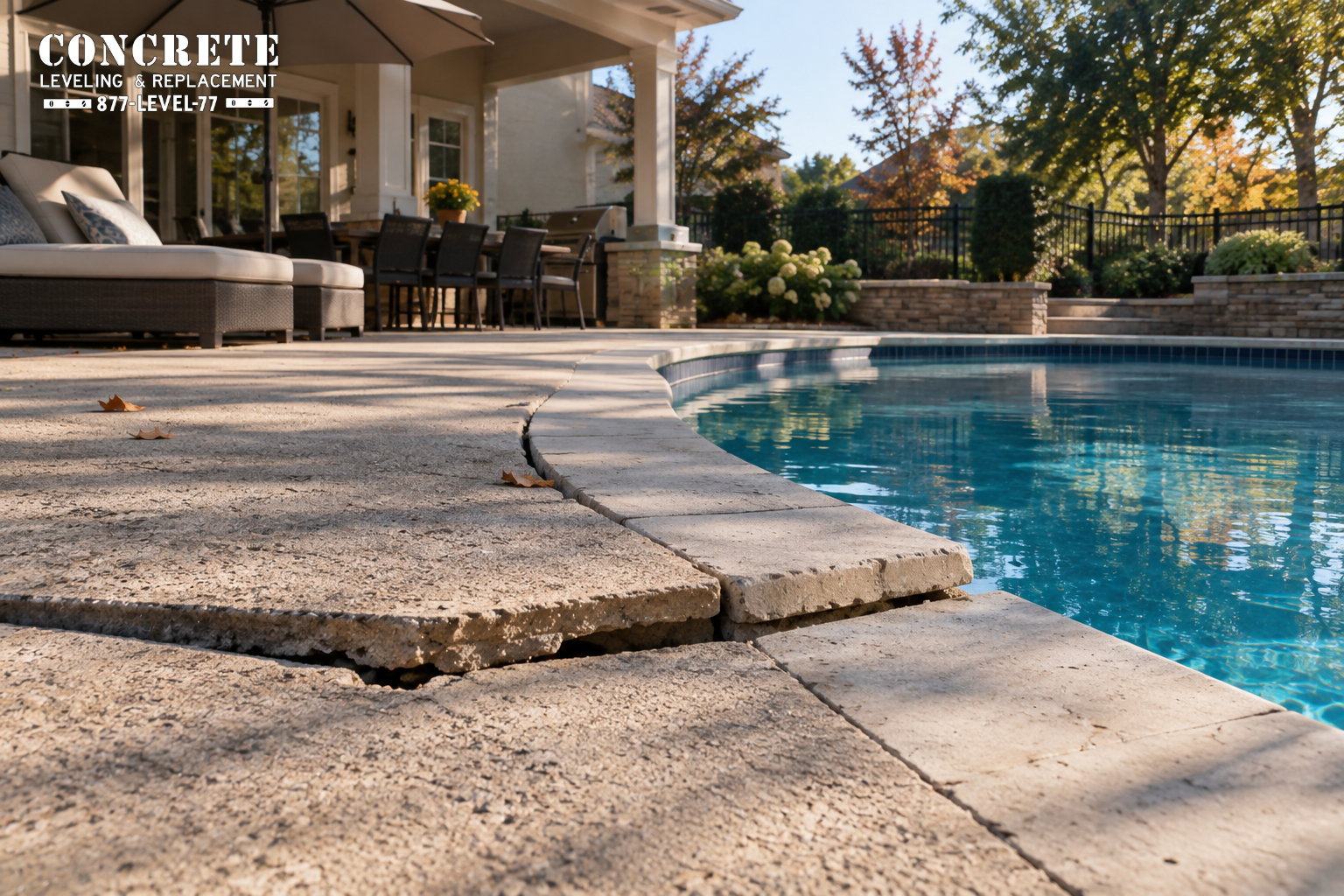
Soil doesn’t just sit there; it reacts to moisture. When the ground gets soaked, some soil types swell and push upward on concrete. When it dries out, they shrink and leaves gaps beneath the slab. This constant movement can make concrete rise in one spot and settle in another, creating cracks, tilted sections, and uneven panels.
You often see this stress first in driveways and sidewalks because they’re exposed to the elements. It might start subtle, but over time, the slab loses its base and starts separating from other sections. At this point, a repair like sidewalk repair or concrete driveway repair is the right move if the damage is already visible.
Erosion and washout of support soil
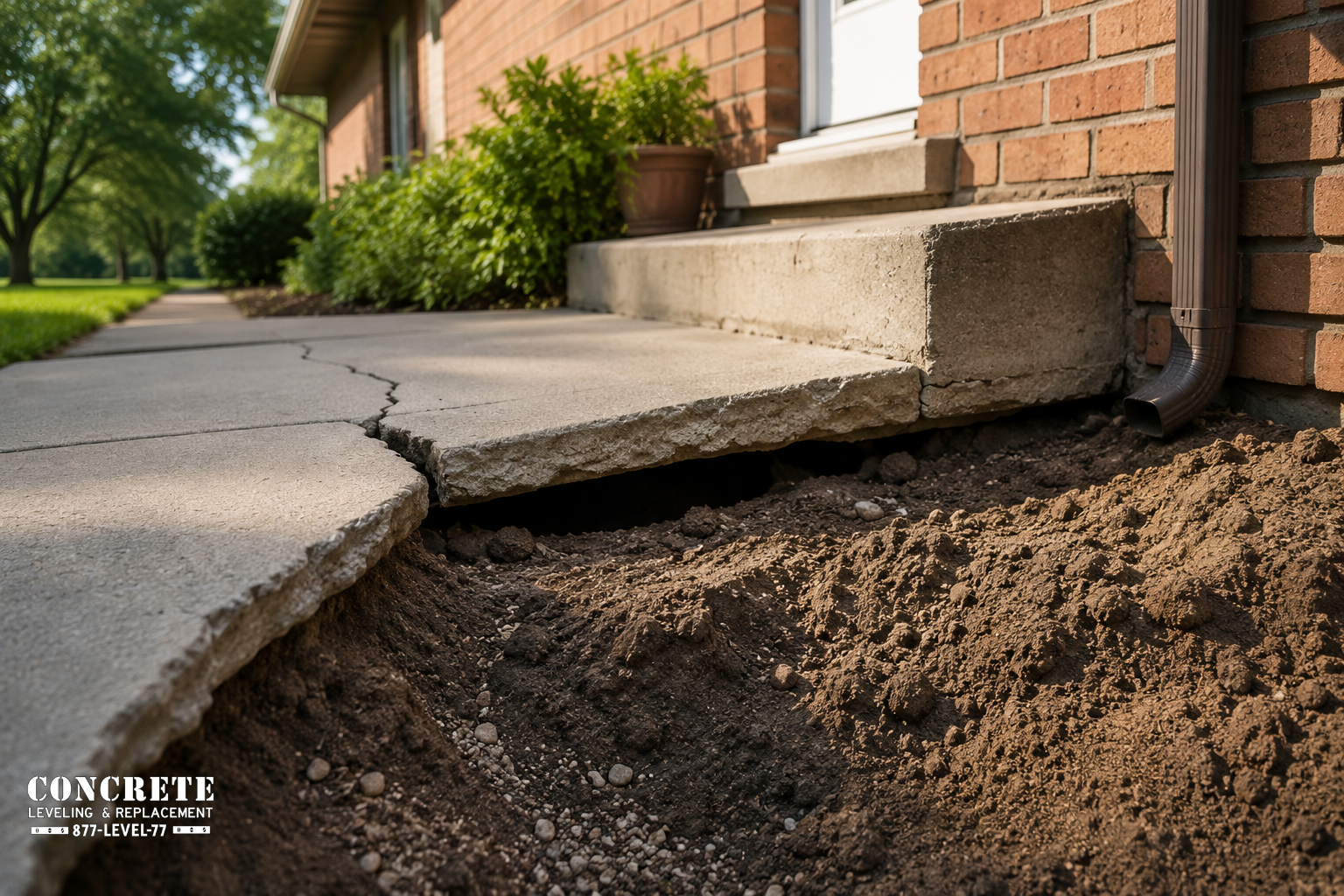
Water can do more than just change soil volume; it can move it entirely. Poor drainage, downspouts that empty too close to concrete, and unsealed gaps can let water wash away soil from under the slab. Without support, the concrete can crack or settle suddenly.
The EPA says that managing water is key to keeping property and soil stable. Review stormwater and runoff control recommendations at the Environmental Protection Agency. Good drainage is extra crucial around patios, porches, and other outdoor slabs where pooling water can quietly erode the base.
Freeze-thaw cycles and seasonal stress
In colder places, freeze-thaw cycles make the soil expand and contract repeatedly. When the ground freezes, it swells, lifting the concrete. When it thaws, the soil weakens, letting the slab settle unevenly. Michigan properties are particularly at risk because the seasonal weather swings can be dramatic and prolonged.
That’s why local experience is important. Seasonal soil behavior in Romulus and nearby areas can be different from what you might read in general repair advice. The mix of moisture, frost depth, and soil type means that concrete surfaces often need a repair approach tailored to local conditions.
Common Signs Your Concrete Is Being Affected
Cracks that widen or shift
Not every crack means something’s wrong, but widening cracks usually indicate ongoing movement. Hairline cracks might occur when the concrete cures, but wider cracks, diagonal breaks, or cracks that split along joints often suggest a support issue beneath the slab. If a crack follows a line where one section is higher or lower than the other, soil movement is likely part of the problem.
A good rule of thumb is to see if the crack stays stable or keeps changing. If it keeps moving, it’s time to call for an inspection. Sometimes, crack repair alone isn’t enough because the slab might need support restored first through concrete floor repair or leveling.
Uneven surfaces and trip hazards
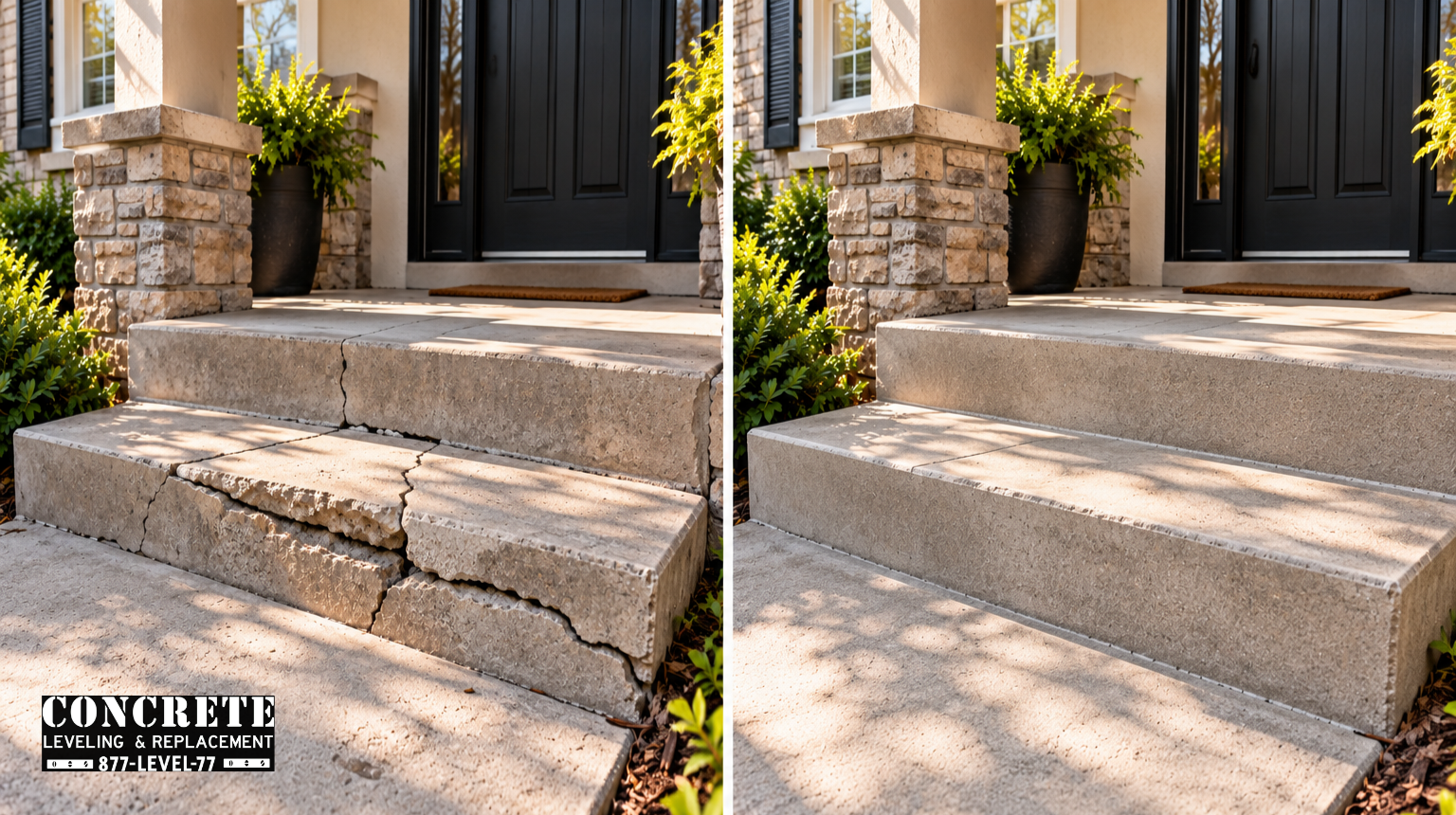
One of the most obvious signs of soil movement is a slab that isn’t level. You might notice one side of a sidewalk panel higher than the next, a driveway section sloping unexpectedly, or a porch step that feels different underfoot. These uneven areas are more than cosmetic problems; they can cause tripping hazards and liability issues.
The Occupational Safety and Health Administration offers tips on keeping walking surfaces safe, which apply to both homes and businesses. Visit OSHA for general safety info related to slips, trips, and falls. If you’ve got uneven transitions, a service like step repair might be needed to restore safe entry points.
Doors, windows, and nearby structures that stick
Concrete movement doesn’t always stop with the slab itself. If the surrounding soil shifts enough, you might notice doors sticking, windows becoming harder to open, or nearby structures showing small gaps. These could be signs that the ground is changing in a way that affects more than just the visible concrete surface.
While these symptoms can come from different causes, they shouldn’t be ignored. They might indicate broader settlement patterns that need professional attention, especially if they appear along with sinking concrete, drainage problems, or new cracks near corners and edges.
Modern Repair Methods: Mudjacking vs. Polyurethane Foam Injection
How traditional mudjacking works
Mudjacking has been around for a while to lift settled concrete. In this method, a cement-based slurry is pumped beneath the slab to fill gaps and raise the surface. It can be a practical solution because it restores support and improves alignment without removing the whole slab.
But mudjacking does have its downsides. The slurry is heavier than modern alternatives, takes longer to cure, and the extra weight might not be ideal for every soil condition. For some properties, especially where you don’t want much disruption, other solutions might work better.
Why polyurethane foam injection is gaining attention
Polyurethane foam injection is becoming popular in concrete lifting because it’s lightweight, fast-curing, and precise. The material expands beneath the slab, filling gaps and gently lifting the concrete back into place. Since it adds much less weight than mudjacking, it’s particularly useful when the soil is weak or unstable.
Modern systems like PolyRenewal™-style methods are popular because they provide quick results with minimal downtime. Industry research shows that companies increasingly use this approach to stabilize slab movement while reducing disturbance to landscaping and structures. For properties where speed and cleanliness matter, it's often a strong option.
Choosing the right repair method for your property
There’s no one-size-fits-all answer for every slab. The right approach depends on what’s causing the movement, how bad the settlement is, the concrete’s condition, and local soil conditions. Sometimes mudjacking is still okay. Other times, polyurethane foam is better because it seals gaps and provides a lighter lift.
If the concrete is heavily cracked, broken, or structurally compromised, replacement might be the smarter long-term investment. Our team often helps property owners compare options honestly, whether the need is for interior floor repair, garage floor repair, or a more extensive structural solution.
Why Local Soil Conditions Matter So Much
Clay soil, moisture swings, and settlement
Some soil types move more than others. Clay-rich soils, for instance, can expand a lot when wet and shrink when dry. That cycle creates repeated pressure changes beneath concrete, leading to lifting on one side and sinking on another. The surface might look fine after a dry spell but shift noticeably after heavy rain.
This is why a proper diagnosis should consider the soil itself, not just the visible slab damage. A successful repair often depends on addressing the underlying moisture source and stabilizing the support base. In practical terms, that means fixing drainage, sealing problem areas, and choosing the best lifting approach for the specific site.
Drainage patterns around homes and businesses
Water flow is one of the biggest drivers of soil movement. Downspouts, grading issues, low spots, and clogged drainage features can all send water where it doesn’t belong. When soil becomes repeatedly saturated and then dries out, it can lose density and settle over time. This is especially common near the edges of driveways, patios, and sidewalks.
For commercial and industrial sites, drainage problems can be even more complex because of larger paved areas and heavier loads. In those settings, services like curb and gutter repair and catch basin repair can play a major role in keeping runoff under control and protecting surrounding concrete.
Michigan weather and seasonal risk
Michigan’s climate adds another layer of stress. Harsh winters, thaw cycles, and humid summers create repeated moisture shifts in the soil. This means concrete surfaces can experience several movement triggers in a single year, especially when drainage is poor or the subgrade was not compacted properly during installation.
For more background on how weather influences materials and structures, the National Weather Service provides helpful climate and seasonal context. In areas with repeated freeze-thaw conditions, monitoring concrete surfaces regularly is one of the best ways to reduce long-term repair costs.
Real-World Example: When Voids Beneath Concrete Become a Bigger Problem
What a void looks like in practice
Voids beneath concrete often begin as small empty pockets caused by washout, shrinkage, or poor compaction. At first, the surface may only sound hollow when tapped or feel slightly soft at a corner. But once the void enlarges, the slab loses support and becomes much more likely to crack or collapse under weight.
A notable example from the research involved rehabilitation work at the Neshoba Spillway, where PolyPier® technology was used to fill voids and stabilize the structure. That kind of project demonstrates an important principle: the problem is not always the concrete itself. Often, the deeper issue is the support beneath it, and modern lifting methods can address that efficiently when used correctly.
What can property owners learn from case studies?
Case studies show that early intervention can prevent more expensive damage. A slab that is lifted and stabilized quickly may avoid replacement, while one left unattended may crack further, damage adjoining joints, or create drainage changes that affect nearby areas. This is especially important in regions where changing weather repeatedly stresses the base.
For homeowners and facility managers, the lesson is simple. A small dip, a minor crack, or a slightly uneven panel may be the first sign of a larger support issue. Addressing the problem early usually produces better results and helps preserve both appearance and function.
Best Practices for Preventing Future Concrete Problems
Inspect concrete regularly
Regular inspections are one of the easiest ways to catch soil movement early. Walk your property seasonally and look for cracks, pooling water, gaps near edges, or areas that feel unlevel underfoot. Pay special attention after heavy rain, rapid snowmelt, or freeze-thaw events because those conditions often reveal hidden problems.
Documenting changes with photos can also help. If a small crack grows wider from one season to the next, that record helps your contractor determine whether the issue is active and what type of repair may be needed. Early detection often means smaller repairs and lower overall cost.
Improve drainage and manage moisture.
Moisture control is one of the strongest defenses against soil movement. Extend downspouts, regrade areas that slope toward the slab, and clear drainage channels so water moves away from concrete instead of under it. If necessary, consider whether your property needs additional drainage support to prevent ongoing erosion.
On many properties, fixing drainage before repair work makes the final result last longer. Even a well-executed lift can fail prematurely if water continues to undermine the soil. This is why reputable contractors evaluate both the slab and the site conditions before recommending a solution.
Protect joints and surrounding surfaces.
Joints are designed to manage movement, but they still need maintenance. When joints crack out, separate, or allow water infiltration, the slab becomes more vulnerable to soil-related damage. Sealing, patching, and timely repair can help keep moisture from getting beneath the surface and starting the cycle of erosion again.
For larger properties, keeping nearby surfaces in good condition matters too. A damaged apron, a settled walkway, or a broken edge near a parking area can redirect water and create new trouble points. That is why patio repair and garage floor repair can be part of a broader prevention strategy, not just isolated fixes.
When Repair Is Enough and When Replacement Makes More Sense
Signs repair is a good option.
Repair is often the better choice when the concrete is still structurally sound but has settled or shifted due to soil movement. If the slab is mostly intact, the cracks are manageable, and the base can be stabilized, leveling may restore safe use and extend the life of the surface. This is often true for driveways, sidewalks, porch slabs, and many commercial pads.
A professional assessment can determine whether the issue is localized or widespread. If only one section has dropped, it may be possible to lift it and seal the joints. When that happens, the repair can be both efficient and cost-effective.
Signs replacement may be better.
Replacement becomes more appropriate when the concrete is severely fractured, broken into multiple unstable pieces, or compromised by long-term settlement that has destroyed its integrity. In such cases, leveling the slab may not provide a durable or attractive result. The same is true when the base condition is so poor that the surface would likely fail again soon after a lift.
Because our team is experienced in both leveling and replacement, we can compare the options without pushing one method over the other. That honest evaluation is especially important for properties with complex conditions or repeated movement.
Frequently Asked Questions About Soil Movement and Concrete
What causes soil movement beneath concrete?
Common causes include moisture fluctuations, freeze-thaw cycles, poor compaction during installation, erosion, and changes in soil composition. In many cases, more than one factor is at work at the same time.
How can I tell if my concrete is settling?
Look for cracks, sinking corners, uneven joints, pooling water, and changes in how doors, windows, or nearby structures operate. If the surface appears to be moving over time, it should be inspected.
Is concrete leveling permanent?
Concrete leveling can provide a long-lasting solution, but the future stability of the slab depends on controlling drainage, soil conditions, and ongoing movement. Monitoring the area after repair is still a smart practice.
Can I ignore a small crack if it does not bother me now?
Small cracks can be harmless, but they can also be the first visible sign of a deeper support issue. If the crack changes, widens, or appears with settling, it is wise to have it checked.
How Concrete Leveling & Replacement Helps Property Owners
Honest assessments and practical recommendations
Concrete problems are easier to solve when the diagnosis is accurate. Concrete Leveling & Replacement focuses on evaluating the real cause of the issue, whether that is soil erosion, drainage failure, cracked joints, or settlement. Because our technicians are not paid on commission, our recommendations are based on what your property actually needs.
That approach matters because not every sunken slab needs replacement, and not every crack should be lifted. A careful inspection can reveal whether leveling, repair, or replacement will produce the best long-term value. If you are evaluating multiple concrete issues at once, our concrete leveling and floor repair services can help restore both safety and appearance.
Local crews with regional experience
Our crews are located throughout Michigan, which helps us respond efficiently without adding unnecessary travel costs. That local presence matters because soil conditions, weather patterns, and slab performance can vary across counties and neighborhoods. Experience with regional conditions leads to better repair planning and more reliable results.
If you would like to learn more about where we work, visit our counties we serve page. We support homeowners, commercial properties, and industrial facilities across multiple service areas, including Romulus and nearby communities.
Take action before movement gets worse.
Soil movement rarely fixes itself. The longer a slab stays unsupported, the more likely it is to crack, sink, or create related problems with drainage and access. A timely inspection can save time, money, and frustration while improving the safety of your property.
If you have noticed uneven concrete, sticking doors, or recurring pooling water, now is the right time to act. Contact Concrete Leveling & Replacement at (734) 895-3820, email sales@concretelevelingpro.com, or visit our website to request an evaluation. Whether you need lifting, repair, or replacement, the goal is the same: restore a safer, stronger concrete surface that lasts.