Expert Guide to Why Sunken Concrete Is More Than a Cosmetic Issue in Romulus, MI
Sunken concrete may look like a minor nuisance at first, but it often signals deeper problems beneath the slab. When sidewalks, driveways, porches, patios, or garage floors begin to settle, the issue can affect safety, drainage, structural integrity, and long-term property value. For homeowners and businesses alike, the key is understanding what causes the sinking, why it matters, and which repair methods actually solve the problem instead of hiding it.
If you've noticed uneven surfaces around your property, it might be time to explore professional concrete leveling or targeted concrete driveway repair before small issues become expensive ones. In many cases, the right repair can quickly restore function and avoid full replacement. That’s especially important in places like Michigan, where freeze-thaw cycles and shifting soils can speed up settlement over time.
According to the U.S. Environmental Protection Agency, water movement and drainage patterns can greatly affect soil stability and erosion, making slab settlement a predictable risk in many environments. You can learn more about broader drainage and runoff concerns through the EPA’s water resources guidance at epa.gov. In practical terms, the concrete itself often isn't the original problem; the support underneath it has changed.
What Sunken Concrete Really Means
It is usually a soil problem first.
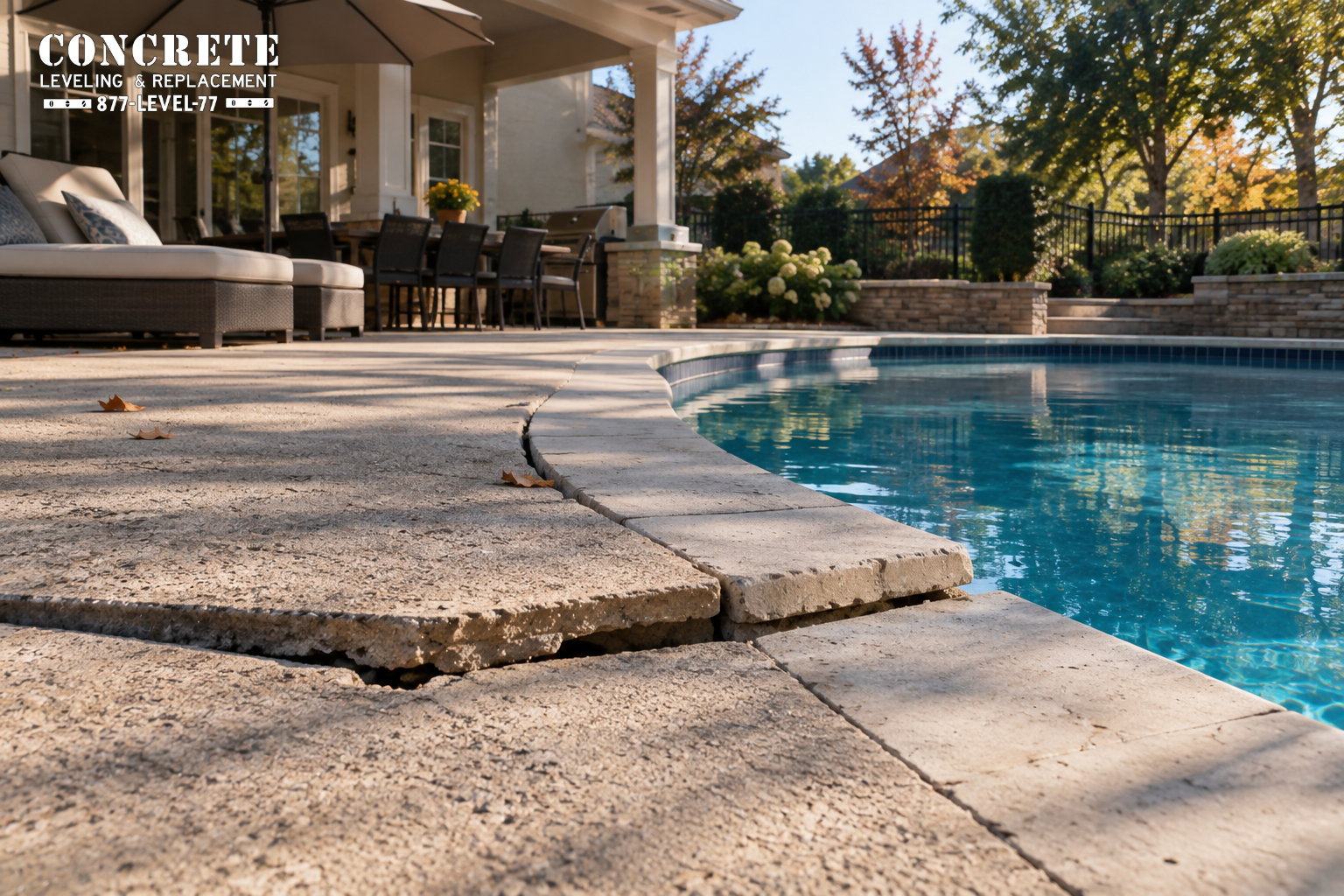
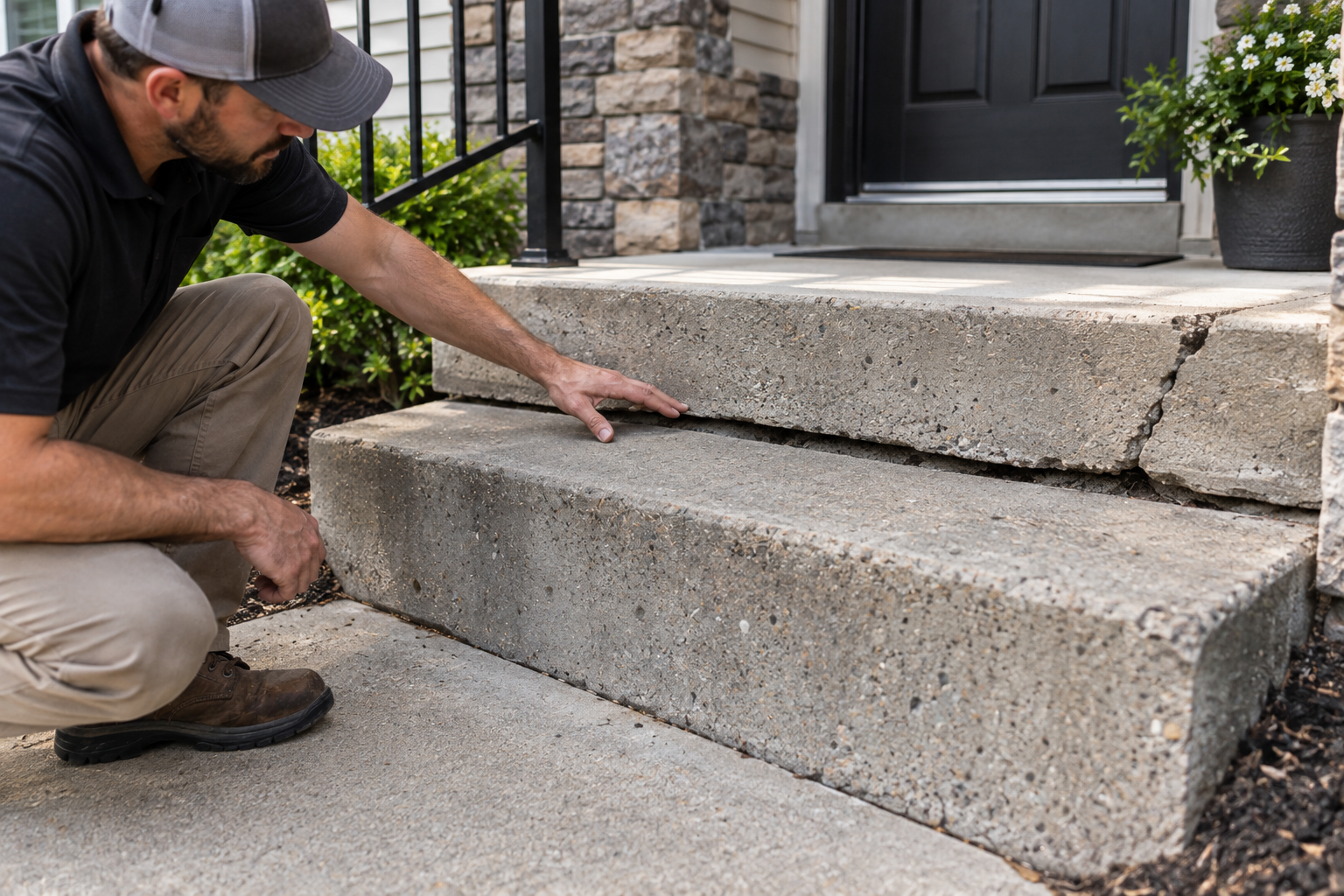
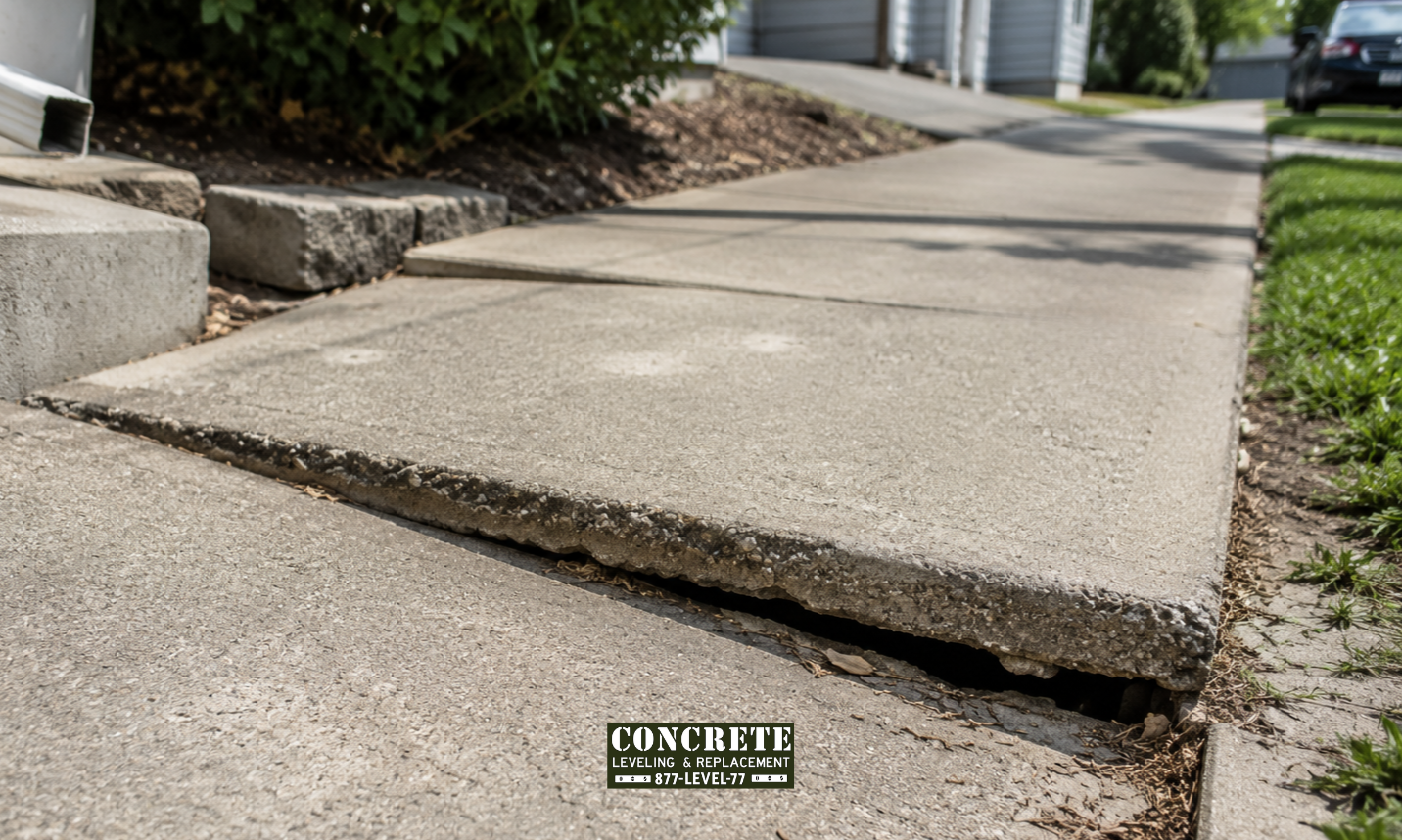
Concrete slabs are only as stable as the ground below them. When the supporting soil becomes loose, washed out, saturated, or poorly compacted, the slab loses uniform support and begins to dip. That’s why settlement often appears in isolated sections rather than across an entire structure. A driveway edge, a front step, or one side of a sidewalk panel may drop while the rest remains intact.
This type of movement isn’t just cosmetic. Once a slab loses support, stress concentrates at weak points and can create cracking, edge deterioration, and widening gaps. Over time, those gaps can funnel even more water beneath the slab, making the original issue worse. The longer the problem is ignored, the harder it becomes to stabilize the area without more invasive repair.
Uneven concrete creates a chain reaction.
Many property owners assume a sinking slab only affects appearance, but it can trigger several secondary problems. Water pooling can destroy landscaping, accelerate erosion, and freeze into ice during colder months. Doors, garage transitions, and interior floors may also be affected if settlement occurs near the foundation or attached structures.
For more on how settlement develops in common residential areas, check out our related post on the home areas most likely to need concrete leveling. Understanding where settlement tends to happen makes it easier to inspect vulnerable surfaces early and prevent more expensive damage later.
Why Concrete Sinks: The Most Common Causes
Soil erosion and water infiltration
Water is one of the biggest contributors to sunken concrete. When runoff, downspouts, poor grading, or leaking plumbing direct water under a slab, the soil can wash away and leave voids behind. Once those voids form, the concrete loses support and gradually drops. In some cases, the sinking happens suddenly after a heavy rain or a long period of saturation.
This is why drainage improvements are often part of a long-term solution. If water continues to collect near the slab, any leveling repair may be temporary. The problem isn’t just lifting the concrete back up; it’s also reducing the conditions that caused the settlement in the first place. Proper drainage is often the difference between a durable fix and repeated repairs.
Poor soil compaction during construction
Another common cause is inadequate compaction when the concrete was originally installed. If the soil, fill material, or base wasn’t compacted properly, it can settle slowly over months or years. This is especially common in new construction, additions, or areas where soil was disturbed during utility work.
The Compaction Control and Soil Stabilization practices used in good construction are designed to prevent this type of failure. The Federal Highway Administration explains the importance of soil density and moisture control in infrastructure performance through its technical resources at fhwa.dot.gov. While residential slabs are smaller than highways, the principle is the same: weak or unstable subgrade leads to movement above.
Freeze-thaw cycles and seasonal soil movement
Michigan weather adds another layer of risk. When the ground freezes, the soil expands. When it thaws, the ground contracts and softens. Repeated cycles can create shifting support beneath concrete, especially if the area holds excess moisture. Over time, this movement can slowly push one portion of a slab upward and then allow it to settle unevenly.
Clay-rich soil, which is common in many parts of the state, can worsen the issue because it expands when wet and shrinks when dry. That constant movement stresses slabs and can open the door to cracks and differential settlement. If you want to understand local conditions more deeply, our article on how soil conditions impact concrete stability in Romulus, MI, explains why regional soil behavior matters so much.
Tree roots and nearby vegetation
Large roots can displace soil beneath concrete or absorb moisture unevenly, causing pockets of instability. This is more common near sidewalks, patios, and older driveways where mature trees have had years to spread. Although roots don’t always directly crack concrete, they can contribute to lifting in one area and settlement in another.
That means a property with healthy landscaping isn’t automatically safe from slab movement. In fact, roots and drainage can interact in ways that make soil conditions more unpredictable. A balanced approach to landscaping, watering, and root management can help protect hardscapes from future problems.
Why Sunken Concrete Is a Safety and Structural Concern
Trip hazards are only the beginning.
One of the most obvious risks is physical injury. Sunken sidewalks, porch slabs, and step transitions create tripping hazards that can affect children, older adults, guests, employees, and customers. In commercial settings, uneven concrete can also lead to liability exposure if someone is hurt on the property. Safety should always be a top priority when a slab becomes noticeably uneven.
The National Safety Council notes that falls remain a leading cause of preventable injury in the United States, which makes uneven walking surfaces a real concern rather than a minor inconvenience. For a more general injury-prevention context, see nsc.org. Even a small height difference can be enough to cause a dangerous stumble, especially in low light or during wet conditions.
Moisture intrusion can weaken nearby structures.
Once concrete cracks or separates, water can get beneath the slab more easily. That moisture can erode base material, damage adjacent surfaces, and contribute to foundation-related issues near the perimeter of a structure. If the concrete is attached to a building, settlement may also affect thresholds, entryways, and adjoining interior spaces.
This is why concrete leveling is often part of a broader repair strategy rather than a standalone cosmetic adjustment. For example, if a sinking porch slab creates a gap near the front door, that gap may eventually lead to water intrusion or rot around the entry. Our porch repair services and step repair solutions are designed to address both function and safety.
Property value and curb appeal take a hit.
Visible damage lowers the perceived quality of a property. Buyers, tenants, and inspectors often interpret sunken concrete as a sign of deferred maintenance or hidden structural concerns. Even when the issue is localized, it can create the impression that other parts of the property were not well cared for.
That’s why owners often pair leveling with broader exterior improvements. For instance, restoring a driveway or sidewalk can significantly improve curb appeal and make the entire property feel more stable and maintained. If the problem affects vehicle access, our driveway repair services can help restore both appearance and usability.
How Professionals Diagnose the Root Problem
Visual inspection and slope testing
Diagnosis usually starts with a visual inspection. Technicians look for cracks, gaps, pooling water, separation from adjacent slabs, and changes in slope or elevation. They may also check whether the settlement is isolated or part of a larger pattern affecting multiple slabs around the property.
Simple slope changes can reveal a lot. If a slab pitches toward a structure, for example, that can worsen drainage and accelerate further settlement. If the slab slopes away from a door or wall, it may create a different kind of safety and moisture issue. Careful inspection helps determine whether the problem is active, stable, or likely to get worse.
Drainage and soil assessment
Professionals also examine drainage routes, downspouts, grading, and signs of erosion. If soil has washed out from beneath the slab, the repair strategy may need to include both stabilization and lift. In some cases, technicians recommend correcting runoff patterns before or after leveling so the underlying conditions don’t repeat.
This inspection step matters because two slabs that look similar on the surface may need very different solutions. One may be sinking from loose fill soil, while another may be affected by water intrusion from a nearby gutter or catch basin. In commercial environments, related issues can involve curb flow or stormwater pathways, which is why services like catch basin repair and curb and gutter repair can sometimes support the concrete repair plan.
When a crack is more than a crack
Not every crack means a slab must be replaced, but cracks combined with settlement are a warning sign. If one side of a crack sits higher than the other, the slab may be moving. That type of differential movement often points to an underlying support issue rather than surface wear alone.
For a deeper look at this distinction, check out our related article, What Causes Cracks in Concrete and When to be concerned. Knowing the difference between cosmetic cracking and movement-related cracking helps property owners respond appropriately.
Repair Options That Solve the Problem
Concrete leveling and slab lifting
In many cases, concrete leveling is the most practical solution. Rather than removing and replacing the slab, contractors lift the concrete back toward its original position using grout, foam, or other lifting materials. This approach is often faster, less disruptive, and more cost-effective than full replacement. It also preserves the surrounding concrete when the slab itself is still structurally sound.
Industry professionals often recommend leveling when the slab has settled but remains intact enough to salvage. According to repair industry guidance, a properly completed leveling project can restore usability quickly and may last for many years when the cause of the settlement is addressed. To learn more about our process, visit Concrete Leveling Services and our article on how long concrete leveling lasts.
Surface preparation and joint repair
Even the best leveling job can fail early if the surface is not prepared properly. Cleaning joints, sealing problem gaps, and addressing edge deterioration all matter. Surface preparation helps ensure the repair material bonds correctly and that the slab performs well after the lift.
Repair professionals also pay close attention to nearby expansion joints and cracks so the repaired area can move naturally with temperature and moisture changes. In situations where the slab has additional damage, our concrete floor repair and interior floor repair services can help address related issues in garages, basements, or commercial interiors.
Replacement when the slab is beyond saving
Sometimes replacement is the right answer. If the concrete is severely broken, structurally compromised, or too thin to lift safely, replacement may be more practical than repair. The challenge is that replacement is usually more expensive, takes longer, and requires more disruption to the property.
A good contractor should explain when replacement is truly necessary and when it is not. Because Concrete Leveling & Replacement uses experienced, non-commissioned technicians, recommendations are based on what the property actually needs rather than on upselling. That honest evaluation is essential when comparing repair versus replacement.
Why Drainage and Soil Stabilization Matter After Repair
Fixing the cause, not only the symptom
Leveling a slab without improving drainage can leave the property vulnerable to repeat settlement. If water still pools near the slab, or if downspouts continue to discharge beside it, the underlying soil can weaken again. That’s why many repair plans include grading corrections, drainage adjustments, or soil stabilization recommendations.
For homes and businesses in Romulus and nearby communities, weather patterns can make this especially important. Heavy rain, snowmelt, and seasonal freeze-thaw cycles all affect how water moves around a property. Our related post on why proper drainage is key to keeping concrete surfaces in Romulus, MI, in top shape explains how drainage protection extends the life of repaired concrete.
Practical maintenance tips for property owners
Simple maintenance can reduce the chances of settlement returning. Keep gutters clean, extend downspouts away from slabs, monitor low spots after rain, and avoid allowing soil to erode around edges. If you notice water consistently gathering near concrete, that’s a sign the property needs attention before the slab shifts again.
It also helps to inspect concrete seasonally. Early signs like hairline gaps, slight tilting, or recurring puddles are easier to manage than major sinking. Small preventive steps often save money later and protect the value of the property.
Real-World Example: How Leveling Restores Safety and Function
Residential driveway settlement
Consider a homeowner whose driveway has settled near the garage apron. At first, the problem seems minor because the slab only dropped an inch or two. But that small dip creates a lip that scrapes vehicles, holds water, and makes winter ice more likely. Over time, the issue becomes an everyday inconvenience and a safety concern.
By lifting the slab and addressing the drainage pattern nearby, the homeowner restores smooth vehicle access and reduces future erosion. In many cases, this type of repair can be completed in a short time with minimal disruption. It’s a good example of how an apparently cosmetic issue can affect the entire function of a space.
Commercial sidewalk and entryway repairs
Now imagine a commercial property with an uneven walkway near the entrance. The hazard is not only visible, but it’s also a liability concern for customers and delivery crews. Restoring the walkway may improve accessibility, reduce trip risk, and create a better first impression for visitors.
In businesses that need fast, reliable results, concrete leveling is often the most efficient option. When combined with targeted sidewalk repair or floor repair, it can keep the property functioning while protecting the company’s image and operational safety.
Frequently Asked Questions About Sunken Concrete
How do I know if my concrete is sunken?
Common signs include visible dips, uneven edges, gaps between slabs, pooling water, and cracks that appear to widen over time. You may also notice doors or garage transitions that feel awkward to cross. If the surface looks crooked or no longer drains properly, an inspection is a smart next step.
Can sunken concrete be repaired, or does it need replacement?
Many sunken slabs can be repaired with leveling, especially if the concrete is still in good structural condition. Replacement is generally reserved for slabs that are badly broken, deteriorated, or too compromised to lift safely. A professional evaluation is the best way to decide between those options.
How long does concrete leveling last?
With proper repair methods and attention to drainage, concrete leveling can last for many years and sometimes for the life of the slab. Long-term results depend on the quality of the original installation, the cause of the settlement, and how well the property is maintained afterward. Preventive care matters just as much as the repair itself.
Does leveling work on all types of slabs?
Leveling works on many residential, commercial, and industrial concrete surfaces, including driveways, sidewalks, porches, patios, garage floors, and more. However, every slab has unique conditions, so not every project is a candidate for the same method. A good contractor will assess thickness, support conditions, and damage severity before recommending a solution.
Why Timely Action Protects Your Property
Waiting usually makes the problem worse.
Sunken concrete rarely corrects itself. Instead, the settlement often worsens as water keeps moving through weak soil and more load is placed on the unsupported area. Delaying repair can turn a manageable issue into a larger structural and financial problem.
Prompt action helps preserve the slab, reduce trip hazards, and protect nearby structures. It also helps property owners avoid emergency repairs after a major weather event or a sudden increase in cracking. Early intervention is almost always the more efficient choice.
Trust local expertise and honest evaluation.
For property owners in Michigan, local soil and climate conditions matter. A contractor who understands freeze-thaw movement, drainage challenges, and clay-based soil behavior can offer better recommendations than a one-size-fits-all approach. That’s especially important when deciding whether to level, stabilize, or replace a slab.
Concrete Leveling & Replacement serves homeowners and businesses with practical solutions across the region, including the counties we serve. Our crews are distributed across Michigan so we can travel efficiently, and our evaluations are based on what your property truly needs. If you’re seeing sinking, cracking, or drainage issues now, it’s a good time to call before the damage spreads.
Conclusion: Sunken Concrete Is a Warning Sign, Not Just a Cosmetic Flaw
Sunken concrete affects far more than appearance. It can create trip hazards, trap water, weaken nearby structures, and reduce the value and usability of a property. The good news is that many sinking slabs can be restored with the right combination of concrete leveling, surface preparation, drainage correction, and maintenance.
If you’re noticing uneven concrete around your home or business, don’t wait for the problem to grow. A careful inspection can reveal whether you need leveling, repair, or replacement, and taking action now can save time, money, and frustration later. To get started, explore our concrete leveling solutions or contact Concrete Leveling & Replacement at (734) 895-3820 or sales@concretelevelingpro.com for a straightforward evaluation.
When concrete sinks, the surface is only part of the story. The real issue is often beneath your feet, and the sooner you address it, the better your results will be.