What Causes Cracks in Concrete and When to Be Concerned
Concrete is strong and versatile, but no slab is completely crack-proof. Some cracks are mainly cosmetic, while others can signal more serious issues like settlement, moisture problems, or structural stress. If you're managing a driveway, sidewalk, patio, garage floor, or commercial slab, knowing the difference can help you keep things safe and avoid big repair bills.
Often, cracks start small and worsen over time as the underlying problem continues. That's why timely inspection matters, especially when surfaces face harsh weather changes. If you're dealing with larger defects or uneven slabs, services like concrete leveling and concrete driveway repair can restore stability before the damage spreads.
This guide covers the common causes of concrete cracks, the warning signs that matter most, and the repair options that make sense for different situations. You'll also learn how new concrete technology is changing crack prevention, with things like fiber reinforcement and self-healing materials. For more technical info, the Portland Cement Association and the National Ready Mixed Concrete Association offer good resources at cement.org and nrmca.org.
Why Concrete Cracks in the First Place
Shrinkage during Curing
One common reason for concrete cracks is shrinkage as it dries and cures. As the moisture leaves, the concrete contracts slightly. If that movement is restrained, tension develops, and cracks can form. Research shows that concrete shrinkage can lead to cracks of about 0.04% to 0.08% in the first year of drying, influenced by water-cement ratio and aggregate content.
That's why mix design is crucial. A high water content might make concrete easier to place, but it also increases the chance of shrinkage-related cracking later. Proper batching, finishing, and curing all help reduce stress as the slab hardens. If a slab is poured too wet or finished too early, the risk of surface cracking rises.
Temperature Changes and Thermal Movement
Concrete expands and contracts with temperature changes, creating stress, especially across large surfaces. The coefficient of thermal expansion for concrete is roughly 5.5 × 10⁻⁶ per °F, meaning temperature swings can cause noticeable movement across long slabs. When surface and core temperatures differ by more than about 35°F, tensile stress can build up and cause cracking.
This is why control joints are important. They create planned weak points where the concrete can move and crack predictably. Without them, random cracking is much more likely. This matters in climates with frequent freeze-thaw cycles, where the slab is constantly expanding, contracting, and absorbing stress.
Soil Settlement and Subgrade Movement
Concrete often cracks because the ground beneath it changes after installation. If the soil wasn't compacted properly, if water erodes support, or if organic material breaks down under the slab, the surface can settle unevenly. Once one section drops, the concrete is forced to span a gap, creating bending pressure that leads to cracking.
This is where concrete leveling comes in handy. Instead of replacing the entire slab, leveling can restore height and support when the concrete itself is still structurally sound. Often, settlement is the real problem, not the crack alone.
Weather, Water, and Freeze-Thaw Damage
Freeze-Thaw Cycles
Freeze-thaw damage is a big threat to concrete durability in colder regions. When water enters small pores or cracks and freezes, it expands and forces the material apart. Repeated cycles gradually widen cracks and weaken the slab, especially if deicing chemicals and surface wear are also present.
In places with regular winter conditions, including areas that see around 40 inches of annual snowfall, this process can be particularly destructive. The issue isn't just the cold; it's the constant transition between freezing and thawing. That repeated expansion and contraction is what turns minor surface flaws into larger repairs over time.
Poor Drainage and Standing Water
Water is one of concrete’s biggest enemies when it lingers. If runoff flows toward a slab instead of away from it, the soil beneath can soften and wash out. Over time, that can create voids, sinking edges, and cracks that keep opening after every storm.
Improving drainage often makes a big difference. Check downspout discharge, grading, and pooling near slabs. Our article on why proper drainage is key to keeping concrete surfaces in top shape explains how moisture control protects concrete from long-term deterioration.
Moisture Infiltration and Surface Sealing
Once water gets into cracks, it tends to keep the damage cycle going. Moisture infiltration can soften subgrade soil, speed up freeze-thaw damage, and promote surface deterioration. That's why experts often recommend sealing exposed concrete, especially in climates where winter weather is severe, and spring thaw creates repeated wet-dry stress.
The U.S. Department of Energy highlights that managing water entry is one of the best ways to extend service life. You can read more about moisture management and building performance through resources from the federal government at energy.gov.
The Most Common Types of Concrete Cracks
Hairline Cracks
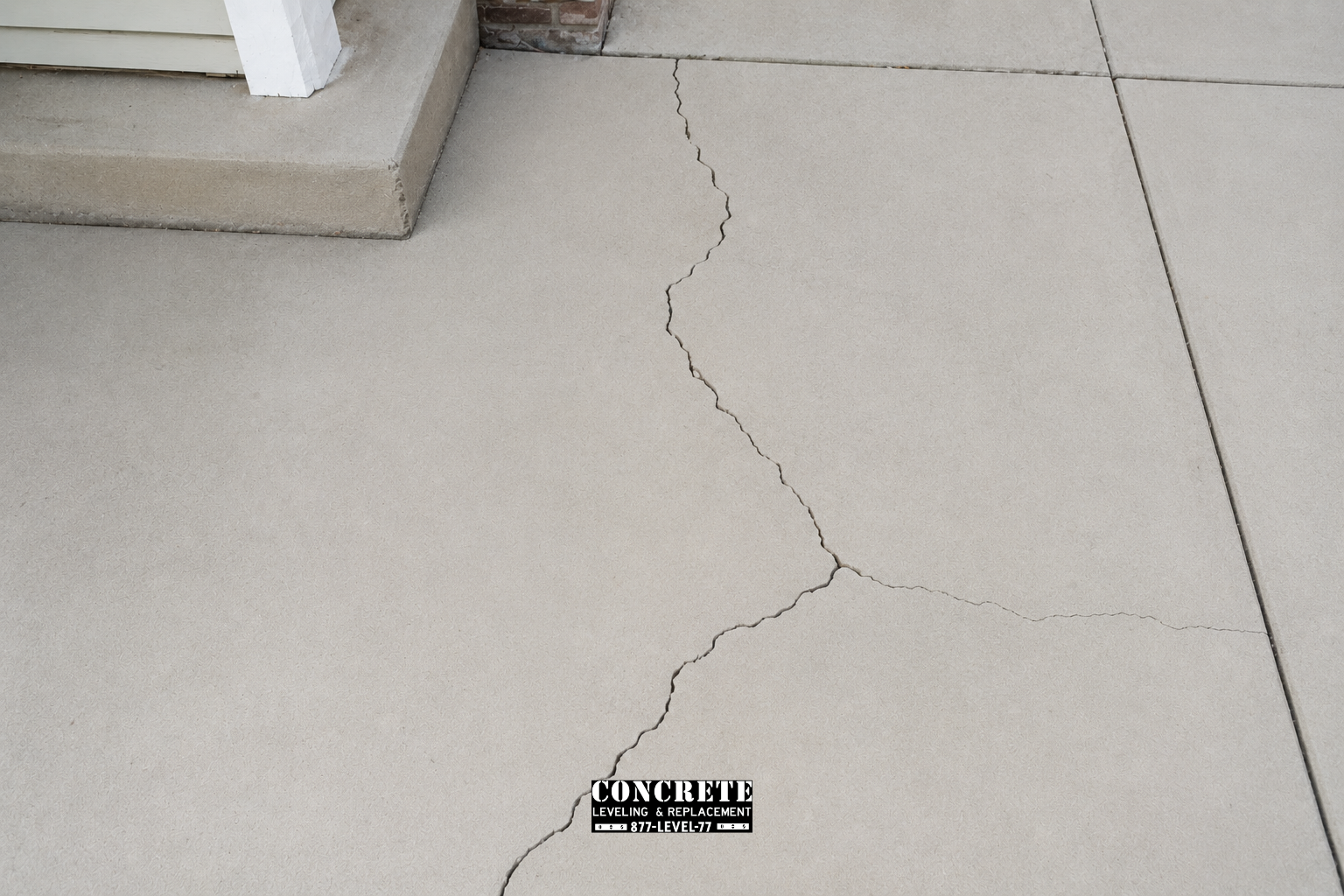
Hairline cracks are thin, shallow cracks that often appear during curing. They're usually cosmetic if they stay narrow, don't grow, and don't allow water in. These cracks are common in slabs, basement floors, and newly poured surfaces, and they don't always indicate serious structural problems.
Still, hairline cracks should be monitored. If the crack pattern changes, widens, or begins to offset vertically, that can mean the issue is no longer just surface shrinkage. Small problems are easier to manage before they become active movement issues.
Wide or Growing Cracks
Cracks wider than 1/4 inch deserve attention because they often indicate movement beyond normal shrinkage. Growth over time is even more concerning than width alone, especially when the crack keeps reopening after patching. If a crack is widening, it may mean the soil below is still shifting, or the slab is under ongoing stress.
In these cases, a repair that only fills the crack may not solve the root cause. The structure may need leveling, stabilization, or a more thorough assessment to determine whether the slab can be saved. If you suspect movement, a professional evaluation is the best next step.
Cracks with Displacement or Heaving
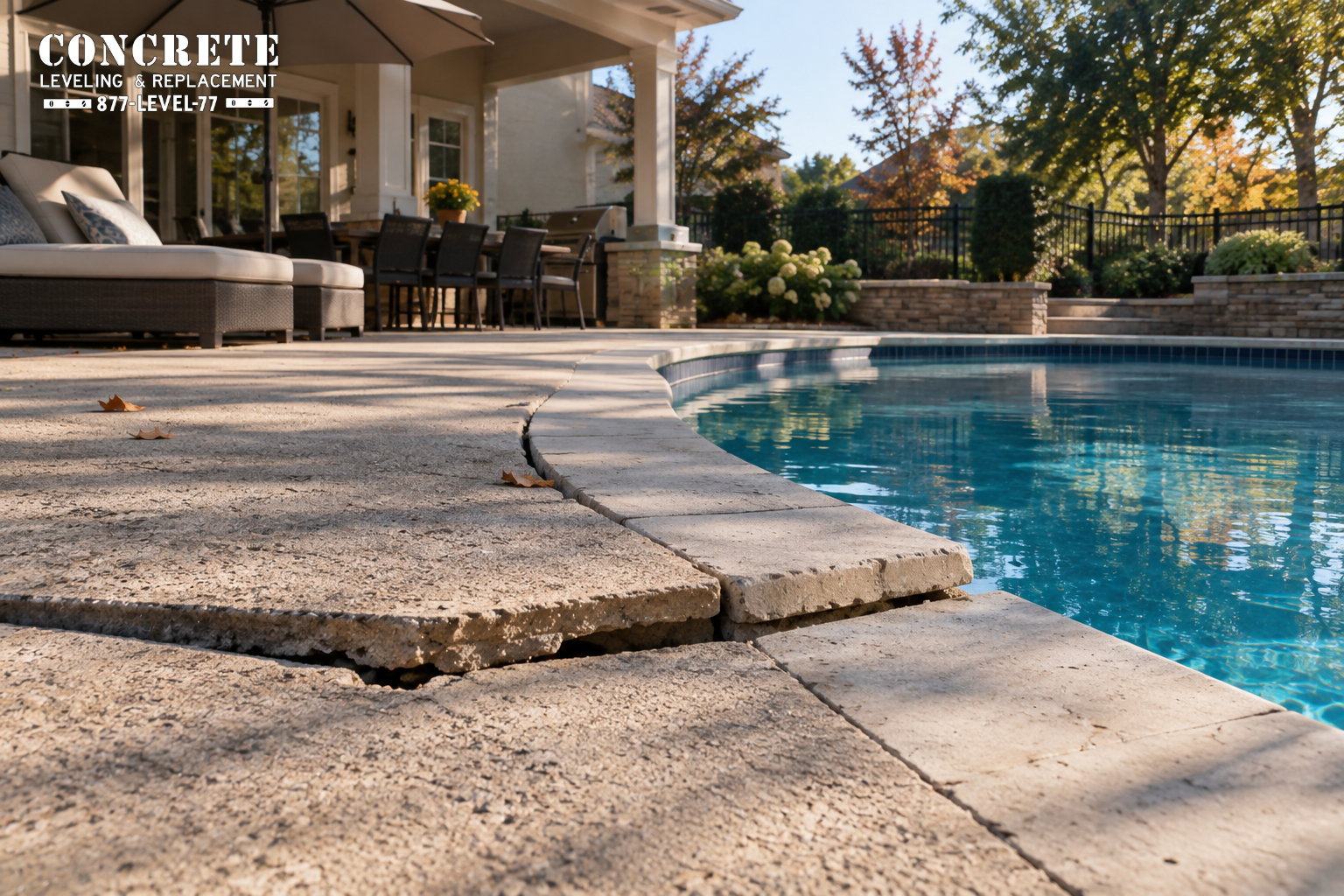
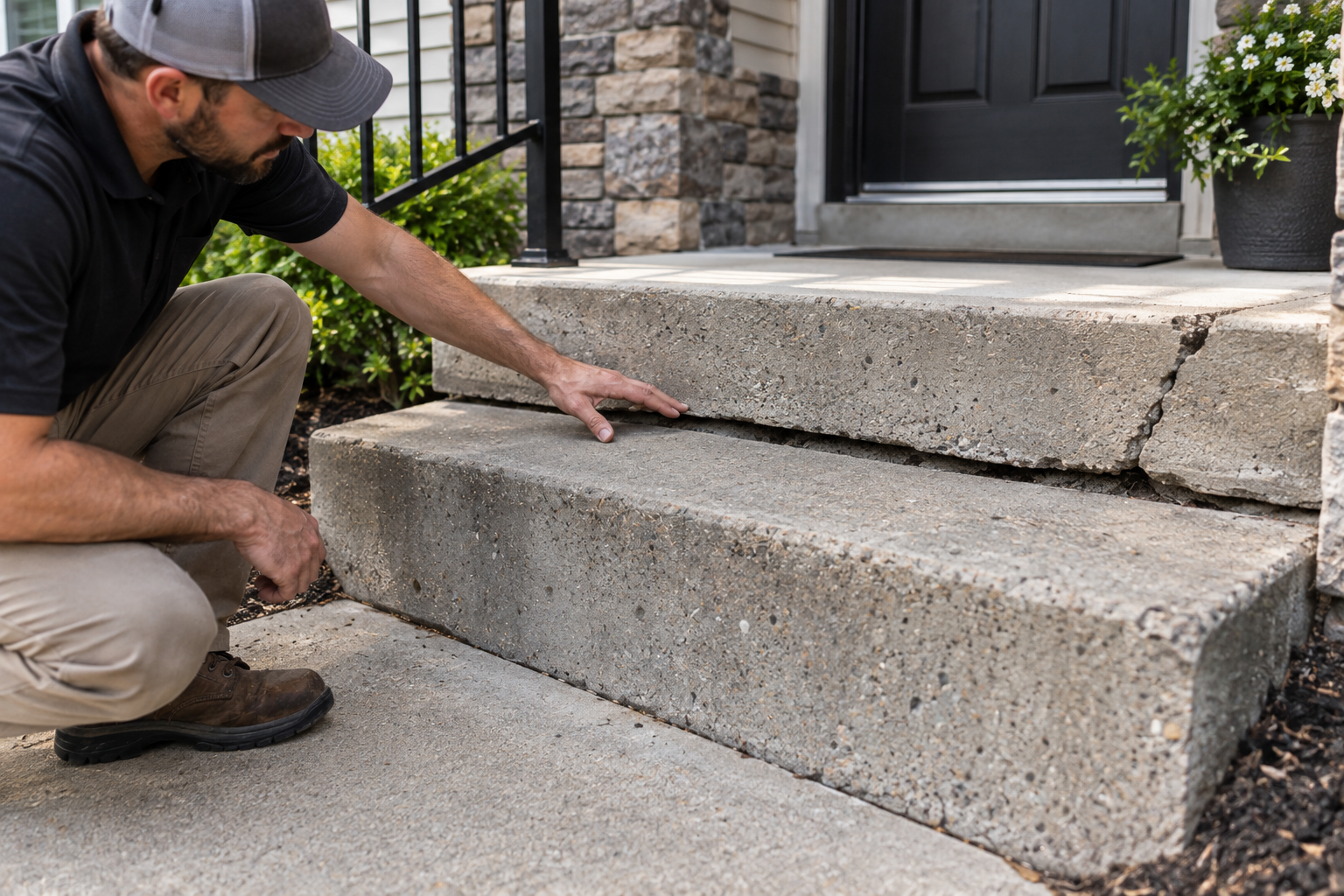
When one side of a crack is higher than the other, the slab has likely shifted. This kind of displacement can create trip hazards on sidewalks, porches, and driveways, and it often signals subgrade movement or erosion. Heaving can occur when soil expands, roots grow underneath, or freeze-thaw cycles push sections upward.
For these situations, sidewalk repair or porch repair may be needed to restore safe access. In some cases, leveling is enough. In others, portions of the slab may need replacement depending on age, condition, and severity.
What Modern Concrete Technology Is Doing to Reduce Cracking
Fiber-Reinforced Concrete
A big trend in crack resistance is fiber-reinforced concrete. Fibers help improve tensile strength and limit the spread of small cracks before they become major defects. The goal isn't to make concrete crack-proof, but to better control how the material responds to stress.
This is especially valuable for slabs exposed to frequent freeze-thaw stress or repeated traffic loads. Fiber reinforcement can help reduce microcracking and improve overall durability, making it a useful option for driveways, garage floors, and industrial slabs. It isn't a substitute for proper installation, but it adds meaningful performance benefits.
Self-Healing Concrete
Another exciting development is self-healing concrete, which uses agents such as bacteria that precipitate calcium carbonate to help seal microcracks automatically. This technology is still emerging, but it has drawn attention from researchers and engineers because it could reduce maintenance needs over time. It's particularly promising for hard-to-access structures where early crack repair is difficult.
Although self-healing concrete isn't yet common in everyday residential work, it shows where the industry is headed. The National Institute of Standards and Technology has published research on improving concrete performance and durability through smarter material science, highlighting the importance of innovation in infrastructure resilience. Readers can explore broader materials research through nist.gov.
Better Admixtures and Mix Design
Modern admixtures help contractors control set time, reduce water demand, improve workability, and limit shrinkage. When used correctly, they improve the chance that the slab will cure properly and resist cracking. Just as importantly, mix design can be adjusted for the local environment, whether that means cold-weather exposure, heavy traffic, or moisture-sensitive soils.
For property owners, the takeaway is simple: better materials help, but workmanship still matters most. Even high-performance concrete can crack if it's installed on a weak base or left to cure improperly. That's why experienced evaluation and careful planning remain essential.
Expert Best Practices to Prevent Concrete Cracks
Start with Proper Subgrade Preparation
The base beneath the slab is just as important as the concrete itself. A well-compacted subgrade supports the slab evenly and reduces the chance of voids forming later. If the soil is loose, saturated, or poorly graded, cracks are much more likely to appear after installation.
Professional contractors look at drainage, compaction, and soil conditions before recommending a repair or replacement. Our internal guide on how soil conditions impact concrete stability explains why even a strong slab can fail when the ground beneath it is unstable.
Use the Right Joints in the Right Places
Control joints are one of the simplest and most effective ways to reduce random cracking. They encourage concrete to crack where the contractor wants it to crack, rather than wherever stress builds. Joint spacing and layout should be planned before the pour, not added as an afterthought.
Expansion joints may also be necessary when slabs meet buildings, walls, or other rigid structures. These details are easy to overlook, but they make a big difference in how concrete performs over the long term. Good joint design helps control movement before it becomes damaged.
Cure the Slab Correctly
Curing is one of the most important steps in concrete performance, yet it's often rushed. Proper curing maintains moisture and temperature so the concrete can gain strength gradually. If the slab dries too quickly, the outer surface may shrink faster than the interior, causing tensile stress and early cracking.
Contractors may use curing blankets, plastic sheeting, or curing compounds depending on the job. Homeowners should also avoid driving or placing heavy loads on fresh concrete too soon. The longer the slab is allowed to cure under stable conditions, the better its long-term durability is likely to be.
When Concrete Cracks Become a Real Concern
Water Infiltration is a Major Warning Sign
Cracks become much more serious when they let water into the structure. Moisture can soften soil, worsen freeze-thaw damage, and cause more movement under the slab. If you notice puddling, seepage, or damp areas near a crack, the issue may be more than cosmetic.
Cracks that admit water should be inspected sooner rather than later, especially before winter. Once water gets into the system, the damage cycle accelerates. Prevention is always cheaper than reconstructing a failed slab.
Cracks that Continue to Widen
A crack that changes over time is a sign of active movement. That movement could be caused by settlement, drainage issues, poor support, or structural load. If the crack gets wider month after month, patching alone will not solve the problem.
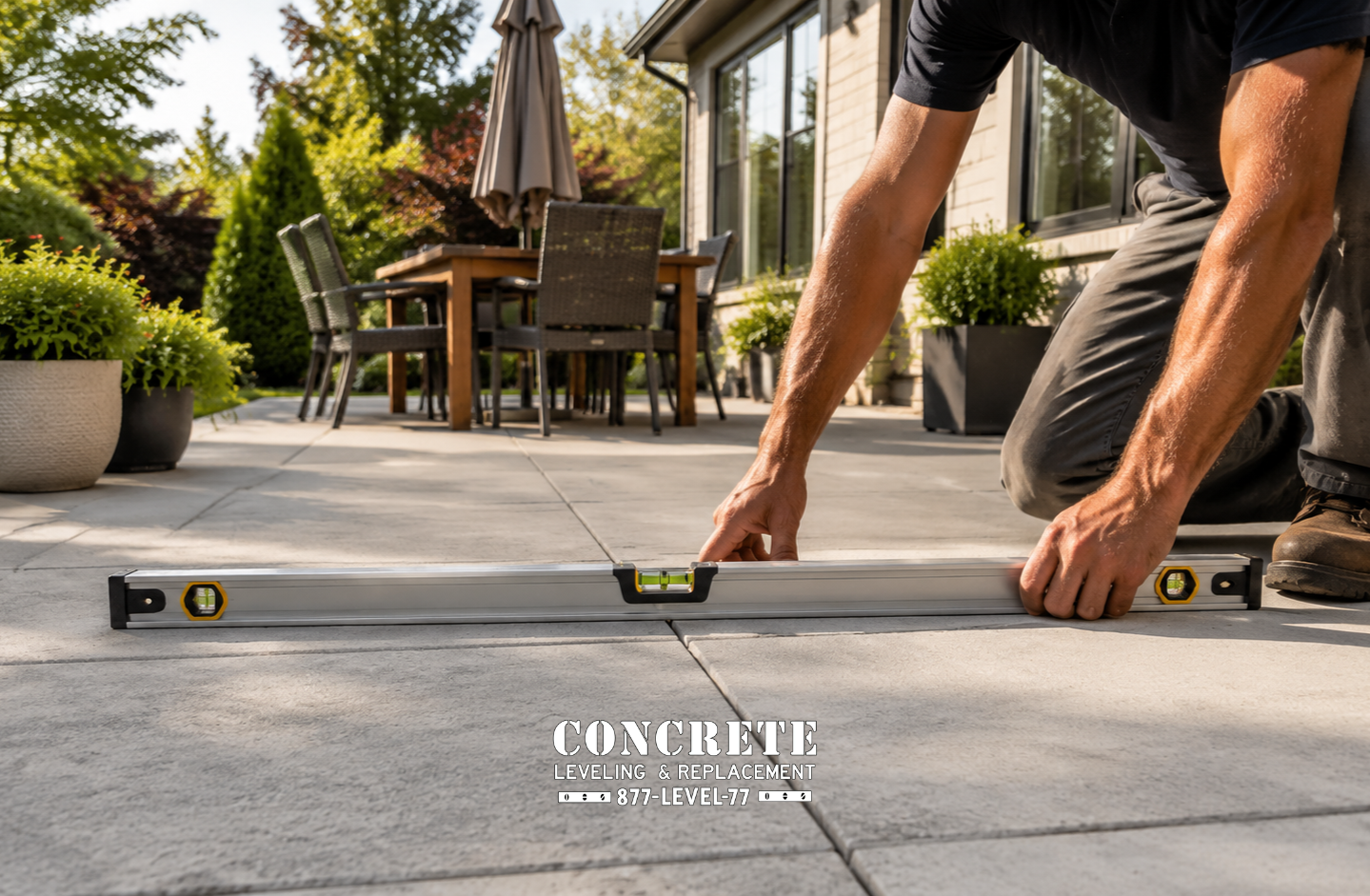
Use a simple monitoring method by marking the ends of the crack and checking it periodically. If the crack grows, changes direction, or develops displacement, it's time for a professional assessment. Documenting the change can also help contractors identify the pattern faster.
Cracks with Trip Hazards or Structural Symptoms
If a crack creates a height difference, it's a safety issue as well as a concrete issue. This is especially true on walkways, entries, ramps, and driveways where people move regularly. Trip hazards can expose property owners to liability and make the surface difficult to use safely.
In these situations, solutions may include concrete floor repair, garage floor repair, or more targeted slab lifting, depending on the location. The key is to address both the visible crack and the underlying cause.
Real-World Example: Driveway Settlement and Leveling
How Soil Erosion Created a Bigger Problem
In one residential case, a driveway developed significant cracking after soil erosion washed support away from beneath the slab. At first, the cracks looked like standard wear, but the driveway continued to sink and create an uneven surface. Over time, the problem became both a drainage concern and a safety hazard.
The homeowner chose concrete leveling rather than full replacement. A cement-based slurry was injected beneath the settled slab to lift it back toward its original position, restore levelness, and reduce the trip hazard. This kind of repair is often a smart middle ground when the slab itself is still salvageable.
Why Leveling Can Be a Cost-Effective Fix
When concrete is structurally sound but unsupported, leveling can extend its life and improve usability without the expense of tearing everything out. It is particularly effective when cracks are tied to settlement rather than complete material failure. In many cases, stabilizing the slab also helps prevent the crack from worsening.
For more details on how lifting methods compare, our blog on how long concrete leveling lasts and our overview of how concrete leveling can make your property safer and more valuable can help you understand the long-term benefits. These resources are useful for weighing repair versus replacement.
How to Decide Between Repair, Leveling, and Replacement
Repair Makes Sense for Minor, Isolated Damage
If a crack is narrow, stable, and not tied to movement, a repair may be enough. Small patching, sealing, or resurfacing can improve appearance and help prevent water intrusion. This is usually the best option for cosmetic cracks that don't indicate a deeper problem.
However, repair shouldn't be used to hide an active structural issue. If the slab is continuing to settle or crack, the visible damage will return. That's why diagnosis matters before any product is applied.
Leveling Solves Settlement-Related Issues
When the slab has dropped but is still intact, leveling is often the best approach. Mudjacking or polyurethane injection can raise the surface and restore proper slope, helping with both appearance and safety. This is especially helpful for sidewalks, patios, driveways, and porch slabs that have lost support.
For a broader look at service options, visit our counties we serve page or explore patio repair if your outdoor living space has begun to settle or crack. Matching the method to the problem is the most efficient path to a lasting result.
Replacement is Needed When the Slab is Beyond Saving
Some slabs are too damaged to repair effectively. Extensive cracking, severe deterioration, poor structural integrity, or repeated failures may point to replacement as the best option. While replacement is more expensive, it can be the right long-term choice if the existing concrete has reached the end of its useful life.
A professional evaluation should weigh age, safety, drainage, base conditions, and the cost of repeated repairs. Honest recommendations matter here because a short-term patch on a failing slab often wastes money.
Frequently Asked Questions About Concrete Cracks
Are All Concrete Cracks Bad?
No. Many cracks are cosmetic and result from normal shrinkage as the concrete cures. The key is whether the crack is stable, narrow, and dry, or whether it is growing, leaking, or causing displacement. Cosmetic cracking is common; active cracking is a different issue.
How Wide is Too Wide?
Cracks wider than 1/4 inch should be evaluated, especially if they continue to grow or allow water infiltration. Width alone is not the only factor, but it is a useful threshold for deciding when to bring in a professional. Vertical movement and recurring cracking are also important warning signs.
Can Cracks be Repaired Permanently?
Some cracks can be permanently stabilized if the root cause is corrected. Others may return if drainage, soil support, or structural stress is not addressed. The best long-term results come from combining visible repair with problem-solving beneath the surface.
Should I Seal Concrete After Repair?
In many cases, yes. Sealing helps reduce moisture intrusion and protects the slab from freeze-thaw damage, stains, and surface wear. It is especially useful for outdoor slabs that face seasonal weather changes.
Protecting Your Concrete for the Long Run
Inspect Early and Act Quickly
Concrete problems are usually easier and less expensive to fix early. Check slabs seasonally for new cracks, widening joints, sinking edges, or water pooling. A quick inspection after winter or heavy rain can reveal issues before they become major repairs.
If you notice the problem spreading, do not wait for it to become unsafe. Early intervention can often preserve the slab and avoid full replacement.
Focus on Drainage, Sealing, and Maintenance
Good drainage, regular sealing, and timely patching all help concrete last longer. Keep gutters working, redirect downspouts away from slabs, and make sure the grade encourages water to move away from structures. Maintenance may seem simple, but it prevents many of the conditions that lead to cracking.
For property owners in Michigan, seasonal freeze-thaw conditions make maintenance even more important. If you are unsure where to start, our team can assess whether the right solution is leveling, repair, or replacement based on the actual condition of the concrete.
Work with a Contractor Who Gives Honest Answers
The best repair recommendation is the one based on facts, not pressure. At Concrete Leveling & Replacement, our crews evaluate drainage problems, soil erosion, cracked joints, and grading concerns to determine what your property truly needs. Because our technicians are not paid commission, our recommendations are focused on safety, durability, and value.
If you are dealing with cracking concrete and want a straightforward assessment, contact our team at Concrete Leveling & Replacement or call (734) 895-3820. A professional inspection can help you understand whether the issue is cosmetic, structural, or somewhere in between, and that clarity is the first step toward protecting your property.
Conclusion
Concrete cracks for many reasons, including shrinkage, thermal movement, settlement, poor drainage, and freeze-thaw stress. Some cracks are minor and manageable, while others indicate a deeper issue that can threaten safety and durability. The difference usually comes down to whether the crack is stable or active, dry or leaking, and isolated or connected to movement in the slab.
By watching for warning signs such as widening cracks, water intrusion, displacement, or trip hazards, property owners can respond before a small issue becomes a major one. When the right fix is chosen early, many slabs can be repaired, leveled, and protected for years to come. If you want a practical, no-pressure evaluation, our team is ready to help you decide the next best step.
Ready to protect your concrete? Schedule an inspection today and get honest guidance on repair, leveling, or replacement options that fit your property and budget.