Ever noticed your concrete steps looking a bit off? Uneven steps are more than just an eyesore; they can be a tripping hazard, collect water, and hint at bigger issues lurking beneath the surface. If you've spotted a step that's tilting, sinking, cracking, or pulling away from the landing, you might wonder if it’s just a cosmetic problem or if it’s time to repair it before things get worse.
This guide is here to help you spot warning signs, understand why these issues happen, and decide if repairing is better than replacing. We’ll also dive into practical repair options, what to expect during a professional inspection, and how services like step repair and concrete leveling can restore safety without major disruptions. Plus, the U.S. Consumer Product Safety Commission highlights that falls are a major household hazard, making it crucial to address uneven steps sooner rather than later. Check out their home safety resources for more info.
Why Uneven Concrete Steps Should Never Be Ignored
Trip Hazards Are a Real Risk
Even a small difference in step height can be a tripping risk. Guests might not notice the elevation change, especially if it’s dark, rainy, or they’re carrying something. For businesses and multi-unit properties, uneven steps can raise accessibility concerns and lead to complaints, injuries, or insurance issues.
Fixing a step isn’t just about looks. It’s about safety, protecting everyone who uses them. If your steps lead to a front entry, porch, garage, or sidewalk transition, they’re likely used daily. A stable, even surface not only prevents falls but also makes your property more accessible.
Damage Tends to Worsen Over Time
Concrete doesn’t settle predictably. Once part of a step starts moving, the pressure can shift to nearby areas, leading to more cracks, gaps, or a slope. Waiting can turn a simple fix into a larger repair job.
Many property owners hesitate to act because the issue seems minor. But concrete won’t fix itself. If the soil beneath keeps eroding, compacting, or shifting, especially with freeze-thaw cycles, the step will continue to sink or separate. Acting early can save money and keep the original concrete intact.
Common Causes of Uneven Concrete Steps
Soil Settlement and Erosion
One of the main reasons steps become uneven is the soil settling beneath them. Over time, loose fill dirt or a poorly compacted base can compress under weight. Water moving through the soil can also wash away fine particles, leaving the concrete unsupported.
This problem often happens near downspouts, sloped yards, and areas with poor drainage. When water pools near steps, the soil can erode faster. That’s why fixing both the concrete and the drainage is often part of the repair plan.
Freeze-Thaw Cycles and Moisture Intrusion
In cold climates, moisture can seep into cracks or joints and expand when it freezes. Repeated freeze-thaw cycles widen existing damage, making the slab more prone to movement. The National Weather Service notes that freeze-thaw conditions significantly contribute to pavement deterioration.
When water freezes beneath or around a step, it can lift one area and cause it to settle unevenly when the ice melts. This cycle repeats each season. If your steps show cracks and movement, moisture is often to blame.
Poor Installation
Sometimes, the problem starts from the beginning. If steps were poured over weak subgrade or installed without proper reinforcement or drainage, they can settle sooner than expected. Poor finishing or thin concrete sections can also make them more vulnerable to cracking.
That’s why an experienced contractor looks beyond visible damage to see if the issue is isolated or part of a larger installation problem. This helps decide if repair, leveling, or replacement is the best long-term choice.
Signs It’s Time to Repair Your Concrete Steps
Visible Sinking or Tilting
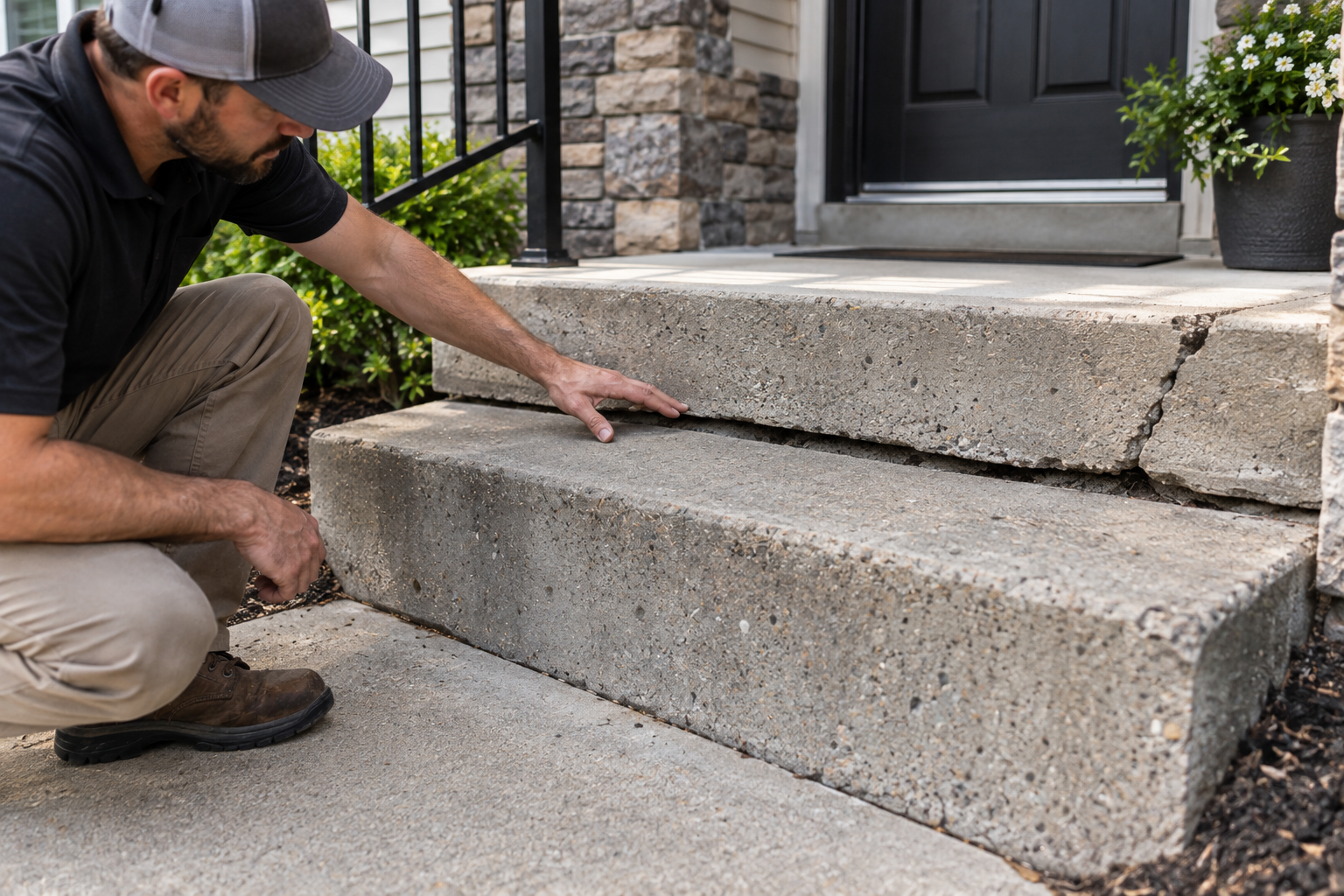
The most obvious sign is a step sitting lower than others or tilting in any direction. Even subtle changes can affect foot placement and create an unsafe transition. If you see daylight under a step or it’s no longer aligned with the landing, get it inspected.
Sometimes, changes are more noticeable at the top or bottom of the staircase, indicating the step is separating or losing support. A professional can check if the structure is stable enough for targeted repair.
Cracks, Gaps, and Separation
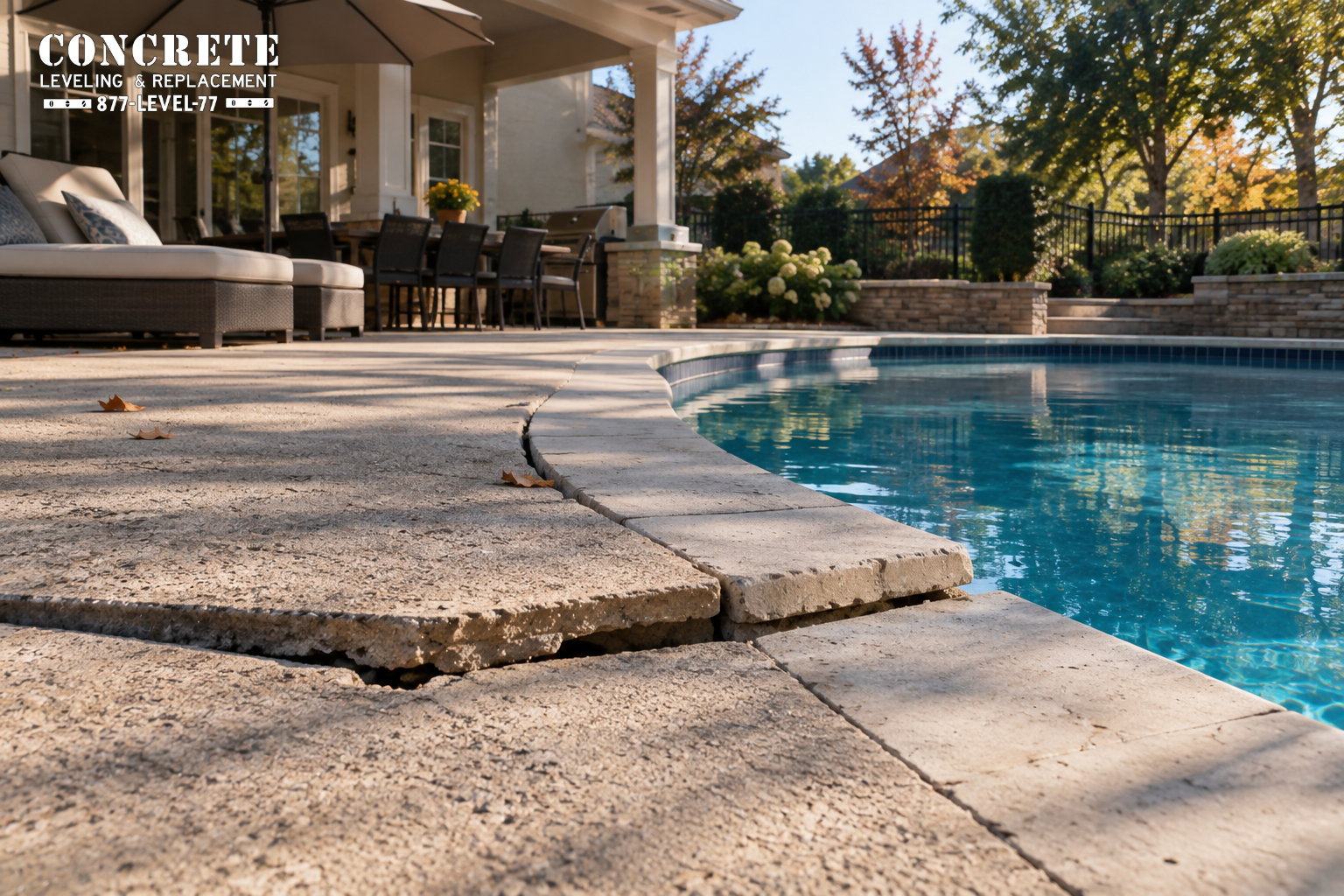
Hairline cracks aren’t always a sign of failure, but cracks that widen or allow water in shouldn’t be ignored. Gaps between the step and adjacent surfaces can indicate movement in the base material. These openings also let in water, worsening the problem.
If you see chipping edges, crumbling corners, or breaking sections, the step might be under stress. These are signs that a repair or leveling is needed before replacement becomes necessary.
Drainage Issues Around the Entryway
Water is a big enemy of concrete steps. If you notice puddling near the base, gutter runoff, or constantly wet soil, poor drainage might be affecting the step. Over time, moisture can weaken the ground beneath, speeding up settlement.
Check if nearby surfaces slope toward the steps. If they do, water might be contributing to the damage. Sometimes fixing drainage is as important as repairing the step, which is why repair is often paired with sidewalk repair or other corrections nearby.
Repair or Replace: How to Decide
When Repair Is Usually Enough
Repair is often the best choice when the step is structurally sound but has settled or shifted. If the concrete is intact and the main issue is loss of support below, leveling and stabilization can fix it without replacement. This is usually the most efficient option for many entryways.
Repair also makes sense when the problem is localized. If only one step in a short set has dropped but the others are stable, targeted work may be all that's needed. Methods like foam injection or mudjacking can lift the concrete and fill voids, repositioning the step properly.
When Replacement Is a Better Investment
Replacement might be the right call if the concrete is badly broken, deteriorated, or unstable. Large cracks, extensive spalling, or multiple failed areas can indicate the step's end of life. If the slab is too thin or poorly constructed, lifting it might only offer temporary relief.
A good contractor will give an honest assessment, avoiding one-size-fits-all recommendations. This is particularly important for those seeking long-term value. If replacement is needed, consider exploring related solutions like porch repair or patio repair if surrounding concrete is also affected.
Professional Inspection Is Key
What seems like a job for replacement might just need repair once the underlying causes are inspected. A contractor should check for voids, drainage patterns, soil movement, cracks, and structural separation. This thorough approach helps property owners avoid unnecessary work.
For those wanting to understand settlement better, check out our article on why sidewalks and driveways shift over time. Knowing the cause makes it easier to choose the right solution.
How Concrete Step Repair Works
Inspection and Diagnosis
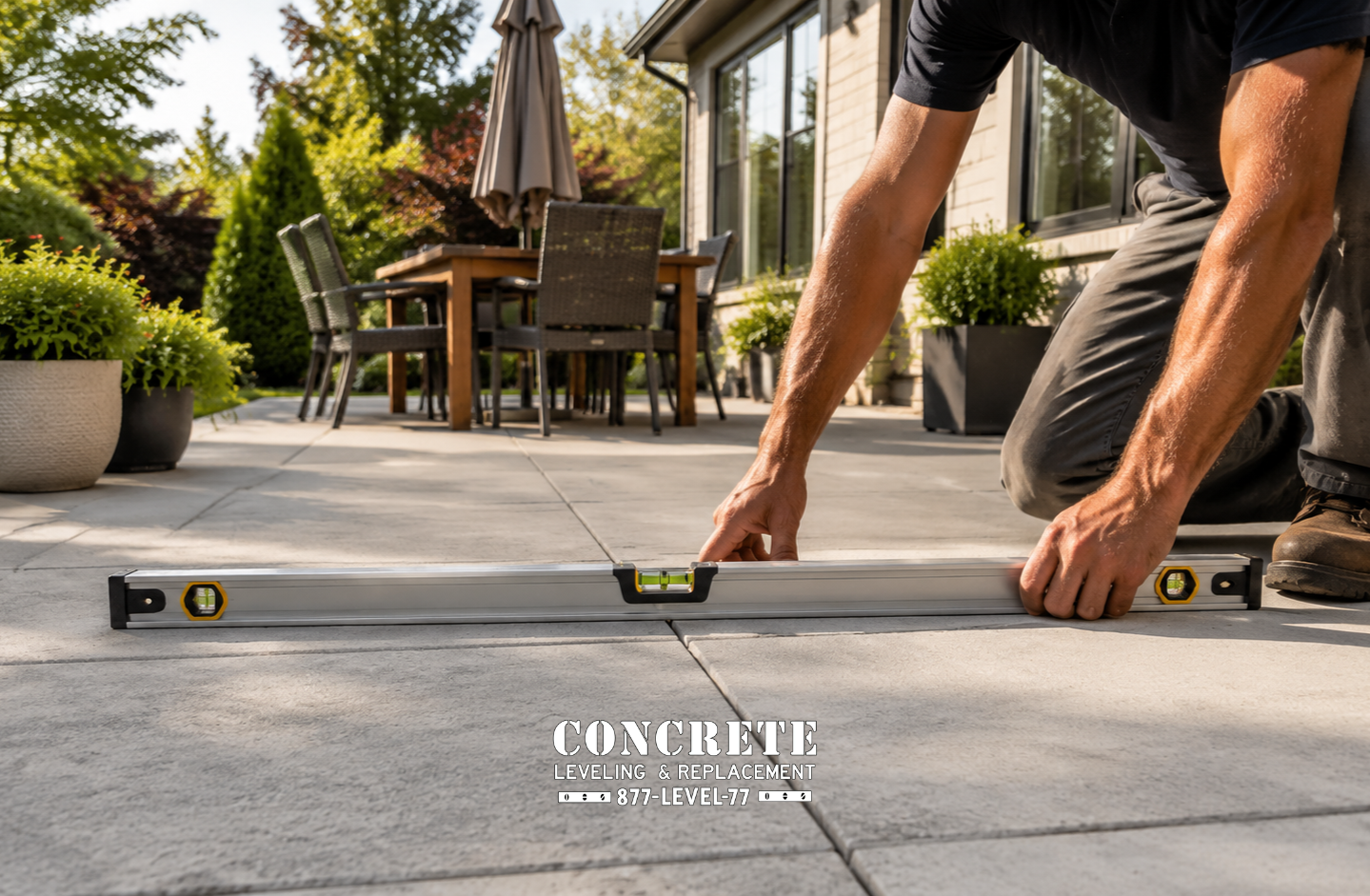
It all starts with a close inspection of the step, landing, and surrounding area. A professional looks for settlement signs, assesses concrete structural soundness, and identifies movement causes. This diagnosis determines if leveling, patching, sealing, or replacement is best.
During this stage, contractors might also check nearby surfaces like walkways or porches, as damage rarely exists in isolation. If the same drainage or soil issues affect other areas, it’s smart to address them together rather than waiting for the next failure.
Leveling or Lifting the Step
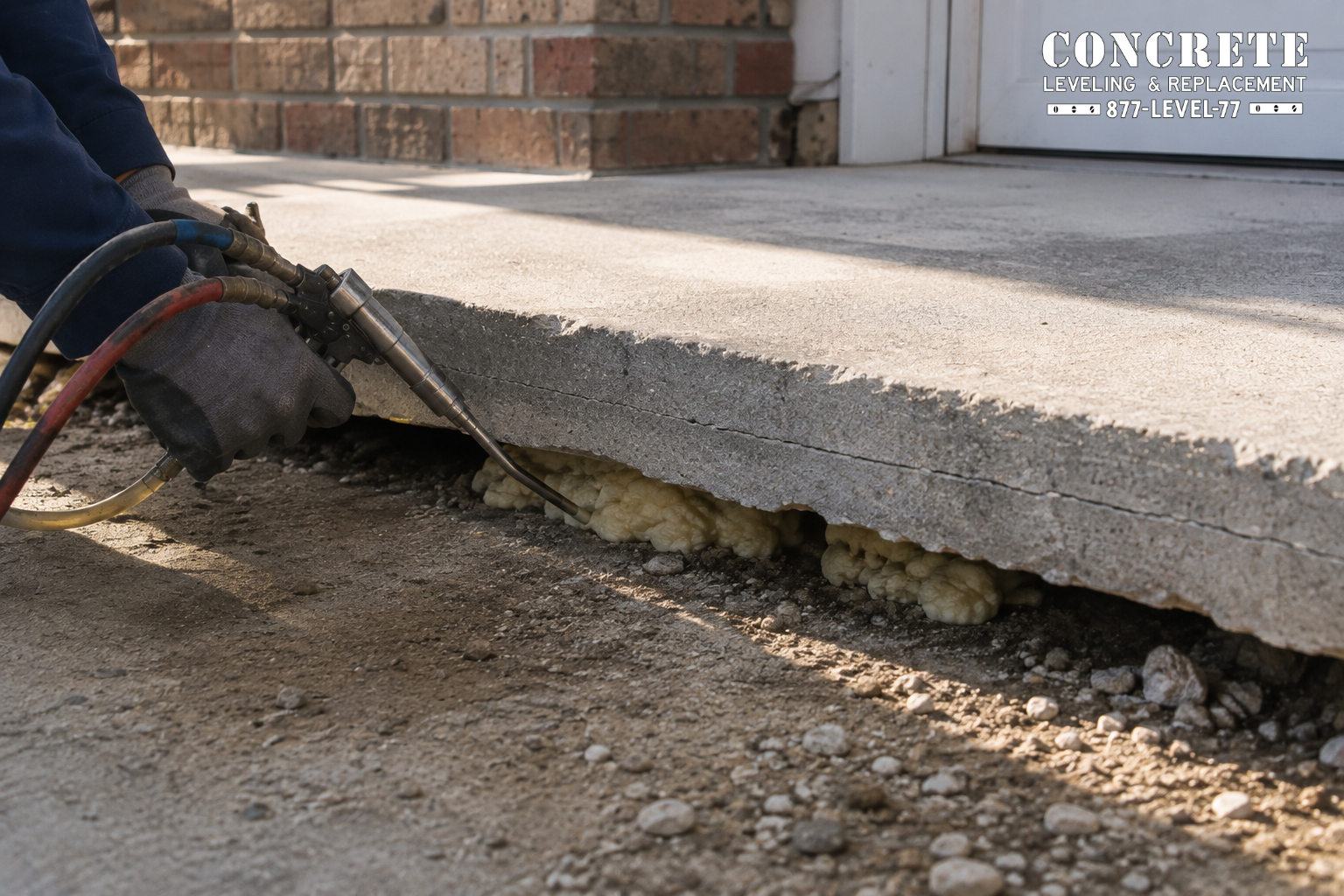
If a void under the step is the issue, lifting might be possible. Concrete leveling fills empty spaces and restores slab support. Depending on the project, this may involve grout-based material or polyurethane foam. Learn more about modern lifting methods in our article on why polyurethane foam injection is a smart choice for concrete repairs.
Leveling is great when you want to preserve the existing step and avoid demolition. It’s often faster, less disruptive, and more cost-effective than rebuilding. It also allows the repaired area to be used sooner, which is helpful for busy homes or businesses.
Surface Repair, Sealing, and Finishing
After stabilizing the step, smaller cracks, chips, and surface defects can be fixed. Crack repair reduces water intrusion, while patching improves appearance. Sealing the repaired concrete can add protection against moisture and future wear.
Good finishing matters because the goal is not only safety but also making the step look clean and consistent with the rest of the property. A well-done repair blends function and appearance. Done right, visitors will notice the improved safety before they spot the repair work.
What Homeowners and Property Managers Should Watch For
Seasonal Movement and Recurring Gaps
If the same step moves more after winter or heavy rain, you might have an ongoing soil or drainage issue. Recurring movement isn’t just cosmetic; it shows that the concrete is still losing support and needs more than a quick patch.
Property managers should document changes over time. Photos taken each season can help track progress. This info is useful when planning repairs and justifying proactive maintenance before damage spreads.
Accessibility and Everyday Use
Uneven steps can make entryways harder for kids, seniors, delivery workers, and anyone with mobility issues. Even if no one’s tripped yet, the risk is there. Entry steps should feel predictable and provide a steady transition between levels.
For commercial properties, safety and accessibility are crucial because people might be unfamiliar with the layout. A misaligned step can create a negative first impression and increase claim exposure. If the entry area connects to other concrete features, services like concrete floor repair might be part of a broader maintenance plan.
Nearby Concrete Problems
When one section of concrete moves, nearby surfaces often show early stress signs too. Look for cracks in walkways, sinking driveways, or drainage issues near porches. These clues can indicate whether the step problem is isolated or part of a larger settlement issue.
If you see damage in multiple places, bundling repairs might be more efficient. A coordinated approach saves time and reduces chances of repeated service calls. It also ensures all related hazards are addressed at once.
Why Early Repair Saves Money
Small Problems Are Cheaper to Fix
Early intervention is usually more affordable than waiting for complete failure. A single uneven step might need leveling and minor repair, while a deteriorated set might require demolition and replacement. The cost difference can be significant, especially if surrounding surfaces are affected.
Think of repair as damage control. Addressing settlement early preserves more of the original concrete and reduces labor. It also lowers chances of secondary issues like water intrusion, cracking, and erosion around the entryway.
Preventing Larger Structural Damage
Ignoring an uneven step can let the same underlying issue affect other property parts. Soil voids don’t stay localized forever; they can spread, making future repairs more complex and costly.
That’s why many owners schedule inspections at the first sign of movement. Investing in diagnosis and targeted repair can prevent a chain reaction of damage. For a broader look at timing economics, check out our article on fixing sunken concrete early to save money.
Less Disruption for Busy Properties
Repairing a step early often means less mess, downtime, and disruption. That’s important for homes, but even more so for commercial properties needing constant access. Quick, targeted work can restore function without turning a small hazard into a full project.
Many property owners appreciate that a professional team can evaluate the site, explain options, and recommend practical solutions. If step-related service is needed, it’s wise to consider step repair before assuming a full rebuild is necessary.
Preventing Uneven Steps in the Future
Improve Drainage Around the Entryway
Good drainage is key to preventing future settlement. Ensure gutters and downspouts direct water away from steps, and check that soil slopes away from the structure. If water pools near the entry, the concrete stays under stress.
Even a well-repaired step can fail again if drainage issues remain. Prevention should be part of every repair plan. Sometimes a small adjustment to grading or runoff management can make a big difference in long-term performance.
Maintain Joints and Seal Cracks Early
Open joints and cracks let water into the base material under the concrete. Sealing these openings limits moisture intrusion and reduces freeze-thaw damage risk. Regular seasonal checks can catch new problems before they become major trip hazards.
If your property has multiple concrete concerns, inspect other nearby areas too. Services like garage floor repair and porch repair may address related damage before it spreads to entry steps.
Schedule Regular Inspections
Routine inspections are an easy way to extend concrete life. A trained eye can spot settling, drainage changes, and early cracking before they require major repairs. This is especially useful for older properties or sites with known soil movement.
Industry guidance from groups like the American Concrete Institute emphasizes durable construction and maintenance for long service life. While every property is different, the principle is the same: small maintenance steps today can prevent big repair bills later.
Frequently Asked Questions About Uneven Concrete Steps
How Do I Know If My Steps Are a Safety Hazard?
If a step is visibly tilted, cracked, separated, or hard to climb, it’s a hazard. Even slight damage can cause trips. A quick inspection can tell if the issue is cosmetic or needs immediate attention.
Can Uneven Steps Be Repaired Without Replacing Them?
Yes, many uneven steps can be repaired if the concrete is still sound. Leveling, void filling, crack repair, and sealing can restore stability and appearance. Replacement is typically for severe deterioration or major structural failure.
How Long Does Concrete Step Repair Take?
The timeline depends on the repair method and damage extent. Some lifting and stabilization jobs are quick, while complex projects take longer. A professional can provide a specific estimate after inspection.
Will the Repaired Step Match the Rest of My Concrete?
Most repairs aim to blend with surrounding concrete, though exact color matching isn’t always guaranteed. The main goal is restoring safe, stable use. Surface finishing and patching can enhance appearance, especially if done before severe deterioration.
Final Thoughts: When Is It Time to Repair Uneven Concrete Steps?
If your steps are sinking, tilting, cracking, or separating, it’s usually time for an inspection. The sooner you act, the more likely you are to preserve the existing concrete and avoid a bigger, pricier project. Small elevation changes can quickly become serious safety issues.
A professional evaluation will show whether leveling, repair, or replacement is best. Our team at Concrete Leveling & Replacement focuses on practical solutions based on your property’s needs, not on sales pressure. Ready to restore safer access and protect your investment? Reach out to discuss options, ask questions, and schedule an assessment. For broader support, explore concrete leveling and related repair options that may fit your property.
For more info or to speak with our team, visit our website at Concrete Leveling & Replacement or call (734) 895-3820. Taking action now can help protect your property, improve safety, and extend your concrete’s life for years.