A Practical Guide to the Home Areas Most Likely to Need Concrete Leveling
Uneven concrete is more than a cosmetic issue. It can create trip hazards, block drainage, reduce curb appeal, and eventually lower the value of your home. If you've noticed a slab that has dropped, tilted, or pulled away from other surfaces, you're seeing a common sign of concrete settlement. For homeowners who want to avoid bigger repairs, understanding the most vulnerable areas around the house is the first step toward smart maintenance.
In this guide, we'll break down the areas around a home that are most likely to need concrete leveling, explain why settlement happens, and share practical ways to slow future movement. If you are already seeing signs of sinking concrete, a professional evaluation from our concrete leveling team can help determine whether leveling, repair, or replacement is the right solution. You can also learn how related issues connect by reading our guides on early signs of settlement and drainage and concrete protection.
According to the U.S. Department of Housing and Urban Development, drainage and foundation moisture management are major contributors to long-term structural concerns in residential properties. That matters because concrete slabs and the soil underneath them are closely connected; when the ground shifts, the slab often follows. For a broader understanding of soil behavior and water movement, the Natural Resources Conservation Service offers helpful information on soil properties and erosion at USDA NRCS.
Why Some Concrete Areas Settle Faster Than Others
Soil movement beneath the slab
Concrete is strong under pressure, but it relies on stable support below it. When soil erodes, shrinks, expands, or becomes poorly compacted, voids can form under a slab. Once the support disappears, the concrete begins to sink or crack. In regions with seasonal freeze-thaw cycles and changing moisture levels, these problems can speed up over time.
Clay-heavy soils are especially prone to shrinking when dry and swelling when wet. That repeated movement can slowly separate the concrete from its base, especially along edges where water gathers. If you want a deeper look at how ground conditions influence slab stability, see our related article on soil conditions and concrete stability. The University of Minnesota Extension provides plain-language guidance on shrink-swell soils at UMN Extension.
Water is the biggest trigger.
Water is one of the most common reasons concrete settles. Downspouts that discharge too close to slabs, clogged gutters, poor yard grading, and runoff from driveways can all wash away the supporting soil. Over time, this creates hollow areas under the concrete that eventually collapse or compress. Often, the slab is not failing because of the concrete itself, but because the ground underneath has changed.
That's why homeowners often notice problems after heavy rain seasons, snow melt, or a long stretch of wet weather. The more water that passes around and below a slab, the greater the chance of settlement. The Federal Emergency Management Agency notes that managing water away from structures is one of the simplest ways to reduce property damage risk; you can review general guidance at FEMA.
Driveways: The Most Common Place for Visible Settlement
Why driveways fail first
Driveways are exposed to both vehicle load and drainage challenges, which makes them one of the highest-risk surfaces around a home. Repeated tire pressure can magnify tiny voids under the slab, especially if water has already weakened the base. When a driveway starts to sink, you might notice one panel lower than the next, a lip at the garage entrance, or cracks that grow wider after each season.
It's more than just a visual annoyance. Uneven driveways can cause tire scraping, puddling, and stress at the garage threshold. If your driveway is already showing these issues, our concrete driveway repair service can address related surface damage, while leveling restores the slab height and support below it. It also helps to know that targeted repair often prevents a full replacement when the concrete is still structurally sound.
Common driveway warning signs
Look out for diagonal cracks, a sunken center section, or a slope that seems to direct water toward the garage. If snowmelt or rain collects on one side more than the other, the surface may already be out of level. In many cases, a skilled contractor can identify the underlying cause during a simple inspection and recommend the most efficient fix.
A practical tip is to stand on the street and look at the driveway from a distance. Uneven panels are often easier to see from far away than up close. If the slab has dropped by more than a small fraction of an inch, or if you can feel a trip point underfoot, it's time to consider repair before the problem expands.
Sidewalks and Walkways: Small Drops, Big Safety Risks
Why do sidewalks settle in sections?
Sidewalks and walkways often settle because they are narrow, lightly reinforced, and exposed to water running off lawns, roofs, and paved surfaces. A small amount of soil erosion can make one section sink enough to become a trip hazard. This is especially common where roots, shallow utility work, or poor compaction have disturbed the subgrade.
Even though sidewalks are not usually subject to vehicle traffic, they still experience daily wear from foot traffic, lawn equipment, and seasonal moisture changes. In fact, many neighborhoods first notice settlement because a walkway becomes difficult to walk across with strollers, carts, or mobility aids. If the problem is isolated, our sidewalk repair services can help restore a smooth, safer transition between concrete panels.
Accessibility and liability concerns
Uneven sidewalks don't just affect curb appeal; they can also create accessibility concerns for guests, family members, and delivery workers. A raised edge or sunken slab can lead to falls, especially when leaves, snow, or ice conceal the hazard. Municipal codes and property owners’ responsibilities vary, but the safety expectation is the same: walkways should be level enough to travel confidently.
Quick action matters. The National Safety Council emphasizes that many falls are preventable with better surface maintenance and hazard awareness. For the general fall-prevention context, their resource library at NSC offers useful safety guidance. A sidewalk that looks minor today can become a costly problem if it remains ignored through multiple freeze-thaw seasons.
Garage Floors: Hidden Settlement That Can Affect Daily Use
What makes garage slabs vulnerable
Garage floors often settle because they are tied closely to the home, exposed to moisture from vehicles, and used for heavy storage. Water carried in by tires can seep to slab edges, while melting snow can collect near the door and weaken the base. Over time, a garage floor may tilt toward or away from the house, creating drainage issues and making the floor harder to use.
Homeowners often notice garage settlement when cabinets become uneven, doors no longer close smoothly, or a vehicle feels like it is rolling in one direction. If your garage is affected, our garage floor repair service may be the right place to start, especially when cracks or surface deterioration are appearing alongside settlement. When addressed early, leveling can preserve the slab and limit additional interior damage.
Why garage floors matter more than people think
A settled garage floor can interfere with storage, water management, and even the transition into the home. If the slab dips near the interior wall, water can migrate where it doesn't belong. That can lead to moisture problems around framing, baseboards, or finished interior spaces connected to the garage.
In cold climates, garage settlement can also amplify freeze-thaw stress because water gets trapped in low spots. The result is a cycle of cracking and movement that continues until the source of the problem is corrected. For homeowners who want to compare repair options and lifespan expectations, our article on how long concrete leveling lasts is a helpful next read.
Patios and Pool Decks: Settlement Around Outdoor Living Spaces
Why do recreational areas settle
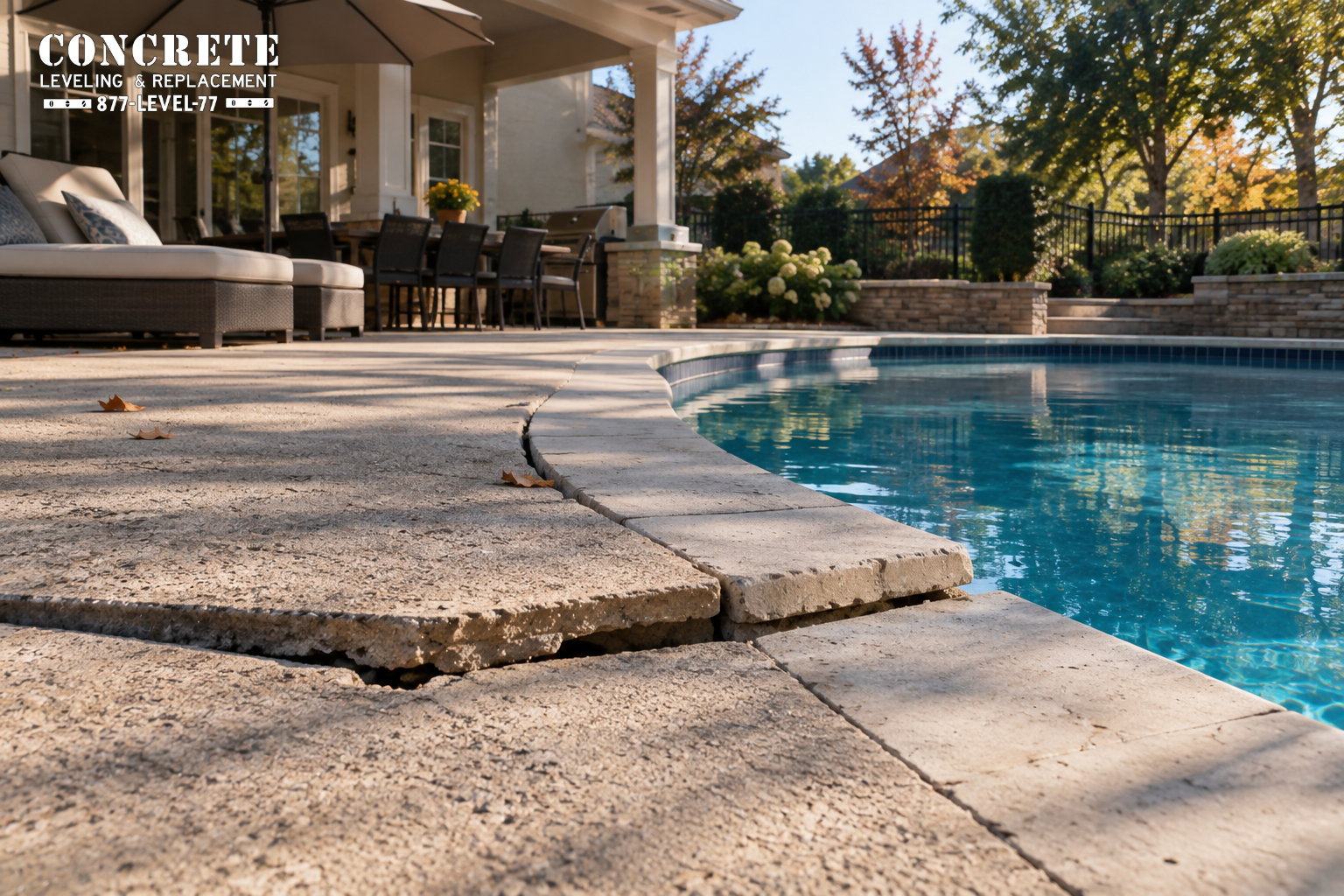
Patios and pool decks are exposed to frequent moisture, temperature swings, and soil movement around landscaping beds. Water from sprinklers, rainfall, or pool splashout can seep into the surrounding ground and erode the support beneath the concrete. Because these areas are often large and open, even subtle settlement can affect drainage and create an uneven walking surface.
Patios usually settle near edges, corners, or areas where soil was backfilled after construction. Pool decks can be especially sensitive because they often require both safety and comfort, and a tilted slab can affect how water drains around the pool. If you're seeing movement in these spaces, our patio repair and concrete pool deck repair services can help restore both function and appearance.
Why homeowners shouldn't overlook small slopes
A patio may seem low priority because it's separate from the house, but a sunken section can quickly become a nuisance. Furniture tips, water collects in low spots, and the surface loses its clean visual line. Near pools, a settled deck can create drainage patterns that leave puddles where people walk barefoot, which adds slip risk.
The best time to address patio or pool deck settlement is before cracking becomes widespread. Early leveling often costs less and preserves more of the original slab. If you're comparing common causes and repair methods, our related article on pool deck settling explains how slab lifting works in detail.
Porches and Front Entries: Settlement You Can Feel Every Day
Entry slabs and steps move fast.
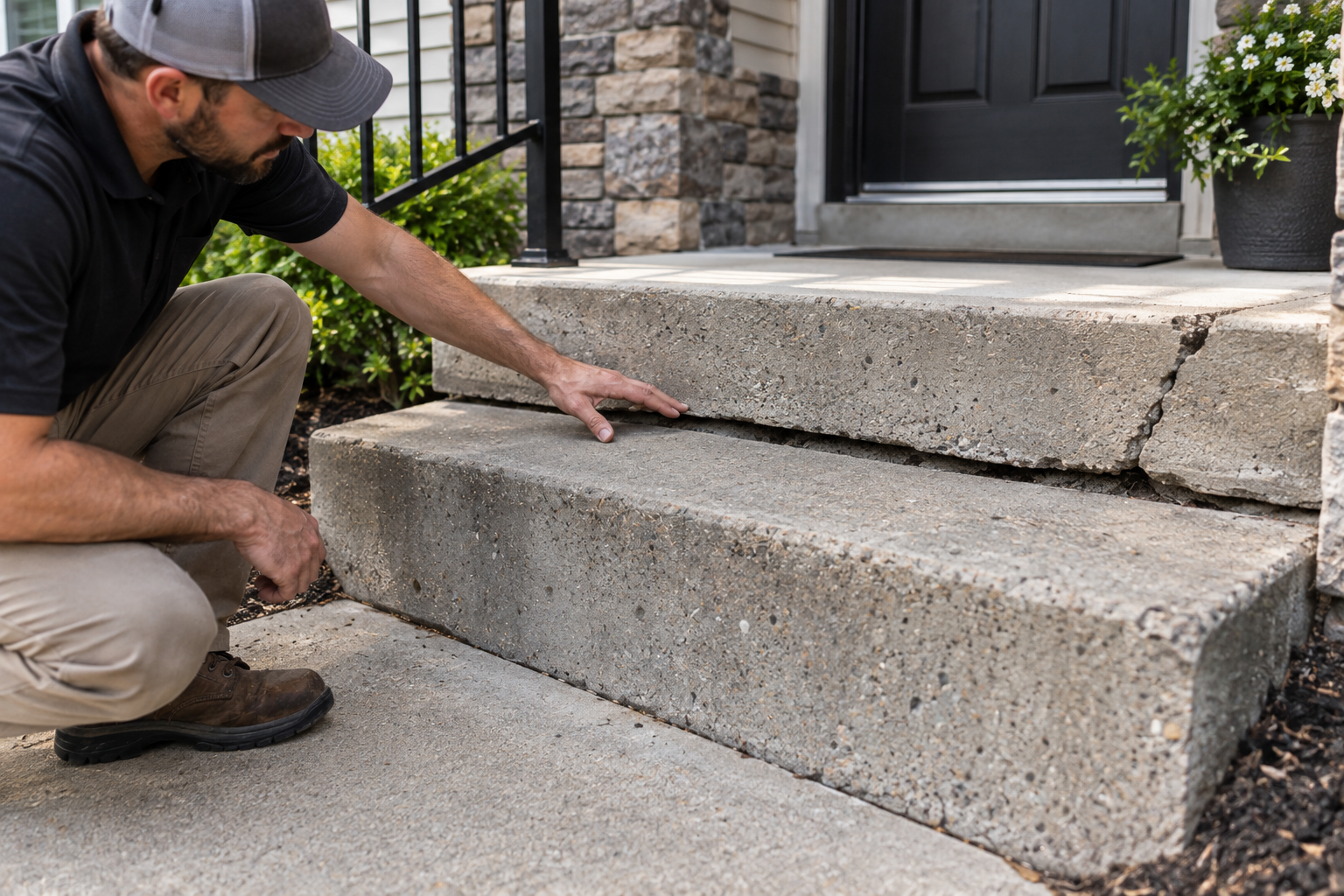
Front porches and entry slabs are highly visible, which means any settlement becomes obvious quickly. Because these areas connect directly to steps, doors, and the home’s first impression, even a minor drop can affect both safety and curb appeal. A porch that settles away from the house can also create gaps where water, pests, or cold air enter.
In some homes, entry settlement is tied to the steps or landing rather than the porch itself. That's why paired evaluation is important. Our step repair and porch repair services are designed to address these connected problem areas and restore a more secure transition into the home.
Why front-entry problems should be handled early
The front entry is one of the first places guests notice and one of the most common places homeowners feel an uneven surface every day. A dropped porch can make door thresholds harder to seal and can cause winter water intrusion when melting snow drains toward the house. If the settlement is combined with cracking, the issue can spread to nearby steps and railings.
For many homeowners, fixing the front entry is one of the highest-return repairs because it improves safety and first impressions at the same time. It also helps maintain the overall look of the property, especially if you're planning to sell. A stable porch makes a home feel cared for, which can influence buyers before they ever step inside.
What Causes These Areas to Sink in the First Place
Poor drainage and runoff patterns
Poor drainage is one of the most common contributors to settlement. If gutters overflow, downspouts dump water near a slab, or the yard slopes toward the house, the soil beneath the concrete can soften and move. Over time, that water creates voids and weak spots that lead to sinking.
According to the EPA, managing stormwater and runoff is essential for preventing erosion and protecting property. That principle applies directly to concrete slabs. When water is directed away from the home, the soil base stays more stable, and the concrete has a better chance of remaining level for years. Homeowners who want prevention tips should also see our article on proper drainage and concrete surfaces.
Soil erosion, freeze-thaw cycles, and compaction issues
Concrete settlement rarely comes from one cause alone. Soil erosion may start the process, but repeated freezing and thawing can make the movement worse. In addition, if the original fill beneath the slab was not compacted properly, it can settle gradually for years after installation.
These conditions are common in northern climates where seasons change dramatically. The ground expands in wet periods and contracts in dry or cold periods, causing slabs to shift unevenly. In older neighborhoods, the problem can be magnified by aging utilities, root growth, and past grading work that altered the original soil structure.
How Professionals Determine Whether Leveling Is the Right Fix
Inspection, probing, and drainage review
A professional assessment usually starts with a visual inspection, but it shouldn't stop there. Experienced contractors look for slope changes, cracking patterns, hollow sounds, moisture clues, and evidence of washout around slab edges. They also review whether the settlement is isolated or part of a broader drainage or foundation issue.
One advantage of working with a seasoned team is that they can identify the likely root cause before recommending a repair. That matters because leveling solves the symptom, but not always the source. At Concrete Leveling & Replacement, our technicians are not paid commission, so recommendations are based on what your property actually needs rather than on upselling a specific service.
When leveling is better than replacement
Leveling is often the best choice when the concrete is still structurally sound but has lost support underneath. In those cases, lifting the slab can restore safety and appearance without the expense of starting over. Modern methods such as polyurethane injection or traditional mudjacking can be highly effective, depending on slab type and severity.
Replacement may still be necessary if the slab is badly broken, crumbling, or beyond practical repair. However, many homeowners are surprised to learn that a large percentage of settlement problems can be corrected without full removal. If you want to understand long-term performance expectations, our guide on how leveling improves safety and value is a useful companion article.
How to Prevent Future Settlement Around the Home
Keep water moving away from the concrete.
The most effective prevention strategy is to control water. Make sure gutters are clean, downspouts extend away from slabs, and landscaping doesn't trap runoff beside the house. Regrading may be needed if the yard naturally slopes toward a driveway, porch, or patio.
Small changes can have a big effect. Even a few feet of improved drainage can reduce soil saturation around key slab areas. When combined with periodic inspections, these steps help homeowners catch trouble early before the slab begins to shift again.
Monitor cracks, gaps, and seasonal changes.
Watch for new cracks, expanding joints, or a recurring lip between concrete panels. These are often the earliest clues that something is changing beneath the slab. After heavy rain, thaw periods, or long dry spells, take a quick walk around the property and look for new low spots or puddles.
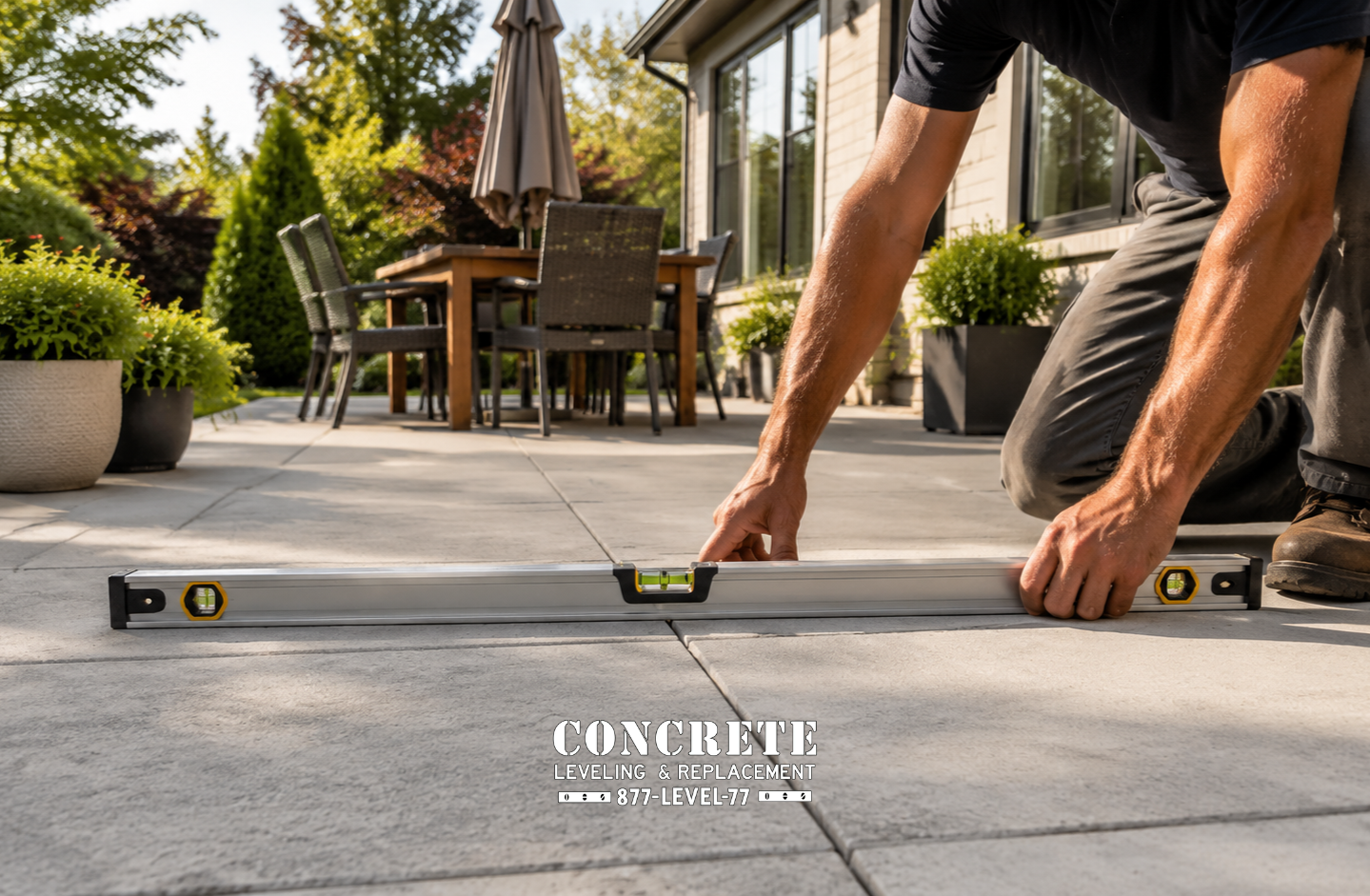
It also helps to compare the height of concrete against doors, steps, and adjacent slabs once or twice a year. A change of even a small amount can signal ongoing movement. If you notice recurring settlement, an expert evaluation is the best way to prevent repeated repairs and wasted money.
Frequently Asked Questions About Concrete Leveling
How do I know if my concrete needs leveling?
Common signs include visible sinking, uneven joints, pooling water, cracks, and trip hazards. If a slab has dropped enough that furniture wobbles, doors scrape, or water flows the wrong direction, it likely needs attention. A simple sightline check across the surface can often reveal whether one side has shifted.
Can I fix sunken concrete myself?
DIY repairs may seem appealing, but they usually don't solve the root cause of settlement. Without the right equipment and material control, a patch or temporary fill can fail quickly. Professional leveling is generally the safer and more durable option, especially for driveways, porches, and entryways.
How long does concrete leveling last?
When the cause of the movement is addressed and the repair is completed properly, leveled concrete can remain stable for many years. Longevity depends on drainage, soil conditions, slab condition, and maintenance after the repair. That's why prevention is just as important as the lift itself.
Final Thoughts: Know the Risk Areas Before They Turn Into Bigger Repairs
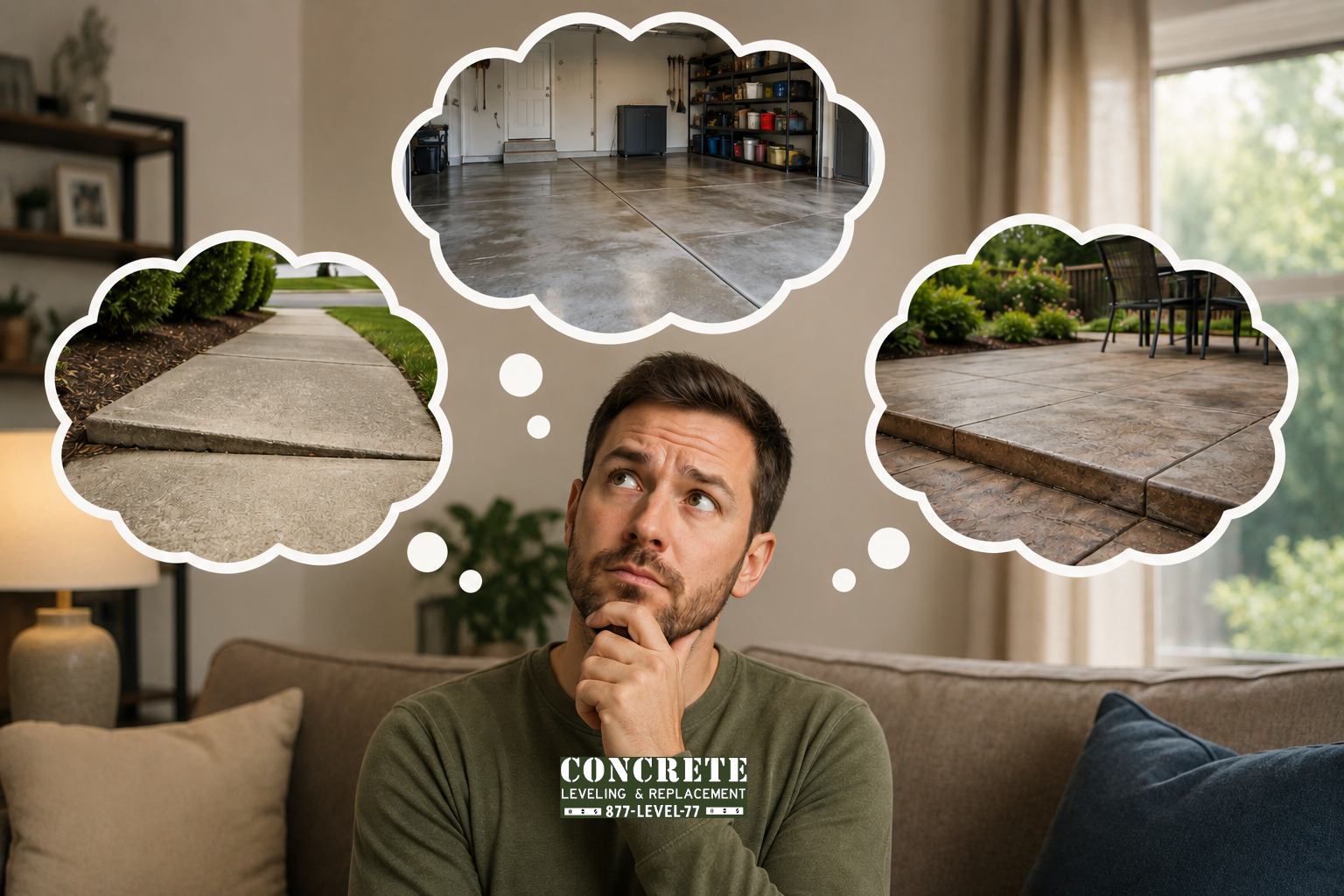
The concrete areas most likely to need leveling are the ones that deal with water, weight, and soil movement every day: driveways, sidewalks, garage floors, patios, pool decks, porches, and entry steps. If you keep an eye on these high-risk spots, you can catch trouble early and avoid more expensive repairs later. That's especially important in climates with moisture swings and freeze-thaw cycles, where small problems can spread faster than homeowners expect.
If you've noticed settlement around your home, the safest next step is a professional inspection. Our team at Concrete Leveling & Replacement proudly helps homeowners evaluate concrete problems honestly and recommend practical solutions that fit the condition of the slab. For more guidance, explore our counties we serve page or review our article on why concrete cracks to better understand how surface damage and settlement often go hand in hand. When you're ready, contact us for a straightforward assessment and a plan that helps protect your home, your safety, and your property value.